Monday, February 18, 2013

Promo Post: Broken Wings by Shannon Dittemore


Hi guys! I haven't updated in a while. That's due to my current loads of work and exams. I'm just dropping by today with this promo post for Shannon Dittemore's Broken Wings! I've been waiting for this book for quite some time, because I really liked the first book, Angel Eyes! Initially, I intended to review it for this book tour, but as it turned out I couldn't juggle work and reading at the same time (I haven't been reading in a while). So here I am with a promo post instead. 

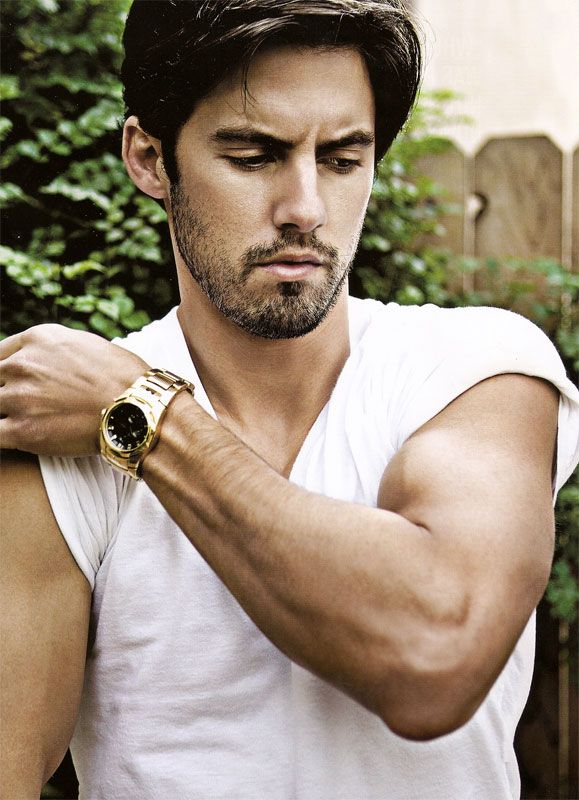
Broken Wings: Character Spotlight

Character: Marco
First & last: Marco James
Age: 25
Hometown: Portland, Oregon
Favorite Possession: Ali’s journal

~ A bit of truth ~
Marco is an actor and filmmaker who was dating Brielle’s best friend, Ali, when she was killed. He was arrested for her murder and later cleared of the charges.

Likes
- Theatre. He’s particularly fond of Hamlet, a play he was working on while dating Ali.
- Independent films
- Coffee houses
- An audience. In particular, he finds Kaylee’s aunt Delia to be a remarkable one-woman audience.

Dislikes
- Henry Madison, a pedophilic old man involved in the trafficking ring that took Ali’s life. The monster haunts Marco’s dreams.
- Any activity that requires him to wear shorts.
- Himself, half the time. The role he played in Ali’s death hangs over him.
- The holes in his memory. He can’t remember half of what happened at the warehouse last December


The Books 

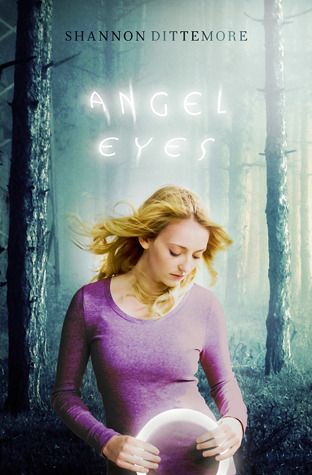
Angel Eyes (Angel Eyes Trilogy #1)
by Shannon Dittemore
Release Date: May 29, 2012
Paperback/e-book
336 pages 


Summary from Goodreads:
Once you’ve seen, you can’t unsee. Everything changes when you’ve looked at the world through . . .ANGEL EYES.
Brielle’s a ballerina who went to the city to chase her dreams and found tragedy instead. She’s come home to shabby little Stratus, Oregon, to live with her grief and her guilt . . . and the incredible, numbing cold she can’t seem to shake.
Jake’s the new guy at school. The boy next door with burning hands and an unbelievable gift that targets him for corruption.

Something more than fate has brought them together. An evil bigger than both of them lurks in the shadows nearby, hiding in plain sight. Two angels stand guard, unsure what’s going to happen. And a beauty brighter than Jake or Brielle has ever seen is calling them to join the battle in a realm where all human choices start.

A realm that only angels and demons—and Brielle—can perceive.

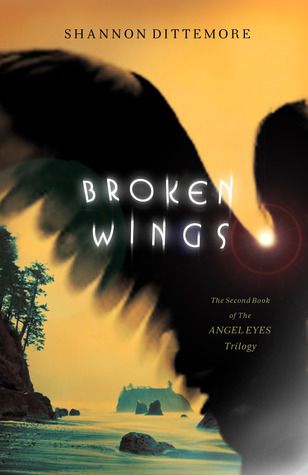
Broken Wings (Angel Eyes Trilogy #2)
By Shannon Dittemore
Release Date: February 19, 2013
Paperback/e-book
320 pages 


Goodreads / Amazon / Barnes & Noble
Summary from Goodreads:
Giant angels with metal wings and visible song. A blind demon restored from the pit of darkness. And a girl who has never felt more broken.
Brielle sees the world as it really is: a place where the Celestial exists side by side with human reality. But in the aftermath of a supernatural showdown, her life begins to crumble. Her boyfriend, Jake, is keeping something from her—something important. Her overprotective father has started drinking again. He’s dating a much younger woman who makes Brielle’s skin crawl, and he’s downright hostile toward Jake. Haunting nightmares keep Brielle from sleeping, and flashes of Celestial vision keep her off kilter.
What she doesn’t know is that she’s been targeted. The Prince of Darkness himself has heard of the boy with healing in his hands and of the girl who sees through the Terrestrial Veil. When he plucks the blind demon, Damien, from the fiery chasm and sends him back to Earth with new eyes, the stage is set for a cataclysmic battle of good versus evil.
Then Brielle unearths the truth about her mother’s death and she must question everything she ever thought was true.
Brielle has no choice. She knows evil forces are converging and will soon rain their terror down upon the town of Stratus. She must master the weapons she’s been given. She must fight.
But can she fly with broken wings?

About the Author

Shannon Dittemore has an overactive imagination and a passion for truth. Her lifelong journey to combine the two is responsible for a stint at Portland Bible College, performances with local theater companies, and a focus on youth and young adult ministry. The daughter of one preacher and the wife of another, she spends her days imagining things unseen and chasing her two children around their home in Northern California. Angel Eyes is her first novel.

Website / Twitter / Goodreads / Facebook / Pinterest


GIVEAWAY! 

a Rafflecopter giveaway


Friday, January 18, 2013

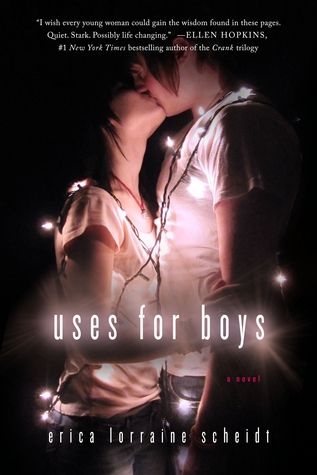
Review: Uses for Boys by Erica Lorraine Scheidt

Title: Uses for Boys
Author: Erica Lorraine Scheidt
Genre: Young Adult Contemporary
Release Date: January 15, 2013
Publisher: St. Martin's Press
Format: eARC
Pages: 240
Source: Publisher via NetGalley
Links: Goodreads | Amazon | Bookdepository
Read from January 14 to 15, 2013
My rating: 3 stars: I like it (2.5)
Summary: Anna remembers a time before boys, when she was little and everything made sense. When she and her mom were a family, just the two of them against the world. But now her mom is gone most of the time, chasing the next marriage, bringing home the next stepfather. Anna is left on her own—until she discovers that she can make boys her family. From Desmond to Joey, Todd to Sam, Anna learns that if you give boys what they want, you can get what you need. But the price is high—the other kids make fun of her; the girls call her a slut. Anna's new friend, Toy, seems to have found a way around the loneliness, but Toy has her own secrets that even Anna can't know. Then comes Sam. When Anna actually meets a boy who is more than just useful, whose family eats dinner together, laughs, and tells stories, the truth about love becomes clear. And she finally learns how it feels to have something to lose—and something to offer. Real, shocking, uplifting, and stunningly lyrical, Uses for Boys is a story of breaking down and growing up.


I have no father. I have no mother. Then you came along and everything changed. 

Uses for Boys majorly caught me off guard. I started this book thinking it would be just another YA Contemporary about troubled teenagers. In the beginning it does feel like one; but then the story takes a totally different turn from what I expected, and led me along a road I would've never taken if it I had known any better.

Anna grows up with no father. In her early childhood, her mother would tell her again and again that Anna is all she ever wanted, and Anna loved the idea. It was bliss, until her mother starts going out all the time to chase after new husbands, one after another, and then she has no time for Anna anymore. Growing up with no father and as good as no mother, Anna turns to the people who give her attention: boys. All of a sudden boys start talking to her, saying that she's pretty, flirting with her, and Anna goes along with it, giving them all they want, one boy after another, just so she can have their company.

I have mixed feelings about this book. On one hand, it's quite entertaining. If it were dull, I would've hated it, but it wasn't, so I went through it pretty fast. It has an easy narrative style, like a person talking, rather than a well thought-out piece of writing like other novels. The story is divided into a lot of parts, and each parts come up pretty randomly, so it isn't always predictable. And that's a good things. But on the other hand, the subject matter is quite discomforting. The book talks about sex pretty bluntly, and I feel weird reading this in the words of a thirteen or fifteen year old (I don't remember which one). For a young girl her age, Anna is very experienced with boys, having slept with 4 or more (I lost count), not to mention that she got pregnant, and had an abortion. I didn't enjoy watching someone let her life slip away like that for no good reason other than to feel loved.

Her mother is partly to blame, I get that. Negligent parents do a lot of damage to their children. And we can see how Anna's mother affects her pretty clearly. She would say that she cares, but then she never shows it. What kind of mother lets her child quit school and move out at 13 to live in a boyfriend's apartment? As hard is it is to imagine, I know there are parents like this out there.

In a way, I think I understand that this book just wants to "tell it like it is" with no fancy fabrications, no glorifying, no denouncing. That would explain why the narrative is this way, and why Anna doesn't acknowledge any of her actions to be anything (not the right thing, not the wrong thing, not a mistake, not anything) other than things she feels like she has to do. Trying so hard to impress, Anna willingly falls victim to her so-called friend and boyfriends, and this is very common among teenagers. Like Anna, they're not always likeable, and don't always know right from wrong. We can judge all we want, but it's also important to understand them, why they are the way they are and why they do the things they do. To me, Uses for Boys is a story that speaks of real teenagers with problems. Even though the book falls short of plot and denouement, it's quite an easy and enjoyable read, unless you're put off by dark, discomforting stories with (too) many sex scenes.

------------------------
This review is also posted on Goodreads.
I received a digital copy from NetGalley and the publisher for review.

Wednesday, January 16, 2013

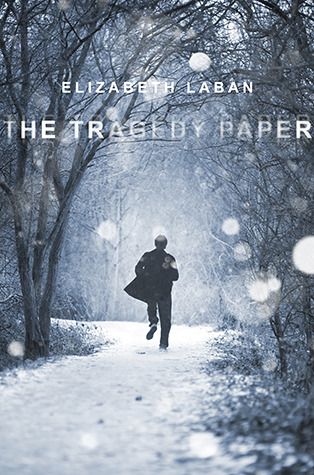
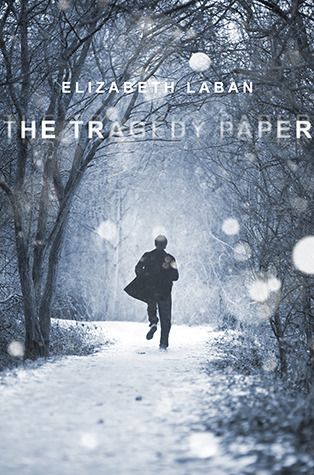
Review: The Tragedy Paper by Elizabeth LaBan

Title: The Tragedy Paper 
Author: Elizabeth LaBan 
Genre: Young Adult Contemporary
Release Date: January 8, 2013
Publisher: Knopf Books for Young Readers
Format: eARC
Pages: 320
Source: Publisher via NetGalley
Links: Goodreads | Amazon | Bookdepository
Read from January 4 to 6, 2013
My rating: 3 stars: I like it (2.5)
Summary: Tim Macbeth is a 17-year-old albino and a recent transfer to the prestigious Irving School, where the motto is, “Enter here to be and find a friend.” Tim does not expect to find a friend; all he really wants to do is escape his senior year unnoticed. Despite his efforts to blend into the background, he finds himself falling for the quintessential “it” girl, Vanessa Sheller, girlfriend of Irving’s most popular boy. To Tim’s surprise, Vanessa is into him, too, and she can kiss her social status goodbye if anyone finds out. Tim and Vanessa enter into a clandestine relationship, but looming over them is the Tragedy Paper, Irving’s version of a senior year thesis, assigned by the school’s least forgiving teacher. The story unfolds from two alternating viewpoints: Tim, the tragic, love-struck figure, and Duncan, a current senior, who uncovers the truth behind Tim and Vanessa’s story and will consequently produce the greatest Tragedy Paper in Irving’s history. 


Sometimes it's hard, impossible even, to know how much magnitude a choice holds until it is all over. 

Duncan Meade enters the Irving School a senior this year. As a school tradition, each senior gets their own dorm room without having to share it with anyone. On the first day of school, each senior will go to the senior hall and find their room; and in the room, there will be "treasures" left behind for them from the previous senior who lived there. Duncan has one fear: he is afraid to find out if the smallest room in the hall belongs to him. And of course, it does. The treasures the previous owner, Tim Macbeth, leaves behind for Duncan is a note and a stack of CDs. Those CDs play the recordings of Tim's story for Duncan as the "meat of your Tragedy Paper," which is the Irving School's senior English paper to be handed in at the end of the school year.

The Tragedy Paper started out, for me, as intriguing; I was curious to see how the connection between Tim Macbeth and Duncan Meade would play out. Would it be, you know, like Shakespeare's Macbeth, in which Macbeth kills Duncan? Or would Tim Macbeth share the same tragic flaw with Macbeth, and Duncan the receiving end of that flaw like King Duncan? Or what? Of course, I was expecting the use of these two names to have some significance. I have been taught in Literature class that a text alludes to something like this, it is saying something implicitly, and you should find what it infers. But it looks like this book falls flat in that department, because as far as I know, the only function of this allusion is only to tell the reader: Hey! This book is a tragedy because its two main characters are named after the two in Shakespeare's tragedy Macbeth! Hmm. Right now, in my head, I can even see my beloved Lit teacher hold up her index finger in a warning manner, and hear her say her favorite disapproval: "Nonono."

Again, I don't seem to share everyone (who's read it)'s enthusiasm about this book. Some say that it's "deep" and "profound," but I honestly don't see how that can be. It's not like I suck that much at reading between the lines and critical thinking; how about it's just meh? 90% of the book is about Tim told, narrated by Tim's recordings which Duncan listens to; while Duncan's part takes up only about 10%. And this makes me wonder why it has to be written this way. Not only does it bother me that the book doesn't just simply tell Tim's story--which already is the focus, if not the entire meat, of this story--it has to have Duncan as a medium (why bother?), but it also irritates me that, knowing very well Duncan's function is only to hang around and play the CDs so we can listen to them as well, the book tries so hard to have Tim affect his romantic life--in a way trying to make a connection between them when it's strained and uncalled for. If there'd been some believable and close connection between them for the recordings to have their natural effects, I would've believed it and appreciated it more.

In the end, I'll say that The Tragedy Paper is not a bad book, but there are a lot of things that I personally didn't like. The ending, for instance, felt too contrived in the way that it is steered into a tragedy pattern, which I understand since I get it, the point is that this book is a tragedy; but I still didn't like it that much. And the effects Tim's story has on Duncan are to me a little too unbelievable. I'd love for it to have more substance, and if the switching between two points of view is going to be this unbalanced and the connection this strained, how about no switching at all? I'd be happy to read Tim's story alone as the whole book without Duncan having a voice in part. That's just me. For the most part, I enjoyed Tim's story and wanted to see how it was tragic and how it would end, but once I did, I felt greatly underwhelmed. Still, as I said, it's not a bad book. It has good potentials but it's just not my cup of tea. 2.5 stars.

 ------------------------
This review is also posted on Goodreads.
I received a digital copy from NetGalley and the publisher for review.

Tuesday, January 15, 2013

Cover Reveal: The Forgotten Ones by Laura Howard

The Forgotten Ones
Author: Laura Howard
Genre: NA Paranormal Fantasy Romance
Expected release date: May 15, 2013
Age Group: New Adult
Cover Designer: Stephanie Mooney 


Book Description:
Allison O'Malley just graduated from college. Her life's plan is to get a job and take care of her schizophrenic mother. She doesn't have room for friends or even Ethan, who clearly wants more. 


When Allison's long-lost father shows up, he claims he can bring her mother back from the dark place her mind has sent her. He reveals legends of a race of people long forgotten, the Tuatha de Danaan, along with the truth about why he abandoned her mother.


Share on Facebook and/or Twitter and you could win a $50 Amazon (or B&N) Gift card!


Monday, January 14, 2013

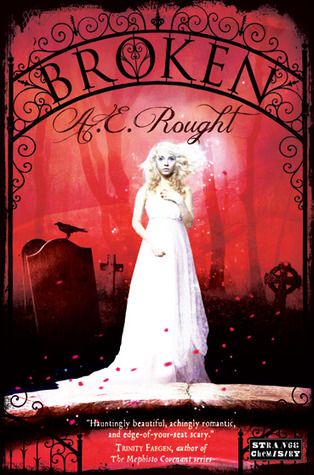
Review: Broken by A.E. Rought

Title: Broken 
Author: A.E. Rought 
Genre: Young Adult Paranormal
Release Date: January 8, 2013
Publisher: Strange Chemistry
Format: eARC
Pages: 384
Source: Publisher via NetGalley
Links: Goodreads | Amazon | Bookdepository
Read from January 6 to 14, 2013
My rating: 2 stars: Nothing special
Summary: A string of suspicious deaths near a small Michigan town ends with a fall that claims the life of Emma Gentry's boyfriend, Daniel. Emma is broken, a hollow shell mechanically moving through her days. She and Daniel had been made for each other, complete only when they were together. Now she restlessly wanders the town in the late Fall gloom, haunting the cemetery and its white-marbled tombs, feeling Daniel everywhere, his spectre in the moonlight and the fog. When she encounters newcomer Alex Franks, only son of a renowned widowed surgeon, she's intrigued despite herself. He's an enigma, melting into shadows, preferring to keep to himself. But he is as drawn to her as she is to him. He is strangely... familiar. From the way he knows how to open her locker when it sticks, to the nickname she shared only with Daniel, even his hazel eyes with brown flecks are just like Daniel's. The closer they become, though, the more something inside her screams there's something very wrong with Alex Franks. And when Emma stumbles across a grotesque and terrifying menagerie of mangled but living animals within the walls of the Franks' estate, creatures she surely knows must have died from their injuries, she knows.
Hurting is better than forgetting.

As I haven't really been a fan of paranormal books, I started Broken with little to no expectation. After the first few pages, I was hooked. The prose was very delicate and wonderful to read; it sounded poetic. I loved the way the author described things in beautiful metaphors, as it really got the message, tone, and feelings across, embedded within those words. I was deeply impressed, but it didn't take long for things to go the other way around. In this case, I think it's best to quote Markus Zusak of The Book Thief: "Like most misery, it started with apparent happiness." And I don't mean the character's, I mean mine.

Things started to get bad after Emma, forever pining after her dead boyfriend Daniel, meets the new boy Alex. Then the teen girl instinct kicks in and she gets obsessed with him, saying how he makes her feel and how she shouldn't feel that way, asking questions along the lines of why-does-he-make-me-feel-this way and what-does-he-mean-by-saying-that-or-looking-at-me-like-that, which I can't really stand. This continues for pretty much the rest of the story. What's worse, Emma is obsessed with some of the sentences Alex says, and would repeat it again and again and again. I know the function of those sentences and Emma's need to repeat it, but really, the tireless repetition is a little uncalled for. It's like the writer doesn't trust the reader to be smart enough to pick up on the foreshadows, and it's a bit trying too hard to keep the whole story unified. It's too much for me, and after a few times it really started to bother me.

The plot is predictable. So predictable that I felt like it was pointless to read this book at all. There are more parts I disliked than parts I liked. And even though I really did enjoyed it in the beginning, I lost patience with it after a while and had to force myself to finish it. I mean, of course, the romance has to be so sappy that the boy is willing to do anything to be with the girl, and say something like "[My heart] doesn't beat for me. It's for you" even if they've known each other for two weeks. And of course, the boy has to be so messed up that the girl thinks it's attractive. And of course, the boy has to remind the girl of the dead boyfriend and echo his exact words and make her heart confused. And of course, the girl has to be so confused that she keeps a distance but pines for him anyway, 'cause apparently she can't live without him. These are only some examples of the worst cliches ever. Yawn.

In some ways, Broken is so bad that it reminds me of Twilight. Although Broken has better writing (only in the beginning), they're both made of uninteresting characters I don't care about, plots I don't like, romance that makes no sense and I have to roll my eyes at; overall books I can't stand. I think they're on the same level of bad paranormal romance. So readers of Twilight might enjoy this better than I did.

------------------------
This review is also posted on Goodreads.
I received a digital copy from NetGalley and the publisher for review.

Saturday, January 5, 2013

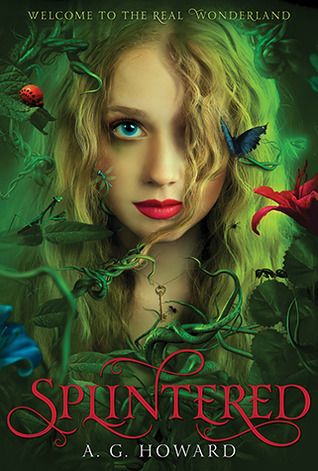
Review: Splintered by A.G. Howard

Title: Splintered
Author: A.G. Howard
Genre: Young Adult Fantasy
Release Date: January 1, 2013
Publisher: Amulet Books
Format: eARC
Pages: 384
Source: Publisher via NetGalley
Links: Goodreads | Amazon | Bookdepository
Read from December 28 to January 2, 2013
My rating: 4 stars: I really like it
Summary: This stunning debut captures the grotesque madness of a mystical under-land, as well as a girl’s pangs of first love and independence. Alyssa Gardner hears the whispers of bugs and flowers—precisely the affliction that landed her mother in a mental hospital years before. This family curse stretches back to her ancestor Alice Liddell, the real-life inspiration for Lewis Carroll’s Alice’s Adventures in Wonderland. Alyssa might be crazy, but she manages to keep it together. For now. When her mother’s mental health takes a turn for the worse, Alyssa learns that what she thought was fiction is based in terrifying reality. The real Wonderland is a place far darker and more twisted than Lewis Carroll ever let on. There, Alyssa must pass a series of tests, including draining an ocean of Alice’s tears, waking the slumbering tea party, and subduing a vicious bandersnatch, to fix Alice’s mistakes and save her family. She must also decide whom to trust: Jeb, her gorgeous best friend and secret crush, or the sexy but suspicious Morpheus, her guide through Wonderland, who may have dark motives of his own.


I'm going to London to find the rabbit hole. Even though I'm scared gutless of where it might lead, of who's waiting inside for me. Of whatever I'm supposed to do once I'm there. I have to go. 

Is there a better way to end 2012 and start 2013 than spending time immersing yourself in the enchanting Wonderland of Splintered? No, I don't think so. Even though I've never actually read the original Alice's Adventures in Wonderland by Lewis Carroll, I was still able to catch up with this retelling of the famous and beloved classic, and came away liking it a lot.

Alyssa Gardner believes she's a descendant of Alice Liddell. And she believes that the females in her family are cursed; they hear bugs and plants talk. Alyssa is afraid of becoming like her mother, who is in an asylum--"mad," dressed in a pinafore and refusing to eat anything unless it's served in a teacup--and her grandmother, who, believing she could fly, jumped out of the window to her death. Splintered's Wonderland is a few notches crazier, darker, more horrible, and more twisted, and Alyssa needs to go there to fix Alice's mistakes and put an end to the curse that haunts her family once and for all. But what she doesn't plan is for Jeb, her best friend and secret crush, to get dragged along into this. As they enter Wonderland through the rabbit hole, they take on a journey to do something they didn't intend to, and become involved in a business that is not theirs--a business that, unless carried out successfully, will keep them in Wonderland forever.

What I liked about this book is its captivating spin of the original Wonderland story. As a member of this generation, I cannot help but know about the young Alice and her Wonderland. I believe I have seen a Disney film once when I was little, but I'm not sure; and I saw Tim Burton's film starring Johnny Depp the first week it came out in cinema (I enjoyed it but I didn't think it was that good). So yeah, I do know about it even though I've never actually read the book. Splintered still maintains some things from the original: Wonderland, the Caterpillar, Queen Red, White Rabbit or Rabid White, the Mad Hatter or Herman Hattington, and of course the Alice legend. But they're not entirely similar; Splintered takes an interestingly dark turn, paints Wonderland in a light that is anything but wonderful--a place full of monsters trying to either eat/kill you or use you.

In the latter category belongs Morpheus, a netherling moth (not sure what that is) who somehow grows up with Alyssa. Now, this is an interesting character. Words used to describe him depict him as a sexy, seductive and sensual being that draws Alyssa to him and influences her, rendering her unable to think straight. I think A.G. Howard did a really great job forming this character and choosing words that reinforce his personality, because man, is he hot *fans self*. I could feel his charms permeating the air even by just reading his dialogue, seriously. This is one of the characters who isn't always likeable but always enjoyable to read about. He's, in his own words, mysterious, rebellious, and troubled--"the qualities women find irresistible."

One of those women, besides myself, is Alyssa. I enjoyed it when she doesn't know how to feel around him. But I also liked Alyssa when Morpheus isn't around. Normally she's brave, smart and a little mad. A truly likeable protagonist. Girls that kick ass. Jeb is a delightful character as well. I found the IloveyoubutI'mwithhersoIcantakemymindoffofyou thing way too cliché, but I'll take it because Jeb is just so sweet and always says the right thing and and makes me swoon and everything. But in comparison to Morpheus, he unfortunately pales as a weaker and less interesting character.

On the whole I really liked this book. The writing is fantastic, the characters pleasant, and the story very entertaining. Quite action-packed, this book is a wonderful read. If I were in any position to judge, I would say that this is one interesting interpretation of Wonderland and a very well-done retelling of the classic, not to mention very well thought-out. It's thrilling, with plot twists here and there to keep things unpredictable and exciting. If you're already a fan of Lewis Carroll's book, you won't want to miss this! Or even if you're not, you won't want to miss this either!

------------------------
This review is also posted on Goodreads.
I received a digital copy from NetGalley and the publisher for review.

Monday, December 10, 2012

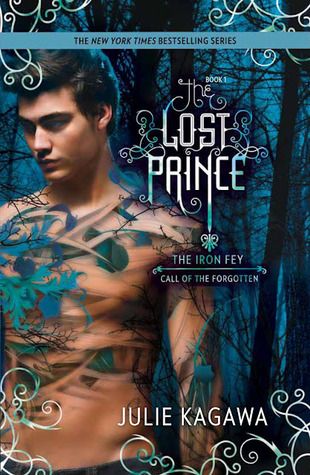
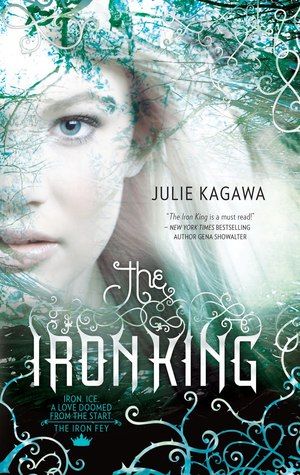
Review: The Lost Prince by Julie Kagawa

Title: The Lost Prince 
Author: Julie Kagawa
Series: The Iron Fey: Call of the Forgotten #1
Genre: Young Adult Fantasy
Release Date: October 23, 2012
Publisher: Harlequin Teen
Format: Paperback
Pages: 379
Source: Publisher via NetGalley
Links: Goodreads | Amazon | Bookdepository
Read from November 12 to 21, 2012
My rating: 3 stars: I like it
SummaryDon’t look at Them. Never let Them know you can see Them. That is Ethan Chase’s unbreakable rule. Until the fey he avoids at all costs—including his reputation—begin to disappear, and Ethan is attacked. Now he must change the rules to protect his family. To save a girl he never thought he’d dare to fall for. Ethan thought he had protected himself from his older sister’s world—the land of Faery. His previous time in the Iron Realm left him with nothing but fear and disgust for the world Meghan Chase has made her home, a land of myth and talking cats, of magic and seductive enemies. But when destiny comes for Ethan, there is no escape from a danger long, long forgotten. 


There is a whole unknown world that exists around us, side by side, and no one knows it is there. Except for a few. A very rare few, who can see what no one else can. And the spirits of this world can be helpful or harmful, friendly or wicked, but above all, those who see the invisible world are constantly trapped by it. They will always walk between two lives, and they will have to find a way to balance them both. 

When I finished this book almost three weeks ago, I decided I wasn't pumped about it enough to write a review. You see, since I had neither praises nor criticisms, there was nothing worth saying, right? But since the day I finished the book, I couldn't help but feel bad for leaving it without saying anything. I felt I owed the original Iron Fey series that much to at least say something instead of just letting it pass me by.

I had high hopes for it. I did. And I guess everyone did, too. The Iron Fey series has been unimaginably fun, and after four main books, I'd grown to adore the Nevernever and everything in it. I remember Ethan, that little boy who was so quiet, who could see fairies, who was mature even when he was 4 years old. Well, he's grown up now, and he's changed. Broody Ethan hates the fairies' guts, which isn't very surprising since he thinks they took his sister away from him and made her their Queen, making it unlikely that she would come home. Ethan lives his life in fear of Them. He keeps a low profile, making sure to never attract any unwanted attention. His plan was going quite well until Kenzie St. James wants to be this tough guy's friend, and until Ethan accidentally looks straight at a fairy, and now They know he can see Them. Ethan then gets involved, involuntarily, with a new kind of fairies—the "Forgotten." And that leads him to the Nevernever, the place he never wants to set foot in, ever. But there he is.

I liked that this book brings back the old characters; it's a delight to see them all again. Meghan, Ash, Puck, Grimalkin, Razor, and what a surprise, Keirran! And he has a love interest! Honestly, I didn't particularly love the story. I felt it was quite mediocre, like The Iron Knight, only a bit better. I din't instantly like Ethan with his brooding nature, nor Kenzie with all her contrived enthusiasm to have something to do with the fairies. I think their characters are a bit too much, too constrained. Possibly to achieve sharp and clear contrasts between them, you know, opposites attract and whatnots. I had a hard time believing anything in this book, including their relationship development. One minute Ethan doesn't one to have her around, then another he wants to kiss her. As I said, it felt unnatural.

Admittedly, I was greatly disappointed. I was expecting mind-blowing, earth-shattering, but I only got alright and mediocre. A letdown, if I may. I guess I had my hopes up too high. Still a fun book on the whole, though. Looking forward to the next book!

------------------------
This review is also posted on Goodreads.
I received a digital copy from NetGalley and the publisher for review.

Saturday, December 8, 2012

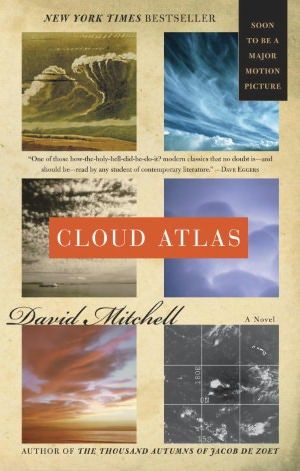
Review: Cloud Atlas by David Mitchell

Title: Cloud Atlas
Author: David Mitchell
Genre: *unidentifiable*
Release Date: August 17, 2004
Publisher: Random House
Format: Paperback
Pages: 509
Links: Goodreads | Amazon | Bookdepository
Read from November 23 to December 6, 2012
My rating: 5 stars: I love it! It's amazing! + Favorite
Summary: A reluctant voyager crossing the Pacific in 1850; a disinherited composer blagging a precarious livelihood in between-the-wars Belgium; a high-minded journalist in Governor Reagan’s California; a vanity publisher fleeing his gangland creditors; a genetically modified “dinery server” on death-row; and Zachry, a young Pacific Islander witnessing the nightfall of science and civilisation—the narrators of Cloud Atlas hear each other’s echoes down the corridor of history, and their destinies are changed in ways great and small. In his captivating third novel, David Mitchell erases the boundaries of language, genre and time to offer a meditation on humanity’s dangerous will to power, and where it may lead us.

Souls cross ages like clouds cross skies, an' tho' a cloud's shape nor hue nor size don't stay the same, it's still a cloud an' so is a soul. Who can say where the cloud's blowed  from or who the soul'll be 'morrow? ... only the atlas o' clouds. 

On October 11, 2011 a certain wide-eyed girl added this book to her Goodreads shelf. Quite an impressionable reader that she was, she felt giddy with the idea of one day taking on something so big and sophisticated, yet at the same time, she couldn't help but feel intimidated by that very same idea. What if she wouldn't like it? She couldn't bear the idea of ending up not liking a book she'd been wanting to read for so long; the desire to love it was too much too handle. What if that desire wouldn't be fulfilled? How would she feel about all the time she spent believing she would love the book, but ended up not liking it the slightest bit? Now over a year has elapsed, her fear's died down quite considerably, and that girl's become me. And I was ready to take it on.

When I picked up David Mitchell's Cloud Atlas, I did so due to the want to see the movie. Admittedly, had the trailer not been released, I would've had no incentive to pick up the book at all. Having read number9dream, I grew to adore Mitchell's brilliant writing skill and its complexity, and learned to be fond of  his peculiar style. But since one Mitchell a year is undeniably more than enough, I postponed Cloud Atlas, waiting for the time near the movie release date enough to start what would be a 15-day's journey of adventures of some sort, of explorations and sheer awesomeness.

Of course, I didn't know what to expect from Cloud Atlas, and I didn't really give much thought about what it would be like. All I knew was, since it's his highest-rated book, I was ready to be blown away. And then I dove in. I trusted that Mitchell had something wonderful in store for me, and I was hoping that it would be a nice surprise and that I would like it a lot.

Now, before I go any further, I think I should point out that this novel's first distinctive element is its form of narration. And here I quote Mitchell's Robert Frobisher (whose quote you won't come across until about 87% of the story), so that you have an idea of what the story-telling is like:
a "sextet for overlapping soloists": piano, clarinet, 'cello, flute, oboe, and violin, each in its own language of key, scale, and color. In the first set, each solo is interrupted by its successor: in the second, each interruption is recontinued, in order. Revolutionary or gimmicky? Shan't know until it's finished, and by then it'll be too late. 
This book is, in Mitchell's own words, a "sextet" of six overlapping stories--each one is connected to another in certain ways, spanning across continents and centuries of time. Thus the book runs so: #1-#2-#3-#4-#5-#6 in its uninterrupted entirety-#5-#4-#3-#2-#1. #1 until #5 are interrupted mid-way and resumed after the 6th story (I love this). Strange? Yes! But it's also delightful. And I'd go with revolutionary instead of gimmicky. I learned about this before I started the book, which I'm not sure if I was supposed to, and it kept me eagerly anticipating and actively wondering how all this would play out. I'm not sure if it will enrich your reading if you know about this narrative form beforehand, but it's definitely not doing any harm, if you ask me, since it isn't a spoiler.

Now that the B-format paperback with such a pretty cover felt snug in my palms as though it belonged there, the journey began. However, much to my dismay, it took off onto a bumpy road—or you could say a stormy sea—and wasn't a very comfortable ride. The Pacific Journal of Adam Ewing bored me in indescribably tedious ways. This part is written by Adam Ewing (aged 33, becomes 34 later), a lawyer of San Francisco, as a journal of a voyage on the "Prophetess" from Sydney to California. It's probably dated in 1849 or 1850. This part touches on racism, slaves, abolitionism, and friendship. What does it mean to be a friend? Is it correct when Dr Henry Goose—Ewing's uncut diamond of the first water—says, "Friendship between races, Ewing, can never surpass the affection between a loyal gundog & its master" or "The weak are meat, the strong do eat"? The writing in this part was difficult to get into. While the narration is interesting in that it's written in diary form with contractions and whatnots, it failed to interest me. Definitely not a page turner. It just made me sleepy. I'll admit it here, Adam Ewing is the part I liked least.

I encountered the book's first interruption when Ewing's journal is suddenly cut mid-sentence and gives way to Letters from Zedelghem. The numerous letters in this part are sent by Robert Frobisher (aged 24, if I interpret it correctly) to his old friend Rufus Sixsmith in 1931. Frobisher is a young English musician who runs away from home to work as an amanuensis for a great composer named Vyvyan Ayrs, who lives in Bruges, Belgium. While helping VA, Frobisher comes across temptations and frustrations in various forms, taking all the emotional whirlwind out on the letters he sends, making them very intimate and personal. He uses people; he falls in love; he talks about war and power; Zedelghem is the part I liked most of all the six stories. Frobisher is also the composer of the Cloud Atlas Sextet, which he says "holds [his] life, is [his] life." And when it's done, he sees himself as a "spent firework; but at least [he's] been a firework." I loved Frobisher's striking narrative voice, his wits and his honesty. He isn't the most likeable character if you think about it, yet he's got so much charm it would be crazy not to like him. When the story takes an unexpected dark turn, my heart ached terribly for him. It crushed me that the firework had to burn out so quickly and  tragically. The last letter put me on the verge of tears. I haven't read something nearly as beautiful as that in a long while.

Next, Half-Lives: The First Luisa Rey Mystery is mystery/thriller set in 1975. If you look closely, you'll realize that it's intended to be a novel since its first page from the chapter number, which doesn't appear in the previous two stories. Like the repeated opening lines "Sixsmith" in Zedelghem, the chapter number in Luisa Rey serves as an element that tells you in which form the story is written—a novel, a mystery/thriller novel to be exact. Surprisingly, Rufus Sixsmith from Zedelghem appears as one of the main character in this novel. I won't say much about the plot of Luisa Rey because saying anything about it would be spoiling it for you. Let's just say that I really enjoyed this part. It revolves around power, money, truth, lies. Different as it may be from the previous two, it's easier to follow and understand, but still mediocre in my opinion.

The Ghastly Ordeal of Timothy Cavendish is the fifth part in this sextet of stories, which is set in Britain in our present day. Timothy Cavandish is a 65-year-old publisher running away from the cruelties the world lets loose on him, yet ends up in another one, and another one, and another one. The story is narrated in the first person POV with lots of humor and sarcasm that can make you laugh, and at the same time you feel bad for Timothy's plights. But no, not really, most of the time you can't help but find them hilarious. It makes you think about how we treat elderly these days. I really enjoyed this funny and colorful story, and I don't think there's anything more to be said. This is the lightest of all the six stories, which lets you relax a little before bringing you to the next part, which is going to be ten notches heavier

Set in the dystopian future in Nea So Copros (futuristic Seoul, Korea?), An Orison of Sonmi~451 is a long interview between an archivist and Sonmi~451, a genetically engineered fabricant. Sonmi~451 is an ex-worker of a diner called Papa Song, among other fabricants working other undesirable, unhealthy, dangerous jobs for "pureblood" human beings. The fabricants of the Nea So Copros are subjected to maltreatment as if they are perfectly dispensable, expendable slaves, but of course they don't know that; in fact, they think their jobs are the best thing in the world. What's so special about this particular Sonmi is that she has anomalously glitched, broken free from the mind-control of Nea So Copros, and developed a "human" mind of her own full of personal opinions. She isn't brainwashed anymore; she sees the truth as it is. She devours philosophy, history, books, because "we are only what we know, and [she] wished to be much more than [she] was, sorely." In a way, this story reminds me of George Orwell's famous 1984. What Winston Smith and Sonmi~451 share is their struggle against the power that be, their trust in the wrongest person, and their unforeseen downfall. Sonmi~451, however, being smarter than us sees it coming all along, and yet, being braver than Smith, willingly puts herself in that position just so she can try to make a difference, try to get the truth out there, even if the only person listening is the archivist. Dealing with heavy topics such as politics, utilitarianism, and ethics, this story is fascinating in its own right.

Now we've reached the last, central story: Sloosha's Crossin' an' Ev'rythin' After. Notice all these apostrophes? The story's full of them; annoying at first, but I later found them to be a part of the story's charms. Zachry tells his story in an orison, which tells his recounting of the story of when he is 16 and meets Old Georgie for the first time, and everything after, including his meeting with a Prescient human named Meronym which would change things. Zachry lives in a post-apocalyptic future world where civilization has collapsed; he and his people live in the valley of Big I, Ha-Why. They don't supposedly speak the same language as the people of the old world anymore, thus this weird use of language in the narration. Tell-it-true, the voice of the narrator is—in his own words, a duck fart in a hurrycane—fun and honest, yay. I don't remember being bored, nay. I admit it's a little hard to decipher, but I went through it really fast. It even felt almost poetic to me, and I enjoyed Sloosha's Crossin' tremendously. And David Mitchell? You're unbelievably incredible. 

Now that this review is getting unbearably long, I'll wrap it up soon. I could talk about this book forever if anyone's willing to listen. I adore it that much. I didn't include the connections between the stories above because it will be much more fun for you to try to see them yourselves. I myself looked hard for the  connections and hints, and I succeeded in gathering most of them (I think), and it just satisfies the perfectionist in me. How these stories are bound together is actually amazing, and I don't know how Mitchell did it but he did it so well. Birthmarks, echoes of each other's exact words, distant memories, transformations of ideas and forms and statuses. I love it. 

Above all else, I love the complexity of the book. And I love that I didn't always love it, but I ended up loving it all the same. It's like I was put to test in some ways, and passed it. Reading it felt so much like a challenge to me, and 15 days spent doing so weren't always happy days. I think very highly of this book, but it should be mentioned that it isn't always enjoyable. I mean it's a great book, but it isn't for everybody (as I said, hard to read)—if you're looking for pure entertainment ("escape literature"), I'm afraid this book won't satisfy you much in that department. Like most "interpretative literature," this book has a tendency to be boring. In all honesty, it's tedious at some points. There are parts that I just wished they'd be over soon, parts that dragged on and on, parts that bored me to sleep *coughadamewingcough*.

But after all is said and done, those parts slipped into the past, they weren't important enough to stay. But most parts still linger in my mind, forever imprinted here. For what I'm worth, I'd say this is one of the best works of fiction I've ever read in my life. I'm thankful for the movie that finally put the end to my procrastination, because as I went on this journey, I lived six different lives at six different points in time, read six different stories in different genres, most of which I couldn't identify. It's an eye opener in a way. I savored the brilliant writing, played with the ideas around in my head, laughed and cried with the characters, and highlighted the amazing quotes (got 94 passages). I finished the journey feeling somehow richer with maturity and life experience. This book is, after all, a memorable reading experience that's sure to be lived again. 

------------------------
This review is also posted on Goodreads.

Saturday, November 24, 2012

Stacking the Shelves (6)

Stacking the Shelves is a meme hosted by Tynga’s Reviews to let bloggers share books they've added to their shelves weekly. 

November 19 to 25, 2012

I didn't have Stacking the Shelves posts in the past two weeks because I didn't buy anything! Yay! But for this week and next week, a bookstore near my uni is having a sale on selected titles. Usually these selected titles don't really catch my eyes but the new price tags just beg to be noticed, so I came home with a few.


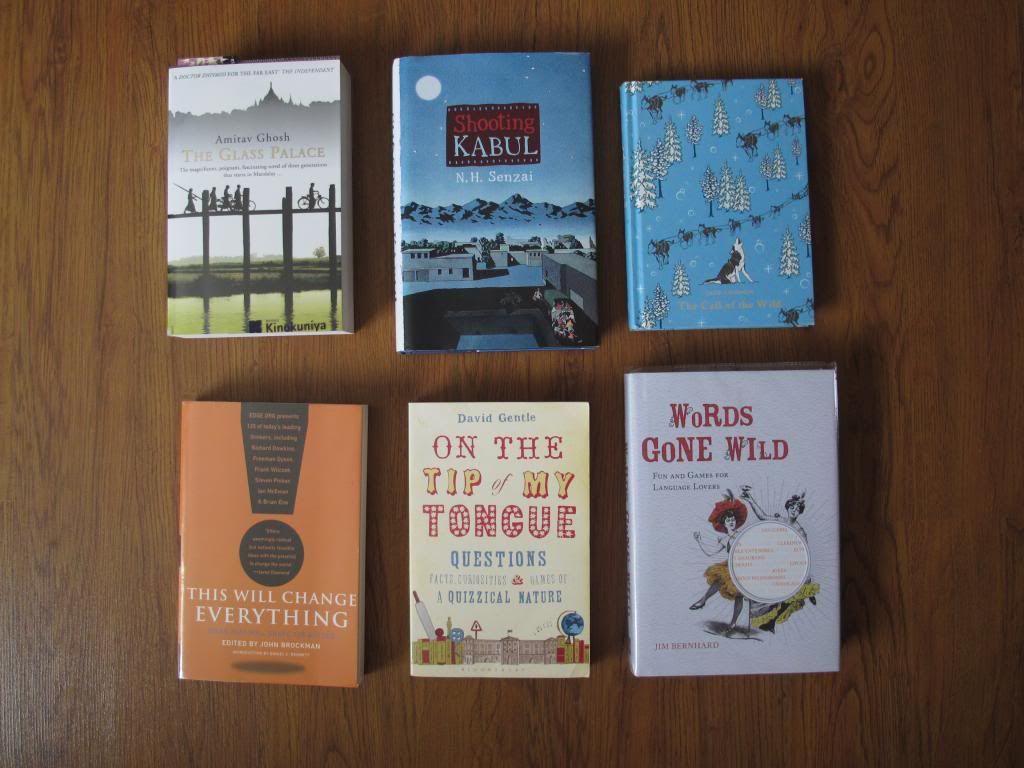
Bought:
The Glass Palace by Amitav Ghosh
Shooting Kabul by N.H. Senzai
The Call of the Wild by Jack London
This Will Change Everything: Ideas That Will Shape the Future
On The Tip Of My Tongue: Questions, Facts, Curiosities And Games Of A Quizzical Nature
Words Gone Wild: Fun and Games for Language Lovers by Jim Bernhard


ARC:
The Tragedy Paper by Elizabeth LaBan

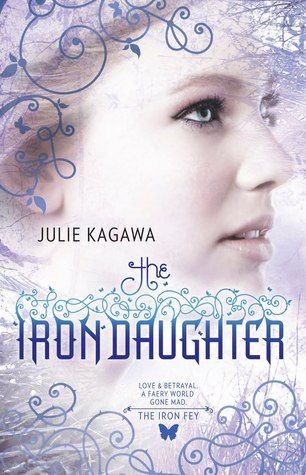
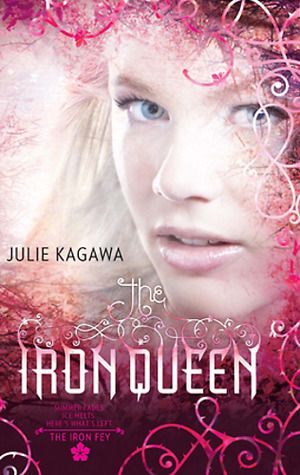
November has been a very busy month for me, so that's why I haven't been posting as regularly as I wanted to. On a positive note, I finished the whole Iron Fey series up to date! My review on The Lost Prince will be coming up soon. :-) In the meantime, read my other Iron Fey reviews!

B's book blog!

Tuesday, November 13, 2012

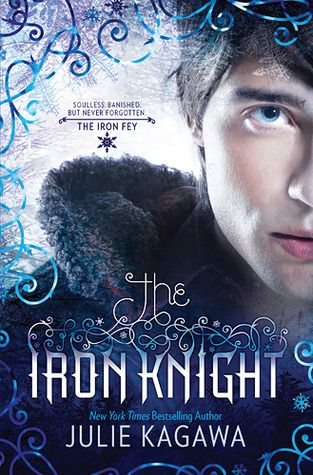
Review: The Iron Knight by Julie Kagawa

Title: The Iron Knight
Author: Julie Kagawa
Series: The Iron Fey #4
Genre: Young Adult Fantasy
Release Date: October 26, 2011
Publisher: Harlequin Teen
Format: Paperback
Pages: 394
Links: Goodreads | Amazon | Bookdepository
Read from November 5 to 11, 2012
My rating: 3 stars: I like it
Summary: Ash, former prince of the Winter Court, gave up everything. His title, his home, even his vow of loyalty. All for a girl… and all for nothing. Unless he can earn a soul.
To cold, emotionless faery prince Ash, love was a weakness for mortals and fools. His own love had died a horrible death, killing any gentler feelings the Winter prince might have had. Or so he thought. Then Meghan Chase—a half human, half fey slip of a girl— smashed through his barricades, binding him to her irrevocably with his oath to be her knight. And when all of Faery nearly fell to the Iron fey, she severed their bond to save his life. Meghan is now the Iron Queen, ruler of a realm where no Winter or Summer fey can survive. With the (unwelcome) company of his archrival, Summer Court prankster Puck, and the infuriating cait sith Grimalkin, Ash begins a journey he is bound to see through to its end— a quest to find a way to honor his solemn vow to stand by Meghan’s side. To survive in the Iron realm, Ash must have a soul and a mortal body. But the tests he must face to earn these things are impossible. At least, no one has ever passed to tell the tale. And then Ash learns something that changes everything. A truth that turns reality upside down, challenges his darkest beliefs and shows him that, sometimes, it takes more than courage to make the ultimate sacrifice.


I will be with her again, or I will die. There aren't any other options. 

I finished the previous book, The Iron Queen, with so great a satisfaction that I expected nothing less from this follow-up, but after pages and pages of adventure and mysteries and secrets, I ended up disappointed. This is not to say that The Iron Knight is a bad book, only it just didn't live up to its three predecessors, and is in my opinion the most mediocre one out of the four.

In this book, Ash sets out on a dangerous journey to the End of the World in order to earn a human soul, as it is the only way he can be with Meghan in the Iron realm without eventually dying from Iron. Ash isn't alone in this quest; there are the usuals—Puck and Grimalkin—and other two surprising characters accompanying him and seeing him through to the end. They follow a very dangerous path into the strangest and darkest parts of the Nevernever where it is said those who have gone in there have never come back.

As much as I love Ash, I didn't find the narration via his POV to be very satisfying. There were more than a dozen times when I felt like this book was written in the third person POV rather than Ash's, because if he's voicing the story, I didn't hear it. Only in some chapters did I really get into his head. Any other times it just felt like I'm reading dialogues. And I would doze off and then not pick up the book until another day came. In all honesty, I would say that I enjoyed Meghan's storytelling far more than Ash's.

When I neared the end of the book, I was praying so hard that Ash would change his mind. I was never one to compromise my identity, who I am, for someone else, so that's why I didn't completely agree with the journey he takes on. I didn't find his quest romantic, instead I found it stupid. Stupid, stupid, stupid Ash. But what can I say? Love makes you blind, right? His undying love for Meghan didn't touch me quite as deeply as the sacrifices made for him, and the friendship offered to him by other characters. When Ash lives the future in his head, I felt his sadness and I hoped he would turn his back. A Winter Prince—invincible, immortal—wants to become a weak mortal for his love? I just couldn't grasp it. Why not wish for an immunity against iron instead? That would make much more sense.

The part that I hate the most is when it's one of those weird moments again when I don't like a book as much as everybody else. Every one of my GR friends who have read this all gave it 5 stars. Let me repeat, all of them gave The Iron Knight five stars. And when I finished the book, I was sitting there and all, "Really? Is that it?" and feeling very very very underwhelmed. My feeling and enjoyment while reading this have been sadly rather static in a pretty mediocre level. It felt almost as tedious as household chores. And I hate that because I feel like I missed out on something that nobody missed that could have added two more stars to this rating, or could have made me love this book with all I had. Which obviously didn't happen. 

On the whole, I'm happy with the way things turn out. Meghan and Ash get what they deserve in the end. In the past month I've been reading the whole Iron Fey series, and it has given me so much joy. Naturally, I felt sad that I had to let these characters go. I've grown to love them a lot. And I will terribly miss them.

------------------------
This review is also posted on Goodreads.
Related Posts Plugin for WordPress, Blogger...