Showing posts with label 3 stars. Show all posts

Saturday, July 12, 2014

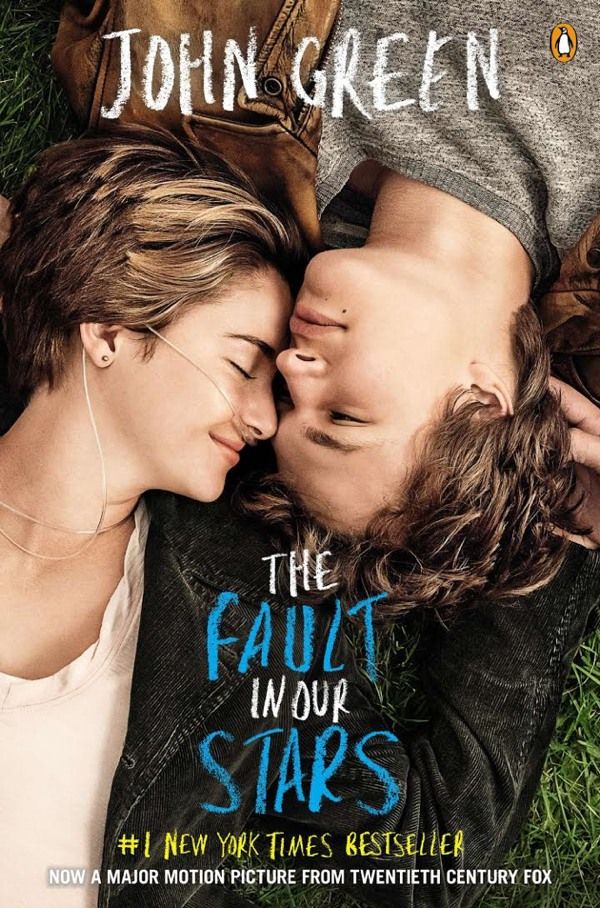
Review: The Fault in Our Stars by John Green

 photo fault-in-our-stars-paperback-movie-tie-in_zps974db3f3.jpg
Title: The Fault in Our Stars
Author: John Green
Genre: Young Adult Ficton
Release Date: January 2012
Publisher: Speak
Format: Paperback
Pages: 313
Links: Goodreads | Amazon | Bookdepository
Read from June 6 to 12, 2014
My rating: 3 stars: I like it
Summary: Despite the tumor-shrinking medical miracle that has bought her a few years, Hazel has never been anything but terminal, her final chapter inscribed upon diagnosis. But when a gorgeous plot twist named Augustus Waters suddenly appears at Cancer Kid Support Group, Hazel’s story is about to be completely rewritten.


There is no shortage of fault to be found amid our stars.

The thing about this book is that I can't quite put my fingers on anything. I can't say I like it, but I don't dislike it either. I can't say it's a good book, but it's not a bad one either. I don't care much about it, but I've read it three times (trying to find something to like). I can't say John Green disappoints me, because he certainly doesn't. I just DON'T know how I feel about The Fault in Our Stars, whether the book or the movie. The story just doesn't work for me.

When I read it in March 2013, my feelings leaned toward the negative end of the spectrum. So here was the book everyone's been raving about, the book I supposed would change my life in some ways, and I expected nothing short of amazing from John Green anyway. And there I was, failing at feeling anything. Finishing the book thinking: well that's it? That in itself, not necessarily the story, was a huge, underwhelming disappointment. I felt like I'd been majorly cheated. I concluded that TFiOS is the most overrated book in the 21st century.

Though this time I had no expectations whatsoever, I still held the same conclusion. I started rereading again because I just wanted to find out exactly why it failed with me the first two times, and I still came away with no satisfactory answers. So I'll just stop trying to rack my brain and begin to tell you frankly how I feel, and maybe figure something out along the way.

First of all, I think a considerable amount of the hype surrounding TFiOS is cancer perks. I'm not saying anything bad here; I'm just pointing out that I think the book wouldn't have been so hyped about, hadn't it been for the fact that it involves cancer. And anyone arguing otherwise might be deluding themselves. I understand that cancer is an extremely relatable subject, and that naturally makes the book popular. (I like reading about subject matters that I can relate to as well, and I tend to like them, too.) What bothers me, though, is when people say this is not a book about cancer, but seriously, how can this book not be about cancer? It's all the characters ever talk about. It affects everything they do and don't do, their feelings and thoughts. Saying TFiOS is not a cancer book is like pretending you love the book for its beautiful story, not because it's about cancer. That you're not manipulated into liking it by the presence of cancer which defines the whole story as you know it. What makes a story beautiful, anyway? Doesn't cancer determine that they're not going to live long and yet they love each other that makes it a beautiful love story? I don't know how to put it nicely, but I feel like TFiOS is a pretentious book about cancer and uses the fact that it's a love story about people with cancer to manipulate readers' feelings and then bask in all the sympathy and tears it can get from them, which are people's natural reactions to cancer. I don't know what John Green's intention was, but I felt that the book tries to manipulate me the whole time. All I heard in my head was "OMG I'm gonna write a cancer book and people are gonna cry so hard and they're gonna love all the feels!!!!!!!!" That was a huge turn-off.

There were times when I liked Hazel and Augustus, but most of the times I didn't. Let's start with  Augustus--to use Isaac's words--what a self-aggrandizing bastard. So. Pretentious. Apparently, he can't say anything without making it sound like a soliloquy, like he's prepared a speech for every occasion and memorized them so that when the occasion arises, he can recite the speech flawlessly on the spot and end it with a smirk to make the girl go even crazier. What's that you say, you fear oblivion? I don't see you trying so hard for the world to remember you, sorry. And what's with all these "metaphors"? How is a cigarette a metaphor for a "killing thing"--it IS a killing thing, no metaphor involved. Dear Gus, a metaphor is when you say something is another thing, whose similarities are not easily arrived at until you really analyze and think about them. Like in Carol Ann Duffy's poem "Valentine," an onion is a metaphor for love because it makes you cry or whatever. No, that pretentious act is not metaphorical, it's symbolic. It symbolizes defiance and the need to control, I get it. It just bothers me so much. For someone who complains about people's wrong use of literality, Augustus isn't good at literary terms either.

Hazel, however, is more bearable. I liked her at times when she shows her firm stance in reality and not grand daydreams, especially when she tells Augustus off about how this is the life you get now live with it. And she annoyed me really bad with her overly girly moments. I guess that's all I have to say about Hazel. She didn't make much of an impression on me. And oh, I didn't for a minute buy that they really loved each other. I didn't. Sorry. It just felt too forced.

I understand that they're supposed to come off as smart above their years, with their philosophical pondering and existential concerns and deep understanding of life and all, but honestly, I just didn't believe it. It didn't feel like them speaking THEIR thoughts. Augustus and Hazel feel more like quote-making machines, whose inner ramblings and dramatic monologues and soliloquies are literary devices through which John Green can deliver his most contrived yet gorgeous lines aiming right for the tear ducts--with expected responses of agreement such as "OMG so true!" or something along that line or real crying, for that matter. (Though I'll admit I highlighted those quotes, too. They're beautiful as standalone quotes, not suited for dialogues of teenagers.)

And yet, I understand why they're written this way. What I appreciate about TFiOS (I'm not so hateful, people) is that it's the most literary of all John's novels. I mean, almost everything can be analyzed to imply deeper meanings. For example, Augustus wants to be remembered by the world, hence: fear of oblivion, the air of self-importance, aggrandizing bullshit--all this so he can validate his significance. Hazel's obsession with An Imperial Affliction and how it ends represents clearly her concern for her parents after she dies. Many literary references and intertextuality appear in the novel. Like T.S. Eliot's "Love Song of J Alfred Prufrock," which Hazel knows by heart and can recite from memory, can illustrate the pointlessness and mundaneness of living, or even Hazel's "disturbing the universe" by falling in love with Gus despite her not wanting to be a granade. Or Hazel's continuing William Carlos Williams' "The Red Wheelbarrow" can reflect how she wishes she could've prolonged Gus's life. The motif "star(s)" occurs throughout the novel and in its title, but I haven't really given it much thought yet.

Although my experience reading TFiOS this time didn't improve much from the previous times, I can now rest in peace knowing that the reason I didn't enjoy the book was not because I was prejudiced or I expected too much, but because it was written in ways impossible for me to enjoy. That's not to say the book is bad; it seems to have achieved its purposes with other readers alright. It is as guilty for my not liking it as my programmed to reject anything that feels artificial is. I'm not upset like I was last time. After trying 3 times, it's clear that it just doesn't work. I made peace with the fact that we're not meant to be. The fault is neither in TFiOS nor in myself that I felt underwhelmed.

 ------------------------
This review is also posted on Goodreads.

Friday, January 18, 2013

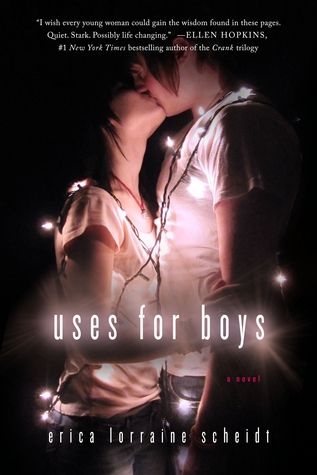
Review: Uses for Boys by Erica Lorraine Scheidt

Title: Uses for Boys
Author: Erica Lorraine Scheidt
Genre: Young Adult Contemporary
Release Date: January 15, 2013
Publisher: St. Martin's Press
Format: eARC
Pages: 240
Source: Publisher via NetGalley
Links: Goodreads | Amazon | Bookdepository
Read from January 14 to 15, 2013
My rating: 3 stars: I like it (2.5)
Summary: Anna remembers a time before boys, when she was little and everything made sense. When she and her mom were a family, just the two of them against the world. But now her mom is gone most of the time, chasing the next marriage, bringing home the next stepfather. Anna is left on her own—until she discovers that she can make boys her family. From Desmond to Joey, Todd to Sam, Anna learns that if you give boys what they want, you can get what you need. But the price is high—the other kids make fun of her; the girls call her a slut. Anna's new friend, Toy, seems to have found a way around the loneliness, but Toy has her own secrets that even Anna can't know. Then comes Sam. When Anna actually meets a boy who is more than just useful, whose family eats dinner together, laughs, and tells stories, the truth about love becomes clear. And she finally learns how it feels to have something to lose—and something to offer. Real, shocking, uplifting, and stunningly lyrical, Uses for Boys is a story of breaking down and growing up.


I have no father. I have no mother. Then you came along and everything changed. 

Uses for Boys majorly caught me off guard. I started this book thinking it would be just another YA Contemporary about troubled teenagers. In the beginning it does feel like one; but then the story takes a totally different turn from what I expected, and led me along a road I would've never taken if it I had known any better.

Anna grows up with no father. In her early childhood, her mother would tell her again and again that Anna is all she ever wanted, and Anna loved the idea. It was bliss, until her mother starts going out all the time to chase after new husbands, one after another, and then she has no time for Anna anymore. Growing up with no father and as good as no mother, Anna turns to the people who give her attention: boys. All of a sudden boys start talking to her, saying that she's pretty, flirting with her, and Anna goes along with it, giving them all they want, one boy after another, just so she can have their company.

I have mixed feelings about this book. On one hand, it's quite entertaining. If it were dull, I would've hated it, but it wasn't, so I went through it pretty fast. It has an easy narrative style, like a person talking, rather than a well thought-out piece of writing like other novels. The story is divided into a lot of parts, and each parts come up pretty randomly, so it isn't always predictable. And that's a good things. But on the other hand, the subject matter is quite discomforting. The book talks about sex pretty bluntly, and I feel weird reading this in the words of a thirteen or fifteen year old (I don't remember which one). For a young girl her age, Anna is very experienced with boys, having slept with 4 or more (I lost count), not to mention that she got pregnant, and had an abortion. I didn't enjoy watching someone let her life slip away like that for no good reason other than to feel loved.

Her mother is partly to blame, I get that. Negligent parents do a lot of damage to their children. And we can see how Anna's mother affects her pretty clearly. She would say that she cares, but then she never shows it. What kind of mother lets her child quit school and move out at 13 to live in a boyfriend's apartment? As hard is it is to imagine, I know there are parents like this out there.

In a way, I think I understand that this book just wants to "tell it like it is" with no fancy fabrications, no glorifying, no denouncing. That would explain why the narrative is this way, and why Anna doesn't acknowledge any of her actions to be anything (not the right thing, not the wrong thing, not a mistake, not anything) other than things she feels like she has to do. Trying so hard to impress, Anna willingly falls victim to her so-called friend and boyfriends, and this is very common among teenagers. Like Anna, they're not always likeable, and don't always know right from wrong. We can judge all we want, but it's also important to understand them, why they are the way they are and why they do the things they do. To me, Uses for Boys is a story that speaks of real teenagers with problems. Even though the book falls short of plot and denouement, it's quite an easy and enjoyable read, unless you're put off by dark, discomforting stories with (too) many sex scenes.

------------------------
This review is also posted on Goodreads.
I received a digital copy from NetGalley and the publisher for review.

Wednesday, January 16, 2013

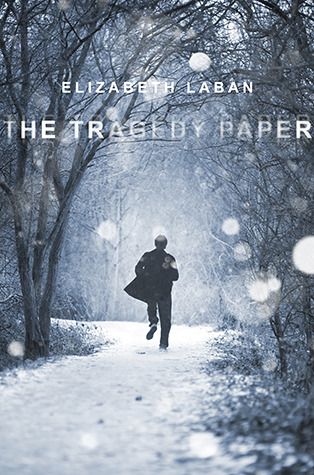
Review: The Tragedy Paper by Elizabeth LaBan

Title: The Tragedy Paper 
Author: Elizabeth LaBan 
Genre: Young Adult Contemporary
Release Date: January 8, 2013
Publisher: Knopf Books for Young Readers
Format: eARC
Pages: 320
Source: Publisher via NetGalley
Links: Goodreads | Amazon | Bookdepository
Read from January 4 to 6, 2013
My rating: 3 stars: I like it (2.5)
Summary: Tim Macbeth is a 17-year-old albino and a recent transfer to the prestigious Irving School, where the motto is, “Enter here to be and find a friend.” Tim does not expect to find a friend; all he really wants to do is escape his senior year unnoticed. Despite his efforts to blend into the background, he finds himself falling for the quintessential “it” girl, Vanessa Sheller, girlfriend of Irving’s most popular boy. To Tim’s surprise, Vanessa is into him, too, and she can kiss her social status goodbye if anyone finds out. Tim and Vanessa enter into a clandestine relationship, but looming over them is the Tragedy Paper, Irving’s version of a senior year thesis, assigned by the school’s least forgiving teacher. The story unfolds from two alternating viewpoints: Tim, the tragic, love-struck figure, and Duncan, a current senior, who uncovers the truth behind Tim and Vanessa’s story and will consequently produce the greatest Tragedy Paper in Irving’s history. 


Sometimes it's hard, impossible even, to know how much magnitude a choice holds until it is all over. 

Duncan Meade enters the Irving School a senior this year. As a school tradition, each senior gets their own dorm room without having to share it with anyone. On the first day of school, each senior will go to the senior hall and find their room; and in the room, there will be "treasures" left behind for them from the previous senior who lived there. Duncan has one fear: he is afraid to find out if the smallest room in the hall belongs to him. And of course, it does. The treasures the previous owner, Tim Macbeth, leaves behind for Duncan is a note and a stack of CDs. Those CDs play the recordings of Tim's story for Duncan as the "meat of your Tragedy Paper," which is the Irving School's senior English paper to be handed in at the end of the school year.

The Tragedy Paper started out, for me, as intriguing; I was curious to see how the connection between Tim Macbeth and Duncan Meade would play out. Would it be, you know, like Shakespeare's Macbeth, in which Macbeth kills Duncan? Or would Tim Macbeth share the same tragic flaw with Macbeth, and Duncan the receiving end of that flaw like King Duncan? Or what? Of course, I was expecting the use of these two names to have some significance. I have been taught in Literature class that a text alludes to something like this, it is saying something implicitly, and you should find what it infers. But it looks like this book falls flat in that department, because as far as I know, the only function of this allusion is only to tell the reader: Hey! This book is a tragedy because its two main characters are named after the two in Shakespeare's tragedy Macbeth! Hmm. Right now, in my head, I can even see my beloved Lit teacher hold up her index finger in a warning manner, and hear her say her favorite disapproval: "Nonono."

Again, I don't seem to share everyone (who's read it)'s enthusiasm about this book. Some say that it's "deep" and "profound," but I honestly don't see how that can be. It's not like I suck that much at reading between the lines and critical thinking; how about it's just meh? 90% of the book is about Tim told, narrated by Tim's recordings which Duncan listens to; while Duncan's part takes up only about 10%. And this makes me wonder why it has to be written this way. Not only does it bother me that the book doesn't just simply tell Tim's story--which already is the focus, if not the entire meat, of this story--it has to have Duncan as a medium (why bother?), but it also irritates me that, knowing very well Duncan's function is only to hang around and play the CDs so we can listen to them as well, the book tries so hard to have Tim affect his romantic life--in a way trying to make a connection between them when it's strained and uncalled for. If there'd been some believable and close connection between them for the recordings to have their natural effects, I would've believed it and appreciated it more.

In the end, I'll say that The Tragedy Paper is not a bad book, but there are a lot of things that I personally didn't like. The ending, for instance, felt too contrived in the way that it is steered into a tragedy pattern, which I understand since I get it, the point is that this book is a tragedy; but I still didn't like it that much. And the effects Tim's story has on Duncan are to me a little too unbelievable. I'd love for it to have more substance, and if the switching between two points of view is going to be this unbalanced and the connection this strained, how about no switching at all? I'd be happy to read Tim's story alone as the whole book without Duncan having a voice in part. That's just me. For the most part, I enjoyed Tim's story and wanted to see how it was tragic and how it would end, but once I did, I felt greatly underwhelmed. Still, as I said, it's not a bad book. It has good potentials but it's just not my cup of tea. 2.5 stars.

 ------------------------
This review is also posted on Goodreads.
I received a digital copy from NetGalley and the publisher for review.

Monday, December 10, 2012

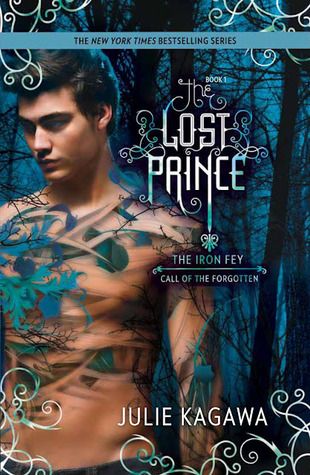
Review: The Lost Prince by Julie Kagawa

Title: The Lost Prince 
Author: Julie Kagawa
Series: The Iron Fey: Call of the Forgotten #1
Genre: Young Adult Fantasy
Release Date: October 23, 2012
Publisher: Harlequin Teen
Format: Paperback
Pages: 379
Source: Publisher via NetGalley
Links: Goodreads | Amazon | Bookdepository
Read from November 12 to 21, 2012
My rating: 3 stars: I like it
SummaryDon’t look at Them. Never let Them know you can see Them. That is Ethan Chase’s unbreakable rule. Until the fey he avoids at all costs—including his reputation—begin to disappear, and Ethan is attacked. Now he must change the rules to protect his family. To save a girl he never thought he’d dare to fall for. Ethan thought he had protected himself from his older sister’s world—the land of Faery. His previous time in the Iron Realm left him with nothing but fear and disgust for the world Meghan Chase has made her home, a land of myth and talking cats, of magic and seductive enemies. But when destiny comes for Ethan, there is no escape from a danger long, long forgotten. 


There is a whole unknown world that exists around us, side by side, and no one knows it is there. Except for a few. A very rare few, who can see what no one else can. And the spirits of this world can be helpful or harmful, friendly or wicked, but above all, those who see the invisible world are constantly trapped by it. They will always walk between two lives, and they will have to find a way to balance them both. 

When I finished this book almost three weeks ago, I decided I wasn't pumped about it enough to write a review. You see, since I had neither praises nor criticisms, there was nothing worth saying, right? But since the day I finished the book, I couldn't help but feel bad for leaving it without saying anything. I felt I owed the original Iron Fey series that much to at least say something instead of just letting it pass me by.

I had high hopes for it. I did. And I guess everyone did, too. The Iron Fey series has been unimaginably fun, and after four main books, I'd grown to adore the Nevernever and everything in it. I remember Ethan, that little boy who was so quiet, who could see fairies, who was mature even when he was 4 years old. Well, he's grown up now, and he's changed. Broody Ethan hates the fairies' guts, which isn't very surprising since he thinks they took his sister away from him and made her their Queen, making it unlikely that she would come home. Ethan lives his life in fear of Them. He keeps a low profile, making sure to never attract any unwanted attention. His plan was going quite well until Kenzie St. James wants to be this tough guy's friend, and until Ethan accidentally looks straight at a fairy, and now They know he can see Them. Ethan then gets involved, involuntarily, with a new kind of fairies—the "Forgotten." And that leads him to the Nevernever, the place he never wants to set foot in, ever. But there he is.

I liked that this book brings back the old characters; it's a delight to see them all again. Meghan, Ash, Puck, Grimalkin, Razor, and what a surprise, Keirran! And he has a love interest! Honestly, I didn't particularly love the story. I felt it was quite mediocre, like The Iron Knight, only a bit better. I din't instantly like Ethan with his brooding nature, nor Kenzie with all her contrived enthusiasm to have something to do with the fairies. I think their characters are a bit too much, too constrained. Possibly to achieve sharp and clear contrasts between them, you know, opposites attract and whatnots. I had a hard time believing anything in this book, including their relationship development. One minute Ethan doesn't one to have her around, then another he wants to kiss her. As I said, it felt unnatural.

Admittedly, I was greatly disappointed. I was expecting mind-blowing, earth-shattering, but I only got alright and mediocre. A letdown, if I may. I guess I had my hopes up too high. Still a fun book on the whole, though. Looking forward to the next book!

------------------------
This review is also posted on Goodreads.
I received a digital copy from NetGalley and the publisher for review.

Tuesday, November 13, 2012

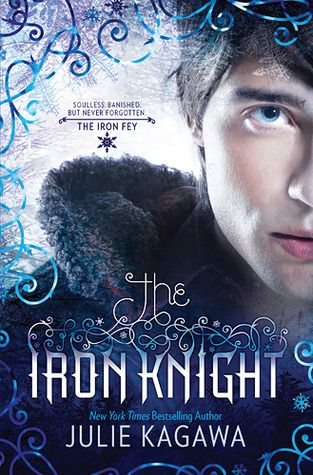
Review: The Iron Knight by Julie Kagawa

Title: The Iron Knight
Author: Julie Kagawa
Series: The Iron Fey #4
Genre: Young Adult Fantasy
Release Date: October 26, 2011
Publisher: Harlequin Teen
Format: Paperback
Pages: 394
Links: Goodreads | Amazon | Bookdepository
Read from November 5 to 11, 2012
My rating: 3 stars: I like it
Summary: Ash, former prince of the Winter Court, gave up everything. His title, his home, even his vow of loyalty. All for a girl… and all for nothing. Unless he can earn a soul.
To cold, emotionless faery prince Ash, love was a weakness for mortals and fools. His own love had died a horrible death, killing any gentler feelings the Winter prince might have had. Or so he thought. Then Meghan Chase—a half human, half fey slip of a girl— smashed through his barricades, binding him to her irrevocably with his oath to be her knight. And when all of Faery nearly fell to the Iron fey, she severed their bond to save his life. Meghan is now the Iron Queen, ruler of a realm where no Winter or Summer fey can survive. With the (unwelcome) company of his archrival, Summer Court prankster Puck, and the infuriating cait sith Grimalkin, Ash begins a journey he is bound to see through to its end— a quest to find a way to honor his solemn vow to stand by Meghan’s side. To survive in the Iron realm, Ash must have a soul and a mortal body. But the tests he must face to earn these things are impossible. At least, no one has ever passed to tell the tale. And then Ash learns something that changes everything. A truth that turns reality upside down, challenges his darkest beliefs and shows him that, sometimes, it takes more than courage to make the ultimate sacrifice.


I will be with her again, or I will die. There aren't any other options. 

I finished the previous book, The Iron Queen, with so great a satisfaction that I expected nothing less from this follow-up, but after pages and pages of adventure and mysteries and secrets, I ended up disappointed. This is not to say that The Iron Knight is a bad book, only it just didn't live up to its three predecessors, and is in my opinion the most mediocre one out of the four.

In this book, Ash sets out on a dangerous journey to the End of the World in order to earn a human soul, as it is the only way he can be with Meghan in the Iron realm without eventually dying from Iron. Ash isn't alone in this quest; there are the usuals—Puck and Grimalkin—and other two surprising characters accompanying him and seeing him through to the end. They follow a very dangerous path into the strangest and darkest parts of the Nevernever where it is said those who have gone in there have never come back.

As much as I love Ash, I didn't find the narration via his POV to be very satisfying. There were more than a dozen times when I felt like this book was written in the third person POV rather than Ash's, because if he's voicing the story, I didn't hear it. Only in some chapters did I really get into his head. Any other times it just felt like I'm reading dialogues. And I would doze off and then not pick up the book until another day came. In all honesty, I would say that I enjoyed Meghan's storytelling far more than Ash's.

When I neared the end of the book, I was praying so hard that Ash would change his mind. I was never one to compromise my identity, who I am, for someone else, so that's why I didn't completely agree with the journey he takes on. I didn't find his quest romantic, instead I found it stupid. Stupid, stupid, stupid Ash. But what can I say? Love makes you blind, right? His undying love for Meghan didn't touch me quite as deeply as the sacrifices made for him, and the friendship offered to him by other characters. When Ash lives the future in his head, I felt his sadness and I hoped he would turn his back. A Winter Prince—invincible, immortal—wants to become a weak mortal for his love? I just couldn't grasp it. Why not wish for an immunity against iron instead? That would make much more sense.

The part that I hate the most is when it's one of those weird moments again when I don't like a book as much as everybody else. Every one of my GR friends who have read this all gave it 5 stars. Let me repeat, all of them gave The Iron Knight five stars. And when I finished the book, I was sitting there and all, "Really? Is that it?" and feeling very very very underwhelmed. My feeling and enjoyment while reading this have been sadly rather static in a pretty mediocre level. It felt almost as tedious as household chores. And I hate that because I feel like I missed out on something that nobody missed that could have added two more stars to this rating, or could have made me love this book with all I had. Which obviously didn't happen. 

On the whole, I'm happy with the way things turn out. Meghan and Ash get what they deserve in the end. In the past month I've been reading the whole Iron Fey series, and it has given me so much joy. Naturally, I felt sad that I had to let these characters go. I've grown to love them a lot. And I will terribly miss them.

------------------------
This review is also posted on Goodreads.
Thursday, November 1, 2012

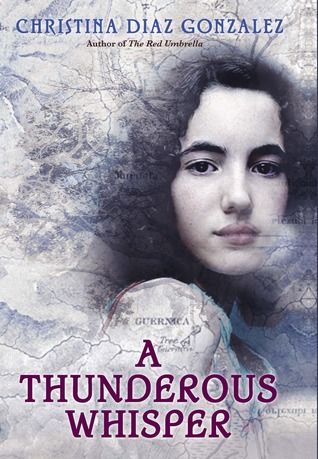
Review: A Thunderous Whisper by Christina Diaz Gonzalez

Title: A Thunderous Whisper
Author: Christina Diaz Gonzalez
Genre: Historical Fiction
Release Date: October 9, 2012
Publisher: Knopf
Format: eARC
Pages: 304
Source: Publisher via NetGalley
Links: Goodreads | Amazon | Bookdepository
Read from October 7 to 9, 2012
My rating: 3 stars: I like it (2.5)
Summary: Ani believes she is just an insignificant whisper of a 12-year-old girl in a loud world. This is what her mother tells her anyway. Her father made her feel important, but he's been off fighting in Spain's Civil War, and his voice in her head is fading. Then she meets Mathias. His family has just moved to Guernica and he's as far from a whisper as a 14-year-old boy can be. Ani thinks Mathias is more like lightning. A boy of action. Mathias's father is part of a spy network and soon Ani finds herself helping him deliver messages to other members of the underground. She's actually making a difference in the world. And then her world explodes. The sleepy little market town of Guernica is destroyed by Nazi bombers. In one afternoon Ani loses her city, her home, her mother. But in helping the other survivors, Ani gains a sense of her own strength. And she and Mathias make plans to fight back in their own unique way.

No matter how loud the world gets, sometimes a single voice can be heard. 

I was first interested in this book because it's about World War II, and because someone said it is like The Book Thief, which is my number 3 most favorite book of all time. And when someone makes a comparison like this, I couldn't help but feel the need to check this book out, as it could be the next best thing that would happen to me for all I knew.

But it wasn't. It's not bad, but it's nowhere near as life-changing or sublime as Markus Zusak's masterpiece. It does have some lovely quotes that I highlighted, but other than that I didn't like anything particular about it. I wasn't into the story—I found the idea that small children can make a difference a bit too optimistic and far-far-fetched.  I was turned off by this notion, to be honest. Maybe this is because I didn't feel like the story portrays it convincingly enough, or well enough, or just enough. And in the end, I didn't believe they make any significant differences at all, and I mean at all, so that renders the title, A Thunderous Whisper, and what it stands for kind of invalid to me. And unlike The Book Thief's, the characters in this book aren't outstanding enough to secure a place in my heart. Most of the time I was just irritated by Ani and her mother.

This was an okay read to me. It's not that boring, not that bad, but also not that good. I expected it to be more interesting, but it sadly didn't measure up.

 ------------------------
This review is also posted on Goodreads.
I received a digital copy from NetGalley and the publisher for review.

Sunday, October 7, 2012

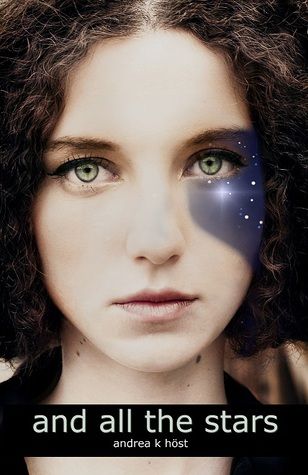
Review: And All The Stars by Andrea K. Höst

Title: And All The Stars
Author: Andrea K. Höst
Genre: Young Adult Science Fiction
Release Date: October 1, 2012
Publisher: Andrea K. Höst
Pages: 279
Format: eBook
Source: Publisher via NetGalley
Links: Goodreads | Amazon
Read from October 1 to 2, 2012
My rating: 3 stars: I like it
Summary: Come for the apocalypse. Stay for cupcakes. Die for love. Madeleine Cost is working to become the youngest person ever to win the Archibald Prize for portraiture. Her elusive cousin Tyler is the perfect subject: androgynous, beautiful, and famous. All she needs to do is pin him down for the sittings. None of her plans factored in the Spires: featureless, impossible, spearing into the hearts of cities across the world – and spraying clouds of sparkling dust into the wind. Is it an alien invasion? Germ warfare? They are questions everyone on Earth would like answered, but Madeleine has a more immediate problem. At Ground Zero of the Sydney Spire, beneath the collapsed ruin of St James Station, she must make it to the surface before she can hope to find out if the world is ending.


Everyone here wants to do something in the abstract, but to get anywhere, to find a way to fight them, we're going to have to gamble everything.

A pretty refreshing read! And All the Stars, thankfully, isn't one of those YA dystopian books that are pervading the market. It's not post-apocalyptic; it's takes place during an apocalypse! Yay!

Interesting as it is, I'm not sure if I understood everything this book threw at me, because honestly, I skipped a dozen of pages. I must say that the writing is very good. I thoroughly enjoyed the way the words made up the story. The story itself started out nicely, and I was like wow wow wow wow. But after a while the excitement died down and I was bored. Again. I should mention that I'm bored by a lot of books recently. I don't know anymore if my boredom results directly from the books being boring or from my newly-developed inability to enjoy anything. If I'm being completely honest with myself, I'd say the latter. But seriously, it's got to be because of the books too, right? Maybe it's just that I have been reading boring books, so I don't enjoy it, so I'm bored.

Anyway. Good writing, nice ideas. Is it alien invasion? Not sure, but it's the most likely. I like the skin color change idea. Midnight blue with stars? I'd love that. However, the book felt too long to me. Like way too long for its own good. There are parts where nothing really happens at all and everyone's just sitting there and watching their skins go blue or green, or walking out of the hiding place and walking back and whatever. It felt boring at times because of the tedious long-winded narration of nothings after nothings. And when something really does happen, it's awesome. Like fighting aliens and science talk and something like that. The drawback is that there are too few of these. I wish the book were more action-packed.

The romance in the book is quite unexpected, but it's pretty nice. I loved that Fisher isn't the real Fisher since we get to know him. And I understood what Madeleine feels like when she knows it's not him, when she becomes unsure who she's really in love with. I like the way the characters are all mature, even the younger ones are mature. Each of the characters is outstanding in their own ways and I like that. There's a character named Noi. I almost flipped when I saw the name 'cause I just knew that she must be Thai. I mean, no one writes about Thai people, only Thai food. So it's a little surprising to find her among the heroe, the Blue Musketeers. And I loved the alien-turned-hero Theoden, or whatever he is.
Fight. Always fight. No matter how impossible the odds, no matter who you've lost, how you've been hurt. If there doesn't seem to be a way out, look for one. If you seem to have come to an end, start afresh. Never, ever give up. 
In the end, I have to admit and remind you that I didn't understand everything. There might be some things I missed that could have changed the way I felt about this book. But the point is that this is the way I feel now. And while I don't love it like the others seem to (out of 17 ratings so far: 13 five-stars and 4 four-stars), I did enjoy it to certain levels and found this to be a very refreshing read. A good choice if you want to escape mainstream fictions!


------------------------

This review is also posted on Goodreads.
I received a digital copy of this book from NetGalley and the author for review. 

Saturday, October 6, 2012

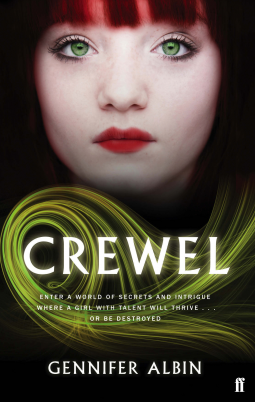
Review: Crewel by Gennifer Albin

Title: Crewel 
Author: Gennifer Albin 
Genre: Young Adult Science Fiction
Release Date: October 4, 2012
Publisher: Faber & Faber
Pages: 372
Format: eBook
Source: Publisher via NetGalley
Links: Goodreads | Amazon | Bookdepository
Read from October 2 to 5, 2012
My rating:  3 stars: I like it
SummaryIncapable. Awkward. Artless. That’s what the other girls whisper behind her back. But sixteen year-old Adelice Lewys has a secret: she wants to fail. Gifted with the ability to weave time with matter, she’s exactly what the Guild is looking for, and in the world of Arras, being chosen as a Spinster is everything a girl could want. It means privilege, eternal beauty, and being something other than a secretary. It also means the power to embroider the very fabric of life. But if controlling what people eat, where they live and how many children they have is the price of having it all, Adelice isn’t interested. Not that her feelings matter, because she slipped and wove a moment at testing, and they’re coming for her—tonight. Now she has one hour to eat her mom’s overcooked pot roast. One hour to listen to her sister’s academy gossip and laugh at her Dad’s stupid jokes. One hour to pretend everything’s okay. And one hour to escape. Because once you become a Spinster, there’s no turning back.


No one knows why some girls have the gift. There are theories, of course. That it's passed down genetically. Or that girls with an open mind can see the weave of life around them at all times. Even that it's a gift only given to the pure-hearted. But I know better. It's a curse. 


When I finished Crewel last night, I was caught in such a whirlwind of excitement that I spent the next two hours thinking about it. It was a fun read!

Crewel is about 16-year-old Adelic Lewys--extraodinary teenager trying to do everything she can to appear  the opposite. The story is set in the world of Arras, which is a new world on top of Earth after its end. In Arras, girls who have the ability to weave invisible threads of time and matter are retrieved as Spinsters. Adelice is qualified as one. When she's taken in, Adelice learns more about what the threads can do (create lakes and mountains and people, for example), and what Spinsters can do to them (rip the threads to kill people and destroy buildings, etc.). What Adelice doesn't discover until later is that her exceptional ability to see the invisible threads with her bare eyes also sets her apart as a Creweler. 

I don't think there's much to say about Crewel considering that I had a lot of problems with the world-building of Arras. I mean, I liked the idea of another world built on top of war-torn Earth, but honestly, I don't think it was built strongly enough. I could see holes in it everywhere and my questions multiplied as I went on reading. And I couldn't wrap my brain around the government and social ranks in Arras to understand it. Most of the time, really, I just didn't know who's bigger than who and who does what. This is to say that the world-building is not flawless, and I'm not sure if it was believable enough for me either. 

As for the story, I have mixed feelings. While it was exciting in some places, it bored me in others. I liked the mystery the author creates when "Creweler" is first mentioned. The pacing was okay. But the glamorous parts about glamorous clothes and glamorous cosmetics of the glamorous Spinsters couldn't bore me more. The romance was good . The girl-hate annoyed me sometimes. It was just silly. The characters are okay. I didn't like any of them especially. I felt like the book started out good, and then everything went statically okay, okay, okay, okay, okay, and then things picked up really fast and suddenly in the last pages. That's why I said I was still excited when I finished it. That's the only parts in the whole book that could excite me. 

All in all, Crewel is a fun read. Despite the problems I had with it, I found the writing very good. The ending left me wanting to know more. Perhaps I will like the story more if the next book answers my questions. Looking forward to it!


------------------------

This review is also posted on Goodreads.
I received a digital copy of this book from NetGalley and the publisher for review. 

Saturday, August 18, 2012

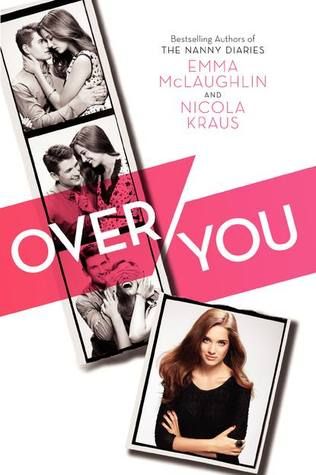
Review: Over You by Emma McLaughlin and Nicola Kraus

Title: Over You 
Author: Emma McLaughlin and Nicola Kraus
Genre: Young Adult, Chick Lit
Release Date: August 21, 2012
Publisher: Harper Teen
Pages: 304
Format: eBook 
Source: Publisher via Edelweiss
Links: Goodreads | Amazon | Bookdepository
Read from August 13 - 25, 2012 
My Rating: 3 stars: I like it
Summary: After the grand explosion of her relationship, seventeen-year-old Max Scott developed what every girl in the history of the world has been waiting for: a way to get over being dumped. Now Max is the go-to guru for heartbroken high-school girls all over NYC. But when her ex unexpectedly shows up in her neighborhood, Max’s carefully controlled world starts to unravel. With her clients’ hearts hanging in the balance, Max will have to do the seemingly impossible: get over him once and for all. 

How is it that civilization evolved the ability to shuttle someone to the moon, but other than capturing its excruciating details in every medium, it hadn't come up with anything to guide women through heartbreak? 

This is a story about a 17-year-old girl, Max Scott, who runs a company of her own called Ex, Inc. With the help of Max's two friends, the company helps girls all over New York get over their exes. So far Max is the guru of heartbreak, until she sees Hugo Tillman, the guy who dumped her years ago, in the neighborhood. And then this proves to her that she isn't really as over him as she thinks she is.

I liked the idea of this book. I thought it was very promising and that it would be a fun read. And in a way, it is. I expected it to be a YA novel, but it turns out to be chick lit with YA characters. Now, my experience with chick lit novels in the past has told me that I don't tend to like them that much --there are only a few chick lit books that I have given the maximum of 4 stars to. And while I liked Over You enough, there are some things in the book that kept me from fully enjoying it.

In the very beginning, I had a problem getting into it. To begin with, I'm not really a big fan of third-person omniscient narration in chick lit, and this is exactly how the book is narrated. What's more, the run-on sentences (some are 7 lines long!) with lots of punctuation marks make me constantly lose track of what's being said. This wasn't fun. The progress was slow and I was annoyed more than anything. But after a quarter of the book, it became less difficult for me. I'm not sure if this was because I'd already got used to it or the writing really was better. Still, I wasn't impressed with the writing, to say the least.

There are many ways the book could have been better. Especially in the character department. While they're fun to read about, they don't have much depth. I didn't feel connected to any of the characters. Max is a good character, but I'm not sure if I liked her. She's portrayed as strong, confident, and someone who knows exactly what she's doing and doesn't let anyone mess with her. But years ago, she's been broken too. Max's breakup with Hugo, as revealed later in the book, is very miserable and involves goose shit. I liked how she thinks she's fine until Hugo comes back into her life again and she loses her cool. That's as realistic as  a relationship can get. But I don't like the way the book makes Hugo a jerk. I mean, Max is seriously not over him and she loves him so much still, and when they have another shot, the writers decide to make him the biggest asshole ever so that she realizes he's not for her and so she can easily make a decision to go back to her present love interest and easily get over Hugo. What I'm trying to say is, after all the crying and pining, if he's really that much of a jerk, how come she doesn't realize it until now? But that's not the point. The point is that I find it a very bad plot device -- one that weakens the conflict in the story and makes everything too easy. Hugo is an important character because he makes all that Max think she is come crashing down. Hugo could've had much more depth to his character and be used to make Max doubt herself even more before she finally gets over him, which would make the story much more powerful.

Bottom line: Over You has a very promising idea and is a light and fun read, but it could have been much better.


------------------------

This review is also posted on Goodreads.
I received a digital copy from Edelweiss and the publisher for review.

Monday, August 13, 2012

Review: The Wednesdays by Julie Bourbeau

Title: The Wednesdays
Author: Julie Bourbeau
Genre: Middle Grade, Paranormal
Release Date: August 14, 2012
Publisher: Alfred A. Knopf Books for Young Readers
Pages: 256
Format: eBook
Source: Publisher via NetGalley
Links: Goodreads, Amazon | Bookdepository
Read from August 2 - 3, 2012 
My Rating: 3 stars: I like it
Summary: Max’s village is absolutely normal in every single way and on every single day—except Wednesday. Most of the townsfolk shutter their windows and lock their doors to hide away from the many peculiar things that happen—things like cats getting stuck in the vacuum cleaner and birthday cakes meeting fiery and horrific ends. But Max is too curious for that, and so, breaking every rule in the village, he searches out the cause of all the Wednesday weirdness. What he uncovers is a secret so devious—so dastardly and mischievous—that life as he knows it will never be the same. Max himself is not the same. Suddenly the mysterious little accidents so common on Wednesdays are happening to him on Thursdays, Fridays—even Saturdays! What’s come over Max? And more importantly, is there any cure for a case of the Wednesdays? Mystery, magic, mischief and monsters abound in this slightly fantastical story of a human kid who wants to stay that way. 


A wednesday's job is never done as long as Wednesdays are. We heed the clock when it tolls twelve and come from near and far. We're never late -- we cannot be for then we'd miss the door. Neither do we dare to leave till Wednesday is no more.

So start one of the wednesdays' song.

This review will be short and simple because it's been 10 days since I finished this book and I already forgot some of plots of the story. I'll just say that I enjoyed this book. Normally I don't really enjoy middle-grade books because I find them too light for my liking. However, The Wednesdays has enough dark stuff in it. It's kind of paranormal, though I'm not sure if we can really call it that.

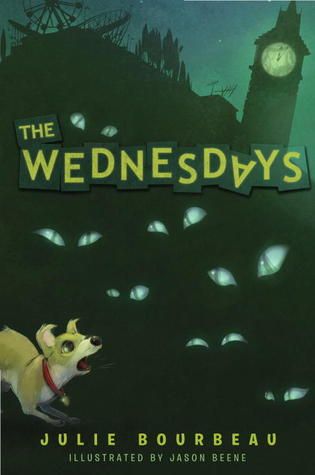
As the title suggests, this book goes around the wednesdays. We're talking about both Wednesdays as in the day after Tuesday, and wednesdays as in little paranormal creatures that come out on Wednesday to wreak havoc in Max's village. According to Max, they look like this:
Besides the silver eyes, the wednesday appeared more or less boy-like, in a crooked, simultaneously squished-down, stretched-out sort of way. It looked like a proper boy whose arms had been pulled like taffy, while the rest of his body had been scrunched down into a tubby egg shape with springy, squat legs. [...] The creature's head was mostly head-shaped and -sized, except for the fact that it seemed vaguely square and didn't seem to have the benefit of much of a neck to sit upon. Overall, the thing gave the impression of being rather putty-like.
That's the wednesdays for you.

I really like the idea of them coming out to cause trouble for everyone. It's fun to read, honestly. The elements and plot come together nicely to form an impressive ending. I wouldn't have thought the Wednesday songs could be that important, but Max figures it out, which is awesome. It's a little sad near the end, and I found it very moving.

All in all, great plots, nice illustrations (which really helped me picture the wednesdays more clearly), beautiful writing. A very enjoyable read.

Wednesdays come and wednesdays go but we know something you don't know. 


------------------------

This review is also posted on Goodreads.
I received a digital copy from NetGalley and the publisher for review.

Friday, August 10, 2012

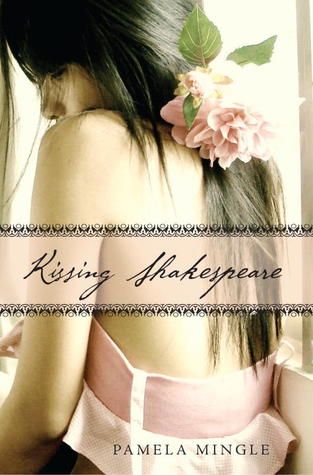
Review: Kissing Shakespeare by Pamela Mingle

Title: Kissing Shakespeare 
Author: Pamela Mingle 
Genre: Young Adult, Historical Fiction
Release Date: August 14, 2012
Publisher: Delacorte Books for Young Readers
Pages: 352
Format: eBook
Source: Publisher via NetGalley
Links: Goodreads | Amazon | Bookdepository
Read from August 4 - 9, 2012
My Rating: 3 stars: I like it
Summary: Miranda has Shakespeare in her blood: she hopes one day to become a Shakespearean actor like her famous parents. At least, she does until her disastrous performance in her school's staging of The Taming of the Shrew. Humiliated, Miranda skips the opening-night party. All she wants to do is hide. Fellow cast member, Stephen Langford, has other plans for Miranda. When he steps out of the backstage shadows and asks if she'd like to meet Shakespeare, Miranda thinks he's a total nutcase. But before she can object, Stephen whisks her back to 16th century England—the world Stephen's really from. He wants Miranda to use her acting talents and modern-day charms on the young Will Shakespeare. Without her help, Stephen claims, the world will lost its greatest playwright. Miranda isn't convinced she's the girl for the job. Why would Shakespeare care about her? And just who is this infuriating time traveler, Stephen Langford? Reluctantly, she agrees to help, knowing that it's her only chance of getting back to the present and her "real" life. What Miranda doesn't bargain for is finding true love . . . with no acting required.


"How would you like to meet William Shakespeare?" A laugh burst from my mouth. "You're crazy." 

When time-traveler Stephen Langford chooses Miranda as the one to take back to the 16th century to save young William Shakespeare from becoming a Jesuit, she doesn't have a choice but to go along with him. Once there, Miranda has to learn to adapt to the way of life of the people in that century, and she also has to pretend to be Stephen's sister, Olivia, while the real one is sick at home. Her mission here is to seduce her idol William Shakespeare, to make him realize that he's a guy suited for worldly things, and that the religious path is not for him. If she succeeds, she can save Shakespeare from being hunted down for being a Jesuit, and she can also save all of Shakespeare's works in the future from vanishing, and save the future forever.

I'll try to keep this review short and simple for there isn't much to say. I didn't expect anything when I started this book, so I wasn't disappointed. It's pure fun and a good break from all the crazy stuff going in my life right now. It's one of those enjoyable books you don't expect to get anything out of, which you don't anyway even if you try.

Some of the plots aren't very well-executed. I'd love to know more about Stephen's time traveling, which the author gives me no chance to. There's a scene where Miranda dresses herself as a boy and everyone believes her. Eh? And then there's this huge plothole that bothered me. The author has Stephen tell Miranda that the time she belongs in won't move on without her -- when she returns, it will be as if no time has passed. As a believer of logic, I wasn't satisfied with this explanation. But I knew this was all I was going to get.

The characters are flat and mediocre. I regret to say that Shakespeare doesn't play the main role in this story. I kept picturing him like this and cringed every time because it wasn't fitting. This book talks about the younger Shakespeare, of course. And when I pictured him with Miranda, he looked like a pedobear to me. This problem is caused by the fact that the author doesn't bother telling us about any character's appearances. I don't know if this was intentionally done or she just forgot. The 16th century is hard enough to picture, and I'd love to know what the characters look like.

I like the ending. Love doesn't always have to work out, you see. I think this ending leaves a lingering haunting feeling, which is much better than if it'd gone for the happily-ever-after. I'm tired of authors trying to make impossible love work. I find the ending especially refreshing.
"As much as it hurts to admit it, I knew he was right. I would love him with all my heart, but in the end, it wouldn't be enough. I'd long for everything I couldn't  have, and that would kill the love between us. Not right away, but someday." 
This is the best part of the book in my opinion.

Looked at in parts, the elements of this book don't seem to work, but together they do. I don't know why and I don't know how to explain. It just works, unless you expect it to be spectacular. If you don't think much about it, you might find it enjoyable and light and fun. But that's really just about it.


------------------------

This review is also posted on Goodreads.
I received a digital copy from NetGalley and the publisher for review.

Saturday, August 4, 2012

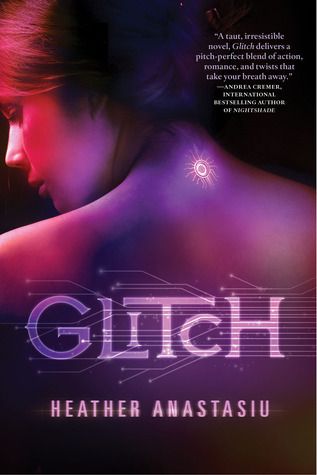
Review: Glitch by Heather Anastasiu

Title: Glitch 
Author: Heather Anastasiu 

Series: #1 in Glitch trilogy
Genre: Young Adult Dystopia

Release Date: August 7, 2012
Publisher: St. Martin's Griffin
Pages: 371 in paperback
Format: eBook
Source: Publisher via NetGalley
Links: Goodreads | Amazon | Bookdepository
Read from July 29 to August 2, 2012
My rating: 3 stars: I like it
Summary: Zoe lives in a world free of pain and war. Like all members of the Community, a small implanted chip protects her from the destructive emotions that destroyed the Old World. Until her hardware starts to glitch. Zoe begins to develop her own thoughts and feelings, but nothing could be more dangerous in a place where malfunctions can get you killed. And she has another secret she must conceal at all costs: her glitches have given her uncontrollable telekinetic powers. As she struggles to keep her burgeoning powers hidden, she finds other glitchers with abilities like hers, and together they plot to escape. But the more she learns about beauty, joy, and love, the more Zoe has to lose if they fail. With danger lurking around every corner, she’ll have to decide just how much she’s willing to risk to be free.


"Love shouldn't exist but it does. It's the biggest anomaly, some might say the biggest defect, of the whole human race. But it's the most beautiful anomaly. I understand that now. And I would give up anything for you, even if you don't feel the same way. Because I love you."

In Glitch, everyone lives underground in the Community because they're told that the surface is dangerous and deadly. Everyone has a v-chip at the back of their neck that connects them to the Link. When they're connected, they zone out and become a drone; they don't think, don't notice beauty in things and they don't feel any emotions. This is so that order can be maintained in the community where everyone serves a purpose. Order first, order always. But what happens if something is out of order? Someone like Zoe? Zoe starts glitching. She is somehow disconnected from the Link and she can think for herself and feel emotions unfamiliar to her. These behaviors are anomalous and need to be reported, so that they can fix her. But Zoe is reluctant. She wants to be fixed so that she doesn't have to live in fear of possible deactivation if they find out, but she also wants to embrace all these human things. She still wants to feel, to think, and to draw. Watching people go on being drones, she realizes that this is nothing but slavery, and together with a few others who malfunction like her, she will struggle to free herself from the Community and claim the freedom that's been taken away from everyone.


This book didn't start out as an easy read for me. It starts with Zoe telling us about a day in her life which includes drawing, breakfast, going to the market and telekinesis. I feel that the author didn't do well enough with the world-building for a dystopian book, so it was really confusing for me for a long while. I didn't get why everyone has to live underground, and how exactly the uppers rose to power, and how the society is run. I didn't get how it is that people live underground and take subways from housing units to school or whatever. I mean, I used to wonder a lot what it'd be like if we all could live underground. I was in Singapore earlier this year and had fun exploring its little underground city. It's so huge and it's so endless. But even as huge and endless as it is, I doubt it could house a nation of its own like in Glitch. So I had a tough time trying to believe this. Plus, the description didn't help. I found it lacking and confusing a lot of times, especially when it comes to describing Zoe's room. From the narration, I came up with at least different five versions of her room, each for a different scene. One time, the bed looks like this and stands there; another time, it looks different. I don't know if it's just me or it's really the way it's written that's so confusing, but reading this really did annoy me.

And sadly, the confusion wasn't the only thing that prevented me from fully enjoying the book. I found it off-putting that Zoe doesn't know words that have to do with feelings and emotions. I would've been okay if she doesn't know any of those words at all, but she does know some of them, which is hard to believe, because why would she know these and not those? She doesn't know, for example, "sorry," but she knows what "embarrassed" means. Huh? In the society where nobody feels anything, isn't it supposed to be just as likely that she doesn't know both words? And how come does Adrien, the main boy, know them anyway? I don't buy it. While Zoe seems to not know a lot of words, Adrien seems to have a few favorite swear words. And of course, he has to say at least one of those words in every sentence he utters. 17 "shunting"s and its variations, 13 "crackin'"s (mostly crackin' hell), and 13 "godlam'd"s. Whatever they mean. But seriously? Aren't they a bit too overused? Are they supposed to be his signature words or what? It's irritating to have to see them appear over and over again.

In a way, this book reminds me very much of George Orwell's 1984. There are the upper-class men who live luxuriously and tell lies, and there are the lower-class people who believe those lies completely, who serve a purpose in the society, who just don't know any better about anything, who think whatever they have is all there is to life. And then there are rebels who think they can make a change. I regret to say that I find all the characters incredibly flat and I don't even like any of them, but I don't hate them either. Zoe is boring for most of the book, constantly getting into troubles and having to be rescued by Adrien, her prince on a white horse, who seems to be shunting sweet and all but swears too godlam'd much. Did I mention there's a love triangle? Oh yes, there is. Zoe, Adrien, and Max. Now, Max is a friggin' psycho. He's had a crush on Zoe ever since he started glitching, and when he finds out that Zoe is also a glitcher, he's very happy because now he can tell her she's all he's ever thought about (creepy much?), force her to make out with him and ask to see her "genitalia" (he really asks her that) so they can explore "pleasure." Awkward? I thought so too.

Anyway. Despite everything I've said, the book starts becoming a lot more fun later in the second half. And that is why this is another one of the love/hate cases. I can't say anything much about the fun without including spoilers, so I won't. But let me tell you this: this book is a huge troll! One minute it's clear this is the bad guy, that is the good guy; another minute it's reversed, and the next minute there's someone else claiming to be the good guy, and everyone else is the bad guys. WHAT? It's this uncertainty that makes reading it fun. It's extremely action-packed near the end of the book, which is something totally worth reading. I had to hold my breath and I couldn't take my eyes off of the pages. It messed with my head so much, but I had to know! So that night I ended up going to bed at 2 AM or something. It was exhilarating.

In the end, I can say that I definitely don't love this book, but I like it enough. It's true that I struggled with the world-building and mostly everything about the book, but I found the action parts to be such awesome fun. And while everything else just falls short, I can still manage to give this book three stars. It's enjoyable, and surely not something special. Like many other love/hate cases, I can't really say if I would recommend this book for anyone. It was an okay to good read for me.


------------------------

This review is also posted on Goodreads.
I received a digital copy from NetGalley and the publisher for review.

Tuesday, July 10, 2012

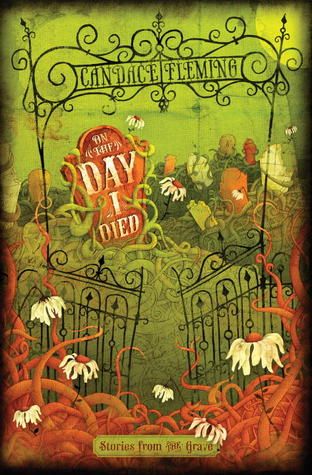
Review: On the Day I Died by Candace Fleming

Title: On the Day I Died: Stories from the Grave 
Author: Candace Fleming 
Genre: Middle Grade, Supernatural
Release Date: July 10, 2012
Publisher: Random House Children's Books
Pages: 208
Format: eBook
Source: Publisher via NetGalley
Links: Goodreads | Amazon | Bookdepository
Read from: July 6 - 8, 2012 
My rating: 3 stars: I like it
Summary: The phenomenally versatile, award-winning author, Candace Fleming, gives teen and older tween readers ten ghost stories sure to send chills up their spines. Set in White Cemetery, an actual graveyard outside Chicago, each story takes place during a different time period from the 1860's to the present, and ends with the narrator's death. Some teens die heroically, others ironically, but all due to supernatural causes. Readers will meet walking corpses and witness demonic posession, all against the backdrop of Chicago's rich history—the Great Depression, the World's Fair, Al Capone and his fellow gangsters. 


This one definitely took me by surprise. I didn't expect much, and I came away more than satisfied. Candace Fleming's On the Day I Died is fun, spooky, and.. well, fun. Absolutely fun.

It's not exactly a short story collection although it is full of short stories. Let's put it this way: this book is a collection of short stories about how each one of the characters died. Mike, the only living character in the book, visits a cemetery one night to return a pair of shoes to a dead girl he ran into earlier that night. He's surprised when he sees that the ghosts that come out to welcome him were all teenagers. One of the ghosts starts telling a story of how he died, and when he finishes, another one tells his story, then another, and another, and another. This book therefore consists of 8 short stories that link back and forth between Mike's present and the time of their death, with Mike being the only audience.

The little tales are surprisingly spooky but in no way too dark. I felt uncomfortable and panicky when I read this at night. One little sound in the silent night could lead me into thinking if my house caught fire, or remind me of the haunted asylum I just read about. I shuddered at the images that were created in my head. I heard sounds that only I could hear. The voices of these ghosts haunted me in my sleep. This book is haunting and so much fun, even though I think it's quite pointless. The story really goes nowhere, and nothing is done. But the fact that it's a light and fun read makes it very enjoyable.


------------------------

This review is also posted on Goodreads.
I received a digital copy from NetGalley and the publisher for review.

Sunday, July 8, 2012

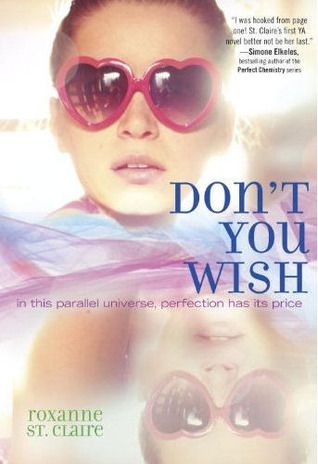
Review: Don't You Wish by Roxanne St. Claire

Title: Don't You Wish
Author: Roxanne St. Claire
Genre: Young Adult Science Fiction
Release Date: July 10, 2012 by Delacorte
Pages: 368
Format: eBook
Source: Publisher via NetGalley
Links: Goodreads | Amazon | Bookdepository
Read from June 30 - July 6, 2012 
My rating: 3 stars: I like it
Summary: When plain and unpopular Annie Nutter gets zapped by one of her dad's whacked-out inventions, she lands in a parallel universe where her life becomes picture-perfect. Now she's Ayla Monroe, daughter of the same mother but a different father—and she's the gorgeous, rich queen bee of her high school. In this universe, Ayla lives in glitzy Miami instead of dreary Pittsburgh and has beaucoup bucks, courtesy of her billionaire—if usually absent—father. Her friends hit the clubs, party backstage at concerts, and take risks that are exhilirating . . . and illegal. Here she's got a date to lose her V-card with the hottest guy she's ever seen. But on the inside, Ayla is still Annie. So when she's offered the chance to leave the dream life and head home to Pittsburgh, will she take it? The choice isn't as simple as you think.


I slide on the sunglasses, covering my dazzling green eyes. Because this dream is so bright, I gotta wear shades. 

Don't You Wish by Roxanne St. Claire tells a story of Annie Nutter, daughter of Mel and Emily Nutter, who wishes she lived a different life. When Mel comes up with a cool invention called Picture Perfect, Annie literally wakes up in the morning to a different life--the one she wishes for--in a parallel universe. Annie is now living Ayla Monroe's life which is different from her own in most ways except that she still has the same mother, but now Emily Monroe instead of Nutter. Finally living the perfect life she always wishes for, Annie finds herself missing her Nutter family more than ever. 

I liked this book. It's fun. I didn't expect much in the first place so I wasn't disappointed. I really like the idea of time travel and parallel universe in this book. I used to be interested in quantum physics, too. The way they all fit together and create a plot for this story is well thought out. Although there are still some things that don't quite make sense, it doesn't affect my enjoyment because it's so much fun. 


"Be careful what you wish for," I think, is what this book tries to say. We must've all been in Annie's position at least once in our lives. Sometimes we wish we were something we're not, the better version of ourselves, or someone else entirely. We wish our lives were different, we wish we had money, we wish for success and happiness. The only difference is that Annie gets it. This book explores the idea of "perfect life" really well. The way Annie's character develops throughout the story is nicely done. She goes from a nobody wishing she was a somebody, to a pretty, rich, A-list girl perfection missing her old life and family. Maybe perfection isn't all it's cracked up to be. But oh, the length people would go to achieve perfection, not knowing that maybe the price can be too high. 


Another idea I really liked about this book is the "what if" and "what could've been". Sure, as human beings, we wonder all the time. What if I was born to a rich family? What if I had married a rich guy? Oh, I could've been living in that big house with so much money I wouldn't have to work for the rest of my life. These kinds of things. In this book, Annie is doing the wishing while her mother is responsible for the what-if's and what-could've-been's. I found it heart-breaking to have second thoughts when you look back at your life. The way you wish you hadn't made that decision, the way you wonder about the differences you could've made. And again, this book shows that maybe you're better off where you are now. Maybe it's all for the better. 


Near the end of the book, I was so much into the story that it was so emotional. Annie is torn between two choices. Will she stay or will she go? In a way, this Ayla Monroe life is perfect. Well, maybe it's not "perfect" perfect, but it's definitely a good  quality life, despite broken family and no real friendship. That Annie Nutter life, on the other hand, is full of mess but with loving family and a best friend. Will she stay or will she go? 


As you can see, I really liked many ideas in the book, but there's one that I didn't like. It's a decision Charlie and his family make. I think it weakens all the thought-provoking messages the book has been sending out up to one point. Running away from the problem, after everything the book has been saying, comes as a let-down for me. 


The characters are fun to read about and get to know. I like the way Annie learns to live and adjust to Ayla's lives while still trying to maintain herself. Charlie is one of the sweetest fictional characters I've ever read about. He's good-looking and very smart, but he's not welcome at school because of his background. He doesn't like bitchy queen bee Ayla, but Annie is good at heart, and Charlie can see that, and that's what he loves about her. 
"Yes, you are pretty, and when you pictured perfect, you came damn close, but the part of you I like the most is inside."
Of course, it's sweet. This can easily be the sweetest thing someone can ever say to someone else. But do you buy it? I don't. I'm a non-believer when it comes to the idea of loving someone purely because of the heart/soul. Surely appearance must play a part, however little or big. This goes against my personal belief, so I had a hard time believing Charlie's love for Annie. Other than these dislikes, this book is made of fun!


Don't You Wish is a fun, thought-provoking story with a touch of science (and time travel!) that explores the idea of perfection. I really enjoyed reading this. This book comes out on July 10, 2012. 


------------------------

This review is also posted on Goodreads.
I received a digital copy from NetGalley and the publisher for review.

Friday, June 1, 2012

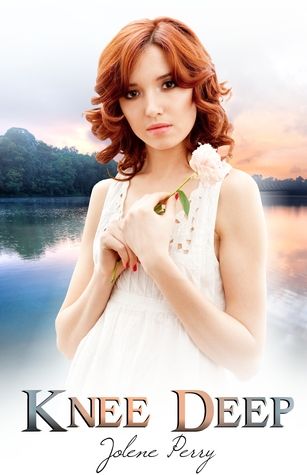
Review: Knee Deep by Jolene B. Perry

Photobucket

Hi guys! Today, June 1, B's Book Blog is happy to host a stop for Jolene B. Perry's Night Sky blog tour!

 
Title: Knee Deep 
Author: Jolene B. Perry
Genre: Young Adult Contemporary
Release date: May 1, 2012
Publisher: Tribute Books
Format: eBook
Pages: 278
Source: Tribute Books
Links: Goodreads | Amazon (Kindle) | Amazon (Paperback)
Read from May 27 - 29, 2012
My rating: 3 stars: I like it
Summary: Shawn is the guy Ronnie Bird promised her life to at the age of fourteen. He's her soul mate. He's more uptight every day, but it's not his fault. His family life is stressful, and she's adding to it. She just needs to be more understanding, and he'll start to be the boy she fell in love with. She won’t give up on someone she’s loved for so long. Luke is her best friend, and the guy she hangs with to watch girlie movies in her large blanketopias. He's the guy she can confide in before she even goes to her girlfriends, and the guy who she's playing opposite in Romeo and Juliet. Now her chest flutters every time he gets too close. This is new. Is Ronnie falling for him? Or is Juliet? The lines are getting blurry, but leaving one guy for another is not something that a girl like Ronnie does. Shawn’s outbursts are starting to give her bruises, and Luke’s heart breaks as Ronnie remains torn. While her thoughts and feelings swirl around the lines between friendship and forever, she’s about to lose them both. 


This book is very hard for me to review. I've been trying to find the words to say about this book and it seems like I still can't find anything worth saying. I enjoyed the book, and that's about it. I don't really have any opinion on the book, partly because it isn't all that memorable to me. Not the kind of book that makes me sit and think about it after finishing. This one's more like the come-and-go to me. I enjoyed it while I was reading it, and now that I've finished it, I don't really have anything to say about it, I just let it go.

Knee Deep is about Ronnie who finds herself in a love triangle. She's been with her boyfriend Shawn forever, and he's all that she knows. Luke is their mutual best friend, who's sweet and relaxed and comfortable to be around. But lately Shawn hasn't been himself, or his "old self", the guy Ronnie fell in love with years and years ago. Her teases and jokes can make him suddenly rigid and glare at her now these days. Ronnie's tired of having to worry about him and not knowing how to act around him without doing something wrong anymore. She doesn't even know what's wrong. Shawn doesn't tell her anything except that he's stressed and his father's stressed and his family's stressed. Ronnie puts up with everything, even when glaring turns into angry outbursts and into grabbing and bruises, believing that things will get back to how they used to be if she gives him enough time. At the same time, Luke and Ronnie get to spend more time together because they're in a play together. She finds herself feeling something she shouldn't with her best friend.


This isn't the most original plot ever, but "I'm a sucker for stories that involve best friends having a chance at more." (Quoting the author. Yes, me too.) So I wanted to read this and see how it'd go. And yes, I found the same old I-feel-like-I-can-just-be-myself-and-comfortable-around-him, and the why-do-I-feel-this-way-he's-my-best-friend thing. There are a lot of sentences similar to those in the book and at one point, it really got too much. Would it be so hard to just admit that you're in love with your best friend? Instead of saying you don't know why you feel this way, or that he's just Luke? I guess I wasn't really impressed with Ronnie trying so hard to pretend to not acknowledge her feelings.

What surprises me is the abusive part, which I totally didn't expect. She should run, but she doesn't. She doesn't want to rock the boat after being together for so long. I really don't know how to feel about that. Of course, it's stupid, she should leave him, but I also understand that when you're in a relationship for that long, you're afraid to change things, to cause even a little change in how things are, and you want to hold on and believe that it'll be okay soon. Ronnie must feel like that, and we can't really blame her, can we?

I wish I can say this book made an impression on me. It didn't. I enjoyed the moment of reading, but after that this book just became one of the books I'll soon forget about. Some parts of the book bored me, but some were really good. I have mixed feelings about this book. I liked Ronnie and Luke, but I didn't feel connected to them.

While reading, I kept comparing Knee Deep to Sarah Dessen's Dreamland, which is the best book involving abusive relationship that I've read so far, which I seriously loved. The violence in Dreamland is more disturbing and much stronger. It sent chills down my spine. It felt more real and cruel, and that made me so into the story. Knee Deep just falls short in comparison. I think this is one of the reasons this book left me kind of underwhelmed. It's not strong enough.

Well, I told you I don't really have anything to say about this book. Yeah, it's enjoyable. It's a good read, but that's it. Again, I seem to be the minority, as everyone else who's read this book seems to really like it or even love it. I don't know if something's wrong with me, preventing me from liking this book as much as everyone else. I find it okay, mediocre, not something special. It's not for me. Sorry for the honesty. If you're looking for other books by Jolene Perry, I'd suggest Night Sky. I certainly enjoyed it more than this book.


------------------------

This review is also posted on Goodreads.
A digital copy of this book was provided by the publisher for review. 


Related Posts Plugin for WordPress, Blogger...