Showing posts with label genre: classics. Show all posts

Wednesday, November 16, 2011

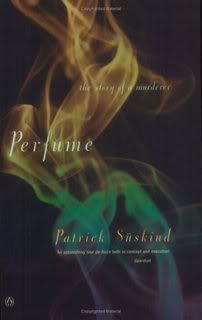
Review: Perfume by Patrick Süskind

Title: Perfume
Author: Patrick Süskind
Genre: Historical Fiction, Horror, Classics
First published: 1985
This edition: 2001
Publisher: Knopf Publishing Group
Format: Paperback
Pages: 272
Links: Goodreads | Amazon | Bookdepository
Read from November 9 to 15, 2011
My rating: 3 stars: I like it
Summary: In the slums of eighteenth-century France, the infant Jean-Baptiste Grenouille is born with one sublime gift - an absolute sense of smell. As a boy, he lives to decipher the odors of Paris, and apprentices himself to a prominent perfumer who teaches him the ancient art of mixing precious oils and herbs. But Grenouille's genius is such that he is not satisfied to stop there, and he becomes obsessed with capturing the smells of objects such as brass doorknobs and frest-cut wood. Then one day he catches a hint of a scent that will drive him on an ever-more-terrifying quest to create the "ultimate perfume" - the scent of a beautiful young virgin.


Everyone seems to like or love this book, but even to my surprise, I feel kind of underwhelmed. The story is without a doubt extraordinary and unusual, based on the idea that the sense of smell is superior to all others, as your other sensory perceptions can be turned off (shutting eyes, covering ears, etc.) except for smelling, so long as you want to live. However interesting it sounds, I often found myself not engaged with what was going on as I read at all. At some points I would look up from the book and feel so blank--I couldn't recall where the story had taken me and how it was going--that I had to flip back, sometimes a few pages, sometimes a lot of pages, to start again. I wasn't as absorbed in it as I had wanted to be. I came to conclude that it was because of the writing.

I had mixed feelings about the writing and the narrative. Sometimes, like I said, it seemed to push me away from grasping what it was telling me. I had to reread sentences or paragraphs a lot of times that it wore me out. However, there were times when it flowed so smoothly and rapidly that I actually enjoyed it. And I also noticed that what seemed like the first 73.07692% of the book was what I felt uneasy with, while the rest after it was somewhat livelier and more exciting. Or maybe all this is just me. Maybe it's just my reading deficiency. In addition, I felt like the narration could have been better and more detailed. When the killing spree part comes, it looks as if the author didn't care about it that much to give more details. I didn't like that. It was like writing one sentence to let the readers know that between this line and the line above, 23 murders had been committed and done. Like that. No more details. Also, kudos to the author's description of smell/scent/odor. I think it's great.

I have only a couple of thing to say about the storyline. Firstly, I think the author focused too much on the first stages of Grenouille's life. A lot of times I wondered why he has killed only one girl when it was almost 200 pages on already. I expected The Story of A Murderer to focus more on acts of murders, rather than what the murderer did in a perfume shop or in a cave. And I don't really like how Grenouille killed one girl in Paris once, paused--lived in a cave for SEVEN years, then started a killing spree, after all those years, which was described within JUST a few pages I think that it's unforgivably unbalanced. I felt the story goes all too slowly, and when the climax of the book comes, it's almost the end of the book itself, and that passes by all to quickly. Secondly, why did some people who gave him shelter have to die after Grenouille left them? What's with that? First, his cruel employee whose name I don't remember. Then Baldini the perfumer. Why? I mean, they didn't have any more significance in the story, why not just leave them alone? Why further going into details their deaths? Perhaps to portray that without him their lives couldn't go on? Hmm... This is quite unnecessary, why not focus on something that would enrich the story instead?

The main character, Jean-Baptiste Grenouille, with one crippled foot and tough personality, is an odorless person. I like how the obsession with scent has its motive from his own shortcoming. He wants to create an odor for himself. When reading about his unfortunate birth and tough childhood, I felt sympathy for him. Even when he's grown up and sinister, I still felt it. I think the author meant for it to be like that, to make the character seem real, to make readers sympathize with him, but dislike him all at the same time. Or at least that's how it was for me. His high ambitions and genius make him a murderer, yet he didn't seem to care much about that. He definitely took obsession to the next level.

This book is definitely fine literature, no doubt about that. But I have to say it didn't quite do it for me. It didn't blow me away, no matter how much I wanted it to. Perfume could, dare I say it, have been better. There.


------------------------

This review is also posted on Goodreads.

Sunday, November 13, 2011

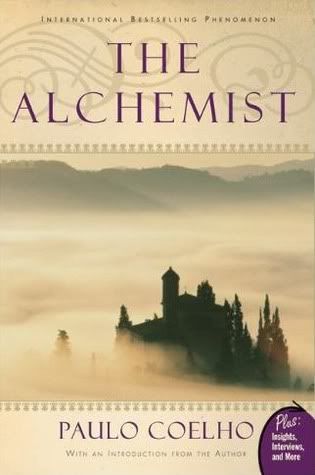
Review: The Alchemist by Paulo Coelho

Title: The Alchemist
Author: Paulo Coelho
Genre: Classics
Release Date: May 1, 1993
Publisher: Harper Collins
Format: Paperback
Pages: 167
Links: Goodreads | Amazon | Bookdepository

Read from September 30 to October 2, 2011

My rating: 1 star: I don't like it


Summary: Paulo Coelho's enchanting novel has inspired a devoted following around the world. This story, dazzling in its powerful simplicity and inspiring wisdom, is about an Andalusian shepherd boy named Santiago who travels from his homeland in Spain to the Egyptian desert in search of a treasure buried in the Pyramids. Along the way he meets a Gypsy woman, a man who calls himself king, and an alchemist, all of whom point Santiago in the direction of his quest. No one knows what the treasure is, or if Santiago will be able to surmount the obstacles along the way. But what starts out as a journey to find worldly goods turns into a discovery of the treasures found within. Lush, evocative, and deeply humane, the story of Santiago is an eternal testament to the transforming power of our dreams and the importance of listening to our hearts.


The moment I finished this book I almost cried of frustration. I was so seriously disappointed by how awful the book is that I had to sit down and shut my eyes and control my in- and exhalation. My rage was only burning hotter; the book was my fuel. I know, the summary sounds interesting, and I'd been told a lot of times that The Alchemist is excellent this, amazing that. But now that I read it, I wish I hadn't.


The story is simple enough. A boy becomes a shepherd for the sake of wandering. Then he meets a man who believes himself to be a king, is told that he will find his great treasure near the Pyramids in Egypt, and off he goes. I have to point out that it is not really a tale of following your dreams, because dreams don't really play any part in this novel. What plays a great role, in fact, are omens. Omens here, there, omens everywhere! (How do you know that something is an omen anyway? It could be coincidences? I don't know..) Everyone he meets on the road seems to know what the boy is up to. They all know about his dreams (again-- not really. More like his "goals" or "aspirations") and where he's going. (What the? It doesn't even make sense!) Then he travels to the Oasis and his eyes fall upon a girl and WHAM! TRUE LOVE! (SERIOUSLY???) He meets an alchemist and they both hit the road to search for his treasure. Along the way they get caught and Santiago is to "turn himself into the wind". Days drag on and on, and he still hasn't figured out how. (I knew it!) And then the day comes where he has to prove himself, and he talks to the wind", making a miracle happen. What's more, he even talks to the sun! In the Language of The World! (WHAT????) He understands the Soul of The World too! Isn't that very touching? Then he go off to the Pyramids only to find out by "dreaming" that his treasure is somewhere else! Cool! *sighs*

I'm going to try and be reasonable and tell you why this book failed me.
1) The writing style is not good. The story is told in simple sentences. I personally have nothing against that, but the way it's written just doesn't get to me. It looks as if it's meant to resemble the style of fables, but it is nothing compared to that. However, this could be something that gets lost in translation. Maybe the writing style--word and sentence structure and whatnot--is beautiful when it's Portuguese. Although that may be true, it just doesn't work when it's English, that's for sure.

2) Coelho kept calling Santiago "the boy". The boy............... The boy...................... The boy....................... The boy............................ All. The. Time. I mean, he has a name, okay? There were times when I'd only read "the boy" that I almost forgot what his name actually is!

3) The messages and story aren't deep and philosophical as portrayed. Sure, A Fable About Following Your Dream sounds cool. But no, this story isn't really about following dreams. It isn't about a certain idea of philosophy, either. It's more about reading omens, and pursuing Personal Legends, and talking in the Language of The World, or reaching through to The Soul of The World. All of which are as deep as..... Gah! I don't know. "...when you want something, all the universe conspires in helping you to achieve it" would have been an inspiring quote, had it any supporting facts or evidences (not the omens, please), otherwise it would just be a cheesy line attempting to be deep but failing, and yes, that's precisely what I think it is. When something touches your inmost heart and makes you feel something special, that is deep, that is profound. When something makes you irritable and your brows furrow in extreme annoyance, that is definitely not deep. Are we clear here, Coelho? 

Extremely annoyed, yes, that's what this book did to me. Everything about it bothered me so much that I had a hard time trying to finish it. Good thing it was thin. I can't believe the hype, really. My friends told me it's so great, but I find it totally awful. It's the first book I've ever rated 1 star. It's just awful.

By the way, I have been told by a friend who loves this book that the reason I dislike it is because I am not a Christian believer. Maybe that's partly why.. However, there are other problems with this book that still would make it displeasing for me, weren't I an atheist.

I hereby insist: this book is awful. It wasn't for me. I'm sorry I'm so harsh on it. I just hated it so much.


------------------------

This review is also posted on Goodreads.
Friday, November 11, 2011

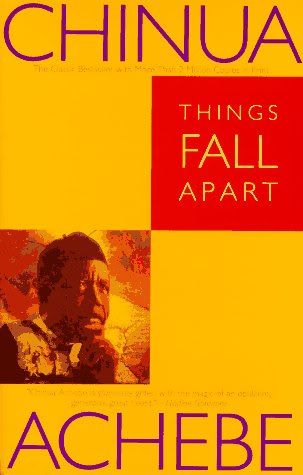
Review: Things Fall Apart by Chinua Achebe

Title: Things Fall Apart
Author: Chinua Achebe
Genre: African Literature
Release Date: September 1, 1994
Publisher: Anchor Books
Format: Paperback
Pages: 209
Links: Goodreads | Amazon | Bookdepository
Read from October 8 to 10, 2011
My rating: 3 stars: I like it
Summary: Things Fall Apart tells two intertwining stories, both centering on Okonkwo, a “strong man” of an Ibo village in Nigeria. The first, a powerful fable of the immemorial conflict between the individual and society, traces Okonkwo’s fall from grace with the tribal world. The second, as modern as the first is ancient, concerns the clash of cultures and the destruction of Okonkwo's world with the arrival of aggressive European missionaries. These perfectly harmonized twin dramas are informed by an awareness capable of encompassing at once the life of nature, human history, and the mysterious compulsions of the soul.


I can't believe these 209 pages took me about 3 days to finish. It was because, honestly, it was boring most of the time. But it's got some fair share of interesting cultural things, too. I don't really feel particularly good about this book, so my rating is somewhere between 2 and 3 stars. The book is okay, and I enjoyed it from time to time.

The story revolves around the rise and fall of this man, Okonkwo. He's a brave man, driven to be great by the abhorrence of his father's qualities: laziness and "incapability of thinking about tomorrow". He loathes his father for being a failure, so he pushes himself to be everything his father isn't. He fends for himself at a young age and becomes one of the brave warriors and gains respect from all the nine villages.


There are however drawbacks. He's extremely hotheaded and trust me, you don't want to be around him when he loses his temper. He's bothered by sights of weakness. He beats his son when he sees him cry, insulting him as a 'woman'. And there's one time when he shoots his second wife (he has three), but luckily for her, she manages to save her life. He loses his temper easily a lot of times in this book. It's these times and I find quite exciting to read. I get to know the thoughts that are going on in his mind and sometimes his anger becomes my anger, too. You can't really decide if you like him or not. I sometimes get upset that he's so senselessly violent, but sometimes I find it justified. Things become more interesting for me when the missionaries come. I can almost sense the hatred Okonkwo feels. The story runs in a way that it makes you feel like the white men shouldn't be here. Their arrival messes up the communities and the people. This is the point where I most strongly felt something while reading this book. ("Die! Die! Die! Assholes!") And I think this conflict is what the title "Things Fall Apart" refers to -- African society falls apart as old culture gives way to the new. The community struggles to hold on to its tradition when colonization and modernism come crashing in.

This book is quite an easy read, if you ask me. I've been slacking the first two days and barely read any pages, but on the third day, I was determined to finish it, and I finished what seemed like half of the book in less than two hours (I'm a very slow reader). So I guess if you really concentrate without getting easily distracted like me, you'll probably finish it in, say, 2 or 3 hours. There are some things that bugged me, though. Local Nigerian words are used quite often here in the books, and I became annoyed when I had to flip back to the glossary page just to figure out what they are. And what bugs me the most is that I probably have to know those words by heart for the test on this book too, as it's an assigned reading for English class. And also these Nigerian names. I lost track of who is who most of the time and had to flip to earlier pages to find out who this is and of what importance. However, I understand that using Nigerian words in this novel means that they are better explained that way, because things can get easily lost in translation. And it just goes to show that Nigerian culture is so much more complicated than we think that translation would have failed the true meanings of the original context.

In general, I think this book is fine literature. I think it's boring for me most of the time because it isn't what I like to read. But it depicts really well the way of life and the society in that time. I'll probably like it either more or less when I read it again, which I will have to soon enough, for the test.


------------------------

This review is also posted on Goodreads.

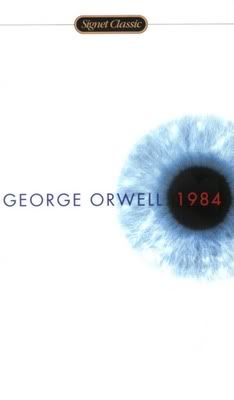
Review: 1984 by George Orwell

Title: 1984
Author: George Orwell
Genre: Science Fiction
Release Date: July 1950
Publisher: Signet Classics
Format: Paperback
Pages: 326
Links: Goodreads | Amazon | Bookdepository
Read from October 13 to 19, 2011
My rating: 
Summary: Written in 1948, 1984 was George Orwell’s chilling prophecy about the future. And while 1984 has come and gone, Orwell’s narrative is timelier than ever. 1984 presents a startling and haunting vision of the world, so powerful that it is completely convincing from start to finish. No one can deny the power of this novel, its hold on the imaginations of multiple generations of readers, or the resiliency of its admonitions—a legacy that seems only to grow with the passage of time.


Prior to this book by George Orwell, I read Animal Farm in 2009 and loved it. I still can't decide how exactly I feel about this novel. It's not really the kind of books that I enjoy reading, but I decided to give it a try anyway.

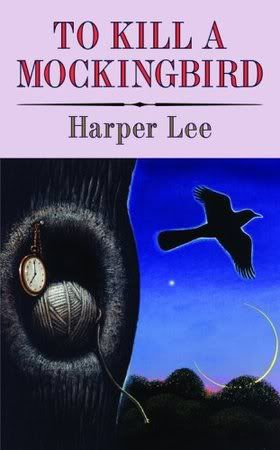
Review: To Kill A Mockingbird by Harper Lee

Title: To Kill A Mockingbird
Author: Harper Lee
Genre: Classics
Publisher: Grand Central Publishing
Format: Paperback
Pages: 376
Links: Goodreads | Amazon | Bookdepository
Read in June, 2009

My rating: Photobucket

Summary: Harper Lee's classic novel of a lawyer in the Deep South defending a black man charged with the rape of a white girl. One of the best-loved stories of all time, To Kill a Mockingbird has earned many distinctions since its original publication in 1960. It won the Pulitzer Prize, has been translated into more than forty languages, sold more than thirty million copies worldwide, and been made into an enormously popular movie. Most recently, librarians across the country gave the book the highest of honors by voting it the best novel of the twentieth century.


“Do not judge the book by its cover” can actually apply to me in this case. At first I thought To Kill A Mockingbird would be a dull, boring book about racism that I did not want to know about. I was (and still am) one of those people who fall for books simply because of their covers. But now I know better. I was mistaken about this book but now I can honestly say that To Kill A Mockingbird is one of the finest books I have ever read.

In 11th grade, my English teacher assigned us to read this book, then we'd have class discussions, tests, and writing assignments, and we'd see the movie together. Mr Bill, the teacher, who is a really cool and nice guy, said the book was intense, and promised us that we would enjoy it very much. At that time, I was around 15-16 years old, still a huge fan of teen books, had never read any classics before. I remember having secretly protested this assignment with my classmate, agreeing that we would rather be reading Twilight instead. (Oh God, why did we ever think that? I took it all back!). But who would have known? When I got to page 3 or 4, I got hugely hooked up. I could never have thought this book could be so fascinating that I could not possibly put it down until midnight of every day. And before I knew it, To Kill A Mockingbird showed up somewhere between the top 5 of my favorite books. 

I love pretty much everything about this book. I love the way Harper Lee reveals more of the story backwards from the end. It portrayed racism at its time and the white people’s hatred and prejudice on the black ones at its best. Meanwhile, it represented many kinds of people; the poor Cunninghams, the Ewells who lived by the rubbish dump of the town, the Radleys who were full of mysteries and the Finches. I am not usually a fan of books with too many characters, but this book is an exception. I think these characters are what make the book one of the best classics ever. It is what makes the book different, makes it beautiful and outstanding.

I love the fact that To Kill A Mockingbird depicts the co-existence of good and evil really well. As I could  see, Jem and Scout both go through a transition in the society as they are exposed to more evil--a transition of innocence that must be adapted to the evil of the world to be more of an adult perspective. Other than that, what I adore about this book is that it shows the result of co-existence of good and evil as some people are destroyed by the glimpse of evil such as Boo Radley, Tom Robinson, Dill and Jem, or as defined by the books as ‘mockingbirds’ who ‘don't do one thing but . . . sing their hearts out for us,’ (according to Miss Maudie) while some still maintain their faith in goodness and learn to be able to come to understand and deal with evil like Atticus Finch and his daughter Scout. 

My favorite character from this book would definitely be Atticus Finch. He comes so clear and real to me, but at the same time he just seems so idealistic. He's definitely the most outstanding character in this novel, as his characteristics and points of view uniquely shine through. He accepts and understands evil in people, all the while he still maintains and holds on to his faith in human goodness. Throughout the novel, he taught me that we should appreciate the good in people, understand the bad and treat others with understanding and sympathy. When he tells his children that they could never understand a person until they put on his shoes and walk around in it, I was stunned. There was no better way to put it. And at the end Scout does as his lesson told her. She finally sees Boo as a human being, and not a childhood mystery. I love the way Atticus stands for what was right--Tom Robinson--knowing in his heart that he may not win the case. And when Walter Cunningham tries to kill him, he still says Cunningham was a friend and would always be. For a second I wondered if a person like this still exists in this world today because as I’ve stated, he's so real, yet so idealistic, too good to be true. 

Overall, I think this book is for the win. I am not surprised why it's assigned to high school students in many countries. Books like these should be noticed by the world, because there is even more to them than just an enjoyable read. To Kill A Mockingbird is definitely one of my favorite books that I will always reread.


------------------------

This review is also posted on Goodreads.
Related Posts Plugin for WordPress, Blogger...