Showing posts with label genre: young adult. Show all posts

Saturday, July 12, 2014

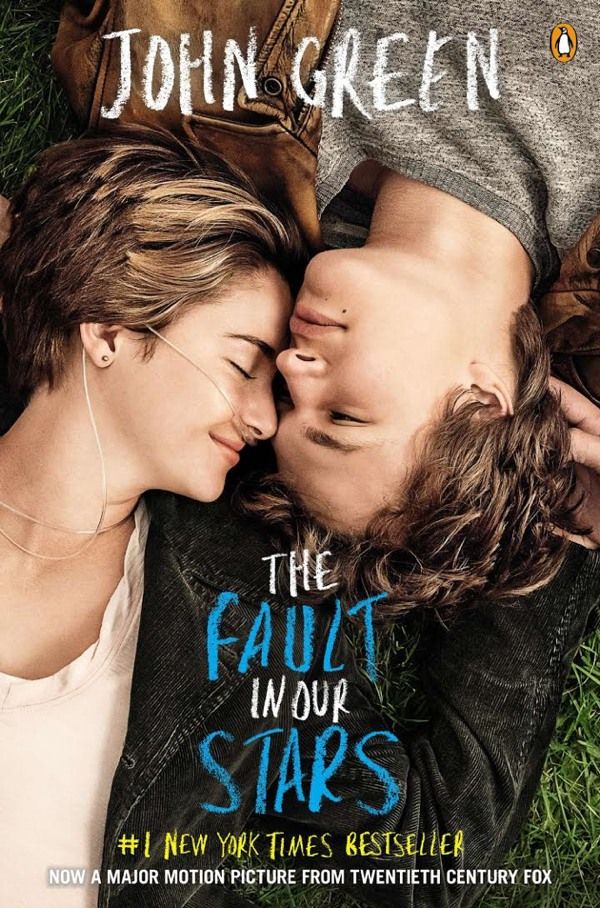
Review: The Fault in Our Stars by John Green

 photo fault-in-our-stars-paperback-movie-tie-in_zps974db3f3.jpg
Title: The Fault in Our Stars
Author: John Green
Genre: Young Adult Ficton
Release Date: January 2012
Publisher: Speak
Format: Paperback
Pages: 313
Links: Goodreads | Amazon | Bookdepository
Read from June 6 to 12, 2014
My rating: 3 stars: I like it
Summary: Despite the tumor-shrinking medical miracle that has bought her a few years, Hazel has never been anything but terminal, her final chapter inscribed upon diagnosis. But when a gorgeous plot twist named Augustus Waters suddenly appears at Cancer Kid Support Group, Hazel’s story is about to be completely rewritten.


There is no shortage of fault to be found amid our stars.

The thing about this book is that I can't quite put my fingers on anything. I can't say I like it, but I don't dislike it either. I can't say it's a good book, but it's not a bad one either. I don't care much about it, but I've read it three times (trying to find something to like). I can't say John Green disappoints me, because he certainly doesn't. I just DON'T know how I feel about The Fault in Our Stars, whether the book or the movie. The story just doesn't work for me.

When I read it in March 2013, my feelings leaned toward the negative end of the spectrum. So here was the book everyone's been raving about, the book I supposed would change my life in some ways, and I expected nothing short of amazing from John Green anyway. And there I was, failing at feeling anything. Finishing the book thinking: well that's it? That in itself, not necessarily the story, was a huge, underwhelming disappointment. I felt like I'd been majorly cheated. I concluded that TFiOS is the most overrated book in the 21st century.

Though this time I had no expectations whatsoever, I still held the same conclusion. I started rereading again because I just wanted to find out exactly why it failed with me the first two times, and I still came away with no satisfactory answers. So I'll just stop trying to rack my brain and begin to tell you frankly how I feel, and maybe figure something out along the way.

First of all, I think a considerable amount of the hype surrounding TFiOS is cancer perks. I'm not saying anything bad here; I'm just pointing out that I think the book wouldn't have been so hyped about, hadn't it been for the fact that it involves cancer. And anyone arguing otherwise might be deluding themselves. I understand that cancer is an extremely relatable subject, and that naturally makes the book popular. (I like reading about subject matters that I can relate to as well, and I tend to like them, too.) What bothers me, though, is when people say this is not a book about cancer, but seriously, how can this book not be about cancer? It's all the characters ever talk about. It affects everything they do and don't do, their feelings and thoughts. Saying TFiOS is not a cancer book is like pretending you love the book for its beautiful story, not because it's about cancer. That you're not manipulated into liking it by the presence of cancer which defines the whole story as you know it. What makes a story beautiful, anyway? Doesn't cancer determine that they're not going to live long and yet they love each other that makes it a beautiful love story? I don't know how to put it nicely, but I feel like TFiOS is a pretentious book about cancer and uses the fact that it's a love story about people with cancer to manipulate readers' feelings and then bask in all the sympathy and tears it can get from them, which are people's natural reactions to cancer. I don't know what John Green's intention was, but I felt that the book tries to manipulate me the whole time. All I heard in my head was "OMG I'm gonna write a cancer book and people are gonna cry so hard and they're gonna love all the feels!!!!!!!!" That was a huge turn-off.

There were times when I liked Hazel and Augustus, but most of the times I didn't. Let's start with  Augustus--to use Isaac's words--what a self-aggrandizing bastard. So. Pretentious. Apparently, he can't say anything without making it sound like a soliloquy, like he's prepared a speech for every occasion and memorized them so that when the occasion arises, he can recite the speech flawlessly on the spot and end it with a smirk to make the girl go even crazier. What's that you say, you fear oblivion? I don't see you trying so hard for the world to remember you, sorry. And what's with all these "metaphors"? How is a cigarette a metaphor for a "killing thing"--it IS a killing thing, no metaphor involved. Dear Gus, a metaphor is when you say something is another thing, whose similarities are not easily arrived at until you really analyze and think about them. Like in Carol Ann Duffy's poem "Valentine," an onion is a metaphor for love because it makes you cry or whatever. No, that pretentious act is not metaphorical, it's symbolic. It symbolizes defiance and the need to control, I get it. It just bothers me so much. For someone who complains about people's wrong use of literality, Augustus isn't good at literary terms either.

Hazel, however, is more bearable. I liked her at times when she shows her firm stance in reality and not grand daydreams, especially when she tells Augustus off about how this is the life you get now live with it. And she annoyed me really bad with her overly girly moments. I guess that's all I have to say about Hazel. She didn't make much of an impression on me. And oh, I didn't for a minute buy that they really loved each other. I didn't. Sorry. It just felt too forced.

I understand that they're supposed to come off as smart above their years, with their philosophical pondering and existential concerns and deep understanding of life and all, but honestly, I just didn't believe it. It didn't feel like them speaking THEIR thoughts. Augustus and Hazel feel more like quote-making machines, whose inner ramblings and dramatic monologues and soliloquies are literary devices through which John Green can deliver his most contrived yet gorgeous lines aiming right for the tear ducts--with expected responses of agreement such as "OMG so true!" or something along that line or real crying, for that matter. (Though I'll admit I highlighted those quotes, too. They're beautiful as standalone quotes, not suited for dialogues of teenagers.)

And yet, I understand why they're written this way. What I appreciate about TFiOS (I'm not so hateful, people) is that it's the most literary of all John's novels. I mean, almost everything can be analyzed to imply deeper meanings. For example, Augustus wants to be remembered by the world, hence: fear of oblivion, the air of self-importance, aggrandizing bullshit--all this so he can validate his significance. Hazel's obsession with An Imperial Affliction and how it ends represents clearly her concern for her parents after she dies. Many literary references and intertextuality appear in the novel. Like T.S. Eliot's "Love Song of J Alfred Prufrock," which Hazel knows by heart and can recite from memory, can illustrate the pointlessness and mundaneness of living, or even Hazel's "disturbing the universe" by falling in love with Gus despite her not wanting to be a granade. Or Hazel's continuing William Carlos Williams' "The Red Wheelbarrow" can reflect how she wishes she could've prolonged Gus's life. The motif "star(s)" occurs throughout the novel and in its title, but I haven't really given it much thought yet.

Although my experience reading TFiOS this time didn't improve much from the previous times, I can now rest in peace knowing that the reason I didn't enjoy the book was not because I was prejudiced or I expected too much, but because it was written in ways impossible for me to enjoy. That's not to say the book is bad; it seems to have achieved its purposes with other readers alright. It is as guilty for my not liking it as my programmed to reject anything that feels artificial is. I'm not upset like I was last time. After trying 3 times, it's clear that it just doesn't work. I made peace with the fact that we're not meant to be. The fault is neither in TFiOS nor in myself that I felt underwhelmed.

 ------------------------
This review is also posted on Goodreads.

Sunday, June 22, 2014

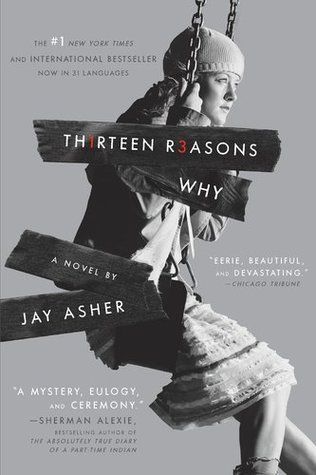
Review: Thirteen Reasons Why by Jay Asher

 photo 2813153_zpsdccb98b9.jpg
Title: Thirteen Reasons Why
Author: Jay Asher
Genre: Young Adult Contemporary
First Release Date: October 18, 2007
Publisher: Razorbill
Format: Paperback
Pages: 288
Links: Goodreads | Amazon | Bookdepository
Read from June 15 to 16, 2014
My rating: 4 stars: I really like it
Summary: You can't stop the future. You can't rewind the past. The only way to learn the secret. . . is to press play.Clay Jensen doesn't want anything to do with the tapes Hannah Baker made. Hannah is dead. Her secrets should be buried with her.
Then Hannah's voice tells Clay that his name is on her tapes-- and that he is, in some way, responsible for her death.All through the night, Clay keeps listening. He follows Hannah's recorded words throughout his small town. . .and what he discovers changes his life forever.


“I hope you're ready, because I'm about to tell you the story of my life. More specifically, why my life ended. And if you're listening to these tapes, you're one of the reasons why.”

I read according to my mood. You can probably tell something about a person's state of mind at the moment by observing what they're currently reading. And as you can guess, I was feeling pretty damned depressed when I picked up this book. Long story short: I was (have been) feeling like I was getting nowhere with my life and I felt trapped with no way out and I'm constantly falling short of my own expectations. The idea of suicide crept into my head and I played around with it, and then came to the conclusion that I wouldn't mind it if I were to not be alive anymore the next minute. Now, don't be alarmed, I'm okay now. I wasn't even contemplating suicide; it's just that I happened to be in the right state of mind to be thinking about it (and I was only thinking).

Growing up in a Buddhist country, I was taught that suicide is an unforgivable sin. And I don’t mean to go into details about this, but I’ve had my lapses of depression and thoughts about suicide. Sometimes my brother would ask what the heck is wrong with me, and most of the time I’ll just ignore him because socialization is just too much of an effort to make when I cannot care less. Sometimes, though, I’ll tell him I don’t feel like living anymore, just so he can stop nagging me. In my family, the suggestion of suicide triggers an incredibly automatic response: the caring look is gone from my brother’s eyes and every word that he utters is tinged with accusations. Anger replaces sympathy. Mine is a society that condemns anyone who commits suicide as a cowardly, selfish, worthless person who craves attention and acts upon superficial impulses. And let’s just say that this is just one of countless other opinions that Thailand and I don’t share.

Before this review turns into a rant fest, let’s talk about Jay Asher’s Thirteen Reasons Why. It’s been sitting on my shelf for years, so when I suddenly needed it, it was already there waiting for me: the first book on the YA shelf, because I arrange my shelves alphabetically according to authors. (This is a real benefit of hoarding books– you always have the right book at hand when the mood hits.) The book is just as I expected: dark, heartbreaking and extremely suspenseful. For someone who has to get up at 7.30 to be at work at 9.30, staying up to watch a World Cup game until 1 am says a lot about dedication and loyalty. And what do you think it says about a book when that someone, instead of collapsing in bed, sacrifices some more hours to finish that book? Yup, that book must be friggin’ awesome.

And it is. Thirteen Reasons Why, while not exactly a mystery book, works the mysterious charms so well. From the first page where the main character Clay Jensen receives a shoe box full of 13 cassette tapes from a dead girl whom he’s had a crush on, we can’t help but wonder what exactly that he’s done to make him deserve such a torturous punishment. The fact that he keeps wondering the same thing and that he’s oh-so-sweet add even more to the suspense. And what are her 13 reasons? How are they so horrible as to drive a girl to kill herself? Opening this book is like opening a box of questions that can’t demand answers immediately enough, and I love that about this book.

The narration switches between Hannah Baker’s recordings and Clay. The interaction between Clay’s narrations, interspersed into Hannah’s, gives the book a sense of real-time urgency, which in my opinion is better than keeping them in big, separate chunks. Sometimes, it doesn’t work so well, as his responses tend to be too frequent, thus interrupting the flow and keeping me from fully immersing myself into her story. When that happened, I would be like: will you just calm your shit and let her finish, Clay? This would be followed by an unhealthy amount of exasperated eye-rolling. But then again, this didn’t happen often. Most of the time I would be too engrossed to notice.

Personally, I believe that feelings and pain are always real, and the magnitude of suffering may vary from person to person. Have you ever had someone tell you the pain you feel isn’t a real pain because what causes that pain doesn’t “seem” like a legit pain causer? I’ve had that shoved in my face one too many times. They would sometimes say they fail to sympathize with me because my problems are so small that it’s rather impossible to be suffering as greatly as I am; I must be overreacting and need to quit being such a drama queen already. How about people feel differently about different things? And how about some people feel more intensely than others? Sure, it might just be a spur-of-the-moment-thing, but that doesn’t make them overly dramatic and their feelings any less real. I never doubt the “realness” of the pain suffered before a person chooses to commit suicide. It’s unfair to judge unless you’re in their shoes, but the thing is you can never pretend to be in anyone’s shoes and understand them, because no two pairs of shoes have been through the exact same shit and taken the exact same roads leading up to that spot where suicide is decided. I’m in no way glorifying it; I’m just trying to point out that since we can never know to what extent a person must be suffering, it’s not our business to judge the legitimacy of their motives and call them cowardly or selfish or stupid or whatever. (Family and friends, please take notes.)

That said, I wish Hannah would’ve reached out to her parents. It’s like they’re not even a part of her life. All her decisions are made without taking her parents into consideration. Because they’re not a part of her problems, I think it’s a bit unfair for her to actually be bothered to meticulously make maps (and secretly drop the maps into lockers weeks before she kills herself—such a planner, huh?), tapes and a second set of tapes for those who make her life miserable, and leave not a single word for her clueless parents. While these people get explanations they might not even care to know about, the parents might be asking themselves “why” for the rest of their lives and getting no answer. Ouch.

For those who don’t like books that sound preachy, be warned that there are didactic messages like:
"You don’t know what goes on in anyone’s life but your own. And when you mess with one part of a person’s life, you’re not messing with just that part. Unfortunately, you can’t be that precise and selective. When you mess with one part of a person’s life, you’re messing with their entire life. Everything. . . affects everything."
And
"No one knows for certain how much impact they have on the lives of other people. Oftentimes, we have no clue. Yet we push it just the same."
I’m not recommending this book for its lessons. (I think books shouldn’t focus primarily on lessons. Yawn.) Rather, read it for the story. Explore how pretty amazingly one event leads to another to another like a “snowball effect.” This book is such a page-turner. It’s safe to say that I haven’t enjoyed a book this much in a long, long time.


 ------------------------
 This review is also posted on Goodreads.
Monday, May 20, 2013

Review: The Rose Throne by Mette Ivie Harrison

 photo cover28636-medium_zps8692a3be.png
Title: The Rose Throne
Author: Mette Ivie Harrison
Genre: Young Adult Fantasy
Release Date: May 14, 2013
Publisher: Egmont USA
Format: eARC
Pages: 400
Source: Publisher via NetGalley
Links: Goodreads | Amazon | Bookdepository
Read from April 16 to 29, 2013
My rating: 3.5 stars
Summary: Ailsbet loves nothing more than music; tall and red-haired, she's impatient with the artifice and ceremony of her father's court. Marissa adores the world of her island home and feels she has much to offer when she finally inherits the throne from her wise, good-tempered father. The trouble is that neither princess has the power--or the magic--to rule alone, and if the kingdoms can be united, which princess will end up ruling the joint land? For both, the only goal would seem to be a strategic marriage to a man who can bring his own brand of power to the throne. But will either girl be able to marry for love? And can either of these two princesses, rivals though they have never met, afford to let the other live?


When something goes wrong, it is always the ones who are different who are blamed. 

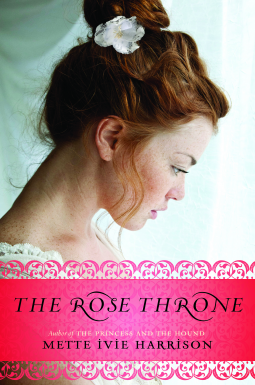
I have to admit that before I started the book, I already had high hopes for The Rose Throne. I mean, look at the cover! (I'm a little superficial when it comes to pretty covers.) The coloring, the girl (whom I suppose is Princess Ailsbet), her facial expression, the details of her hair! And the words in the blurb paint the book in such a great light that it is hard to resist. Princesses, magic, kingdoms, love, rivalry? It's a no-brainer for me!

Now that I've read this book and thought it over, I'd say that it isn't bad. It's riveting, fun, mysterious, but at the same time it does disappoint me to some level. Now, I am not going to summarize the story, as 1) I have come to learn that summaries aren't ever 100% accurate and in fact often times misleading, no matter who writes it and 2) I read this book a month ago, so things aren't as fresh for me right now. Thanks to my notes, however, I know how to go on and where I'm going with this.

First things first: this book is slow. I'm usually not someone who likes slow books, and even though I tend to finish every book I read, my attention span and tolerance are very limited when it comes to slow-paced books. But that's not necessarily a bad thing; a slow pace allows for a great story building, only when an author knows how to make use of it. And unlike other books I've read that stretch the story aimlessly for far too long, The Rose Throne makes a good use of its slow pacing and develops its story well. This book also takes a lot of time to digest--a quality I'm not generally quite fond of. Initially, the magic terms (e.g. taweyr, neweyr, unweyr, ekhono) were confusing me a lot, and that was a bit frustrating. The author did not exactly give a clear definition to these terms, but you can infer from the context and story, and yes, that took time to make sense.

The story was exciting and fun, and I think the author also did well on the characterization of Ailsbet and Marlissa, but not really of the other minor characters. I really enjoyed the wit of both princesses and their unique characteristics. I'm not going into details here, but let's just say that I enjoyed this book a whole lot.

One thing, though, is that I really wanted to appreciate the twist near the end of the book, but think it isn't very well executed. It didn't feel grand. I didn't see it coming; it just felt like the author couldn't decide what to do next, so she threw in this twist out of nowhere and hoped for the best. Well, I didn't like it, and I found it disappointing for a good book to suffer this bad twist. I think it took away the energy it was building up. And I also wanted to like the ending, but something feels off. After the awkward plot twist, things were quite awkward until the end. And I was consequently underwhelmed.

After such an ending, there has to be sequels. And I still would definitely read other books in the series, as I enjoyed this book and I'm curious to know how it all will turn out.

 ------------------------
This review is also posted on Goodreads.
I received a digital copy from NetGalley and the publisher for review.

Sunday, March 17, 2013

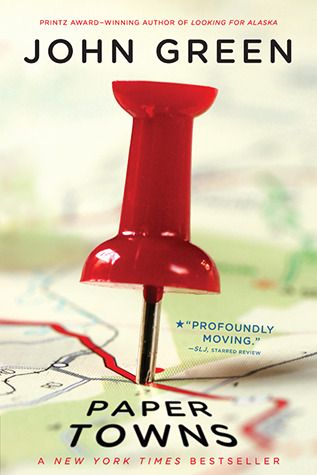
Review: Paper Towns by John Green

 photo 7papertowns_zps8e568af1.jpg
Title: Paper Towns
Author: John Green
Genre: Young Adult Contemporary
Release Date: October 16, 2008
Publisher: Speak
Format: Paperback
Pages: 305
Links: Goodreads | Amazon | Bookdepository
Read from March 8 to 10, 2013
My rating: 5 stars: I love it! It's amazing! + Favorite
Summary: Quentin Jacobsen has spent a lifetime loving the magnificently adventurous Margo Roth Spiegelman from afar. So when she cracks open a window and climbs back into his life—dressed like a ninja and summoning him for an ingenious campaign of revenge—he follows. After their all-nighter ends and a new day breaks, Q arrives at school to discover that Margo, always an enigma, has now become a mystery. But Q soon learns that there are clues—and they’re for him. Urged down a disconnected path, the closer he gets, the less Q sees of the girl he thought he knew.


“Here's what's not beautiful about it: from here, you can't see the rust or the cracked paint or whatever, but you can tell what the place really is. You can see how fake it all is. It's not even hard enough to be made out of plastic. It's a paper town.”

I love Paper Towns so much that I have been at a loss for words for one whole week. I thought I love Alaska, but I love this even more. This book is perfect to me.

(Right now, it's hard to form coherent responses to this book, since it's been a week and my feelings are not as intense as they were right after I finished it, so please bear with me.)

There are a lot of things I loved about this book. I loved the story, the characters, the intertextuality (Walt Whitman's "Song of Myself"), the mystery, and most of all, damn, I loved the ending. I loved it so much. I remember being hurt all over while reading this book. Like Looking for Alaska, reading it gave me some kind of warmth, soothing and intense at the same time. It was sad, but it was also more than that. I spent a few minutes trying to write down what I think this story is a mixture of, but it all came out wrong. It's one of those books you really can't summarize. The whole thing is just too sublime to be wholly reduced or contained in just a few petty sentences.

Besides the story, the characters in this book are just wonderful. I understood Q as well as I could easily place myself in Margo's shoes. The thing about loving someone from afar is that it comes with this distance, which is big and wide enough for you to imagine and fill in the blank whatever you want about them, and sometimes you can't separate reality from imagination, because, for you, they are embodied in this one figure, and you end up believing this conjured-up thing/person to be real and inseparable. It's easy to think you love someone unattainable, but the truth is it can be more about you than about them--because the thought of attaining the unattainable gives you pride or makes you feel good about yourself or whatever. Looking from a distance, you don't see the cracks or flaws; but what if you don't like what you see when you're up close? Will you feel betrayed or deceived? Will they still be what you think you want? Will Q still love the real and exposed Margo?

I could relate so much with Margo, and that made me love the book even more. This girl, who carries herself with poise on the outside and marvelously kicks ass on a daily basis, is filled to the brim with all the pent up unhappiness and dissatisfaction with life. And I just totally get it. In this manner, Margo is pretty much like Alaska in Looking for Alaska, whom I also love. To me, it's crystal clear why she needs to go away so desperately, why she just can't hold on for one more second. I respect her because she doesn't waste time talking about what she's going to do, she just goes ahead and does it. Her determination and having the courage to go through with her plans are something I look up to. What I also love about her is that despite her determination, she doesn't push it, but instead gives herself time for second thoughts, a chance to change her mind.

I think John Green played with these ideas very well in Paper Towns, with a lot of depth and sophistication. I also loved that he took the other turn for the ending, the less cliched one, which is all the more rewarding and painful for readers (or at least for me). I remember having a crying jag near the end of the book; I felt everything and it was overwhelming. It was just so beautiful, what with things so messed-up and wrong and expectations ruined—and yet, amid all that destruction, there's so much beauty in it that is so, so real and so raw. I don't know if I'm making sense, but I can tell you the ending of Paper Towns is one of the best book endings in all history of my readership. This book is very clever, too, and touching, and definitely the best thing I've read since the beginning of 2013. A five-star kind of magnificence. A new favorite I plan to reread a lot in the future.

------------------------
This review is also posted on Goodreads.
Monday, March 11, 2013

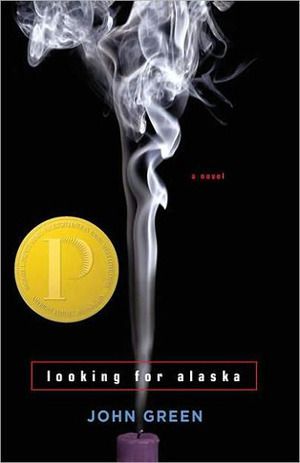
Review: Looking for Alaska by John Green

 photo 6alaska_zpsa58745dd.jpg
Title: Looking for Alaska
Author: John Green
Genre: Young Adult Contemporary
Release Date: January 1, 2005
Publisher: Speak
Format: Paperback
Pages: 231
Links: Goodreads | Amazon | Bookdepository
Read from March 5 to 6, 2013
My rating: 5 stars: I love it! It's amazing! + Favorite
SummaryBefore. Miles "Pudge" Halter's whole existence has been one big nonevent, and his obsession with famous last words has only made him crave the "Great Perhaps" (François Rabelais, poet) even more. Then he heads off to the sometimes crazy, possibly unstable, and anything-but-boring world of Culver Creek Boarding School, and his life becomes the opposite of safe. Because down the hall is Alaska Young. The gorgeous, clever, funny, sexy, self-destructive, screwed-up, and utterly fascinating Alaska Young, who is an event unto herself. She pulls Pudge into her world, launches him into the Great Perhaps, and steals his heart.
After. Nothing is ever the same.

“You spend your whole life stuck in the labyrinth, thinking how you'll escape one day, and how awesome it will be, and imagining that future keeps you going, but you never do it. You just use the future to escape the present.”

Thus began my John Green book marathon (I finished this and Katherines, am reading Paper Towns next). I'd been meaning to read Looking for Alaska for so long, but 1) I couldn't really find the time to and 2) no, actually, I was afraid of ending up not liking it (kind of like the quote I put above; I kept thinking I would read it one day and it would be awesome but I never did it because I was afraid of being proven wrong—brilliant quote, by the way, John Green). Well, now that I couldn't resist it anymore and finally read it, I feel so stupid for having putting it off all this time. We're only about 2 months and 2 weeks into 2013, and this is the best read by far. Dang! I really should've read this much sooner! I hope 8 years after the publication date isn't too long. Still, better late than never, right?

It's one of those times again when a book affects me so much that I don't know how to begin talking about it properly. Here goes nothing.

Looking for Alaska is divided into "before" and "after," and by looking at it I kind of knew what was to come. This is not a subtle foreshadow, but rather blatant, and I was really happy and looking forward to the heart-wrenching parts because God knows I live for tearjerkers. In the "before" part, Miles "Pudge" Halter leaves home to attend a boarding school in order to leave behind the same old things and seek "the Great Perhaps." Not having any friends before, Miles surprisingly makes a few friends who totally kick ass: "the Colonel", Alaska, and Takumi. Miles gets pulled into their pranks and become a part of this circle of great friendship. More than anyone, Miles is drawn to Alaska—the reckless, unstable, unstoppable, impulsive, loud, fun, beautiful, rude, unhappy, bookish Alaska Young, the girl who "embodies the Great Perhaps" and changes everything in his world in the "after" part.

I enjoyed the story, the characters, the writing, everything. I loved how this is a coming-of-age story with heartfelt heartbreak and love and loss and sadness and misery and friendship and nostalgia and mistakes and regrets and longing for a better future. This book has everything that I love to read about, and it blends all these things together perfectly. About halfway through the book, I couldn't feel its amazingness yet, and I thought it was just okay. But once it goes into the second half of the book I just couldn't stop the tears from coming. I felt so much, and yet too little; I couldn't get enough of the sadness the book drowned me in. I felt alive.

Like I said in my Katherines review, John Green's characters are brilliantly crafted. I loved them. Even though I don't have much in common with Pudge, I respect him greatly. Not a lot of people realize that they've had enough and that they need to change, or have the courage to leave things behind in hope for a better unknown. I feel like a total loser in comparison to him; I always complain about how I hate it and how I'm so full of it, and I dream about leaving all of it behind but I never really do anything about it (again, like the quote above). And Alaska, she's so full of hope and misery that she reminds me of myself (this is not to say I'm as cool as her, but I think we're both similarly "deeply unhappy" with our lives). I'm known for my unpredicatable ups and downs, and with a little trigger, I can freak out for the longest time about things I have no power to change. I feel like I get her, and she gets me. The way she sees life and the world is heartbreaking. Even with all her flaws, Alaska is a perfect character the way she is, and I love her with all my "crooked heart."

I don't think any more needs to be said other than that Looking for Alaska is just what I've been looking for to get me out of my epic reading slump. In the time when hardly any books move me, Alaska managed to get a hold of my heart and wrench it, wrench it so hard it hurt all over, and made me once again susceptible to feelings besides boredom. I submerged myself in the overwhelming floods of emotions, in which there was some sort of illumination about life and suffering. John Green's writing enveloped me with warmth on top of all that. Although my first reaction when I finished the book was to give it 4.5 stars, I changed my mind as I slept on it these past two days. This book is glorious and deserving of every praise.

------------------------
This review is also posted on Goodreads.
Friday, March 8, 2013

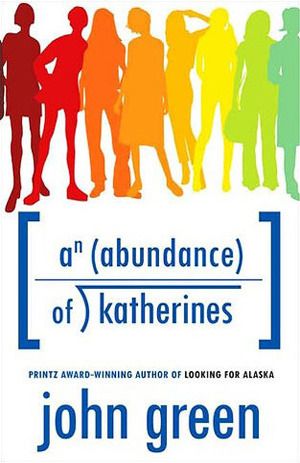
Review: An Abundance of Katherines by John Green

 photo 5katherines_zps50758107.jpg
Title: An Abundance of Katherines
Author: John Green
Genre: Young Adult Contemporary
Release Date: September 1, 2006
Publisher: Dutton
Format: Hardcover
Pages: 229
Links: Goodreads | Amazon | Bookdepository
Read from March 6 to 8, 2013
My rating: 3 stars: I like it (3.5)
Summary: Katherine V thought boys were gross. Katherine X just wanted to be friends. Katherine XVIII dumped him in an e-mail. K-19 broke his heart. When it comes to relationships, Colin Singleton's type happens to be girls named Katherine. And when it comes to girls named Katherine, Colin is always getting dumped. Nineteen times, to be exact. On a road trip miles from home, this anagram-happy, washed-up child prodigy has ten thousand dollars in his pocket, a bloodthirsty feral hog on his trail, and an overweight, Judge Judy-loving best friend riding shotgun--but no Katherines. Colin is on a mission to prove The Theorem of Underlying Katherine Predictability, which he hopes will predict the future of any relationship, avenge Dumpees everywhere, and finally win him the girl. Love, friendship, and a dead Austro-Hungarian archduke add up to surprising and heart-changing conclusions in this ingeniously layered comic novel about reinventing oneself.

What is the point of being alive if you don't at least try to do something remarkable?

This is my second John Green book (the first is Looking for Alaska, for which I will write a review after this one), and honestly I didn't like it as much as I did Alaska. They are totally different, and I think I prefer the Alaska kind of mood to this comic one. But this is not to say that Katherines isn't a good book; it is a good book, but just not one that will compel me to gush about it forever.

In John Green's second novel, Colin Singleton, a "washed-up child prodigy," just gets his heart broken by K-19, which is the starting point of this whole novel. All his life, Colin's love interests have been all named "Katherine" (the exact spellings, no variations)—he explains this somewhere in the story that once he got together with the second Katherine, he felt like he wanted to keep the streak (forgive me if my memory is wrong; after all, "you don't remember what happened. What you remember becomes what happened," to quote John Green).  The best friend, Hassen, a "fatty" and "not a terrorist" (hahaha he always says funny things), thinks it will do him good if they go on a road trip together, because, well, road trips are awesome, right? On the way, Colin sees this poster that says Archduke Franz Ferdinand's corpse, which started WWI, is buried in Gutshot, Tennessee. And because Colin is Colin, who has interests in everything (actually, the book says he doesn't "know from boring"), they go see it. And Gutshot, Tennessee just might start a new chapter in his life, one that doesn't involve any more Katherines, but one that will see Colin comes to terms with his high expectations of himself and others.

I think John Green did a really great job in crafting compelling characters. Like in Alaska, the characters in this book feel so real, so alive, so likeable and relatable in ways big and small. Colin is a unique human being who is miserable most of the time because of the pressure he puts on himself. I understand where he's coming from; always wanting to be better than what you already are, because "good" isn't enough to be remarkable. It's scary, don't you think, to think that you've got something to offer, but that talent is "lodged" with you "useless" (to quote John Milton), because so far you haven't offered anything yet, and you don't know if you'll ever be able to do something about it. It's scary! And it eats at you, this pressure you put on yourself. To think that it is bad for me, I know that it must be worse for Colin, because at least he has a ground on which he can always assess his "matterness." A child prodigy, now teenager Colin expects himself to be even more than that, but not all child prodigies grow up to be or geniuses or necessarily remarkable. This Colin quote: "I just want to do something that matters. Or be something that matters. I just want to matter" speaks to me quite personally, and I'm sure it speaks to a lot of other people as well, as it wraps up this feeling of wanting to be more so well.

But to say that Colin is my favorite would be totally wrong, even if I do like him. Hassen, I have to admit, is the most colorful character in the book. If you know me personally, you might know that I don't cope very well with boredom. Boredom is lethal to me, it chokes and suffocates me (which is the main reasons why I abandon a lot of books), and most of the time I don't stick with books long enough to discover the not-boring parts. But Hassan, he colors everything. Any scenes with him never failed to crack me up, and I totally mean it. Books don't usually make me laugh out loud; chuckle, maybe, or snort, but not laugh out loud, and that's exactly what Hassan made me do. My mom asked me if I was alright, because I laughed long and hard and intermittently. Hassan is the best. And I would totally love to have a friend like him in real life. He just makes everything better.

I will say this again in my review for Alaska because this thought originally occurred to me while I was reading it, but I'll also say it now to make my point: John Green's writing skill is clearly excellent. So excellent that sometimes some passages would strike me, like as soon as I read them I know it's what I've been feeling but didn't know how to put into words. Still, all the time I was reading Katherines, I could feel the absence of something, only I didn't know what it was until the book ended: this book, for me, is not so much plot as characters, and I don't know if that's good or bad. I would love more plot, though, to hold it together better. And I didn't like the ending. So abrupt, and a little contrived, if I may. But overall an enjoyable read. And who'd have known that math could be associated or interwoven with something so hilarious and fun?

------------------------
This review is also posted on Goodreads.

Friday, January 18, 2013

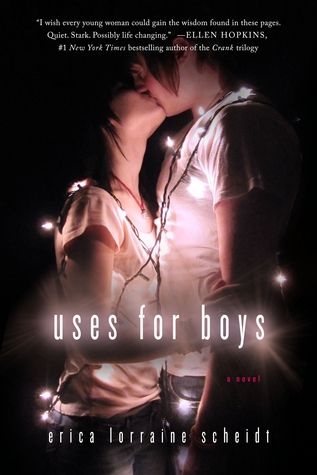
Review: Uses for Boys by Erica Lorraine Scheidt

Title: Uses for Boys
Author: Erica Lorraine Scheidt
Genre: Young Adult Contemporary
Release Date: January 15, 2013
Publisher: St. Martin's Press
Format: eARC
Pages: 240
Source: Publisher via NetGalley
Links: Goodreads | Amazon | Bookdepository
Read from January 14 to 15, 2013
My rating: 3 stars: I like it (2.5)
Summary: Anna remembers a time before boys, when she was little and everything made sense. When she and her mom were a family, just the two of them against the world. But now her mom is gone most of the time, chasing the next marriage, bringing home the next stepfather. Anna is left on her own—until she discovers that she can make boys her family. From Desmond to Joey, Todd to Sam, Anna learns that if you give boys what they want, you can get what you need. But the price is high—the other kids make fun of her; the girls call her a slut. Anna's new friend, Toy, seems to have found a way around the loneliness, but Toy has her own secrets that even Anna can't know. Then comes Sam. When Anna actually meets a boy who is more than just useful, whose family eats dinner together, laughs, and tells stories, the truth about love becomes clear. And she finally learns how it feels to have something to lose—and something to offer. Real, shocking, uplifting, and stunningly lyrical, Uses for Boys is a story of breaking down and growing up.


I have no father. I have no mother. Then you came along and everything changed. 

Uses for Boys majorly caught me off guard. I started this book thinking it would be just another YA Contemporary about troubled teenagers. In the beginning it does feel like one; but then the story takes a totally different turn from what I expected, and led me along a road I would've never taken if it I had known any better.

Anna grows up with no father. In her early childhood, her mother would tell her again and again that Anna is all she ever wanted, and Anna loved the idea. It was bliss, until her mother starts going out all the time to chase after new husbands, one after another, and then she has no time for Anna anymore. Growing up with no father and as good as no mother, Anna turns to the people who give her attention: boys. All of a sudden boys start talking to her, saying that she's pretty, flirting with her, and Anna goes along with it, giving them all they want, one boy after another, just so she can have their company.

I have mixed feelings about this book. On one hand, it's quite entertaining. If it were dull, I would've hated it, but it wasn't, so I went through it pretty fast. It has an easy narrative style, like a person talking, rather than a well thought-out piece of writing like other novels. The story is divided into a lot of parts, and each parts come up pretty randomly, so it isn't always predictable. And that's a good things. But on the other hand, the subject matter is quite discomforting. The book talks about sex pretty bluntly, and I feel weird reading this in the words of a thirteen or fifteen year old (I don't remember which one). For a young girl her age, Anna is very experienced with boys, having slept with 4 or more (I lost count), not to mention that she got pregnant, and had an abortion. I didn't enjoy watching someone let her life slip away like that for no good reason other than to feel loved.

Her mother is partly to blame, I get that. Negligent parents do a lot of damage to their children. And we can see how Anna's mother affects her pretty clearly. She would say that she cares, but then she never shows it. What kind of mother lets her child quit school and move out at 13 to live in a boyfriend's apartment? As hard is it is to imagine, I know there are parents like this out there.

In a way, I think I understand that this book just wants to "tell it like it is" with no fancy fabrications, no glorifying, no denouncing. That would explain why the narrative is this way, and why Anna doesn't acknowledge any of her actions to be anything (not the right thing, not the wrong thing, not a mistake, not anything) other than things she feels like she has to do. Trying so hard to impress, Anna willingly falls victim to her so-called friend and boyfriends, and this is very common among teenagers. Like Anna, they're not always likeable, and don't always know right from wrong. We can judge all we want, but it's also important to understand them, why they are the way they are and why they do the things they do. To me, Uses for Boys is a story that speaks of real teenagers with problems. Even though the book falls short of plot and denouement, it's quite an easy and enjoyable read, unless you're put off by dark, discomforting stories with (too) many sex scenes.

------------------------
This review is also posted on Goodreads.
I received a digital copy from NetGalley and the publisher for review.

Wednesday, January 16, 2013

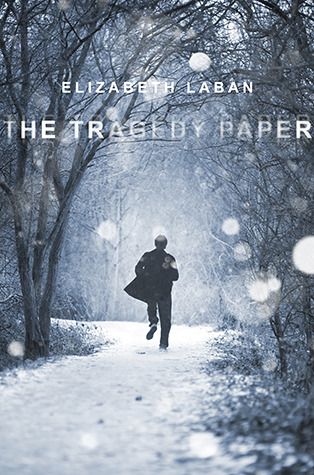
Review: The Tragedy Paper by Elizabeth LaBan

Title: The Tragedy Paper 
Author: Elizabeth LaBan 
Genre: Young Adult Contemporary
Release Date: January 8, 2013
Publisher: Knopf Books for Young Readers
Format: eARC
Pages: 320
Source: Publisher via NetGalley
Links: Goodreads | Amazon | Bookdepository
Read from January 4 to 6, 2013
My rating: 3 stars: I like it (2.5)
Summary: Tim Macbeth is a 17-year-old albino and a recent transfer to the prestigious Irving School, where the motto is, “Enter here to be and find a friend.” Tim does not expect to find a friend; all he really wants to do is escape his senior year unnoticed. Despite his efforts to blend into the background, he finds himself falling for the quintessential “it” girl, Vanessa Sheller, girlfriend of Irving’s most popular boy. To Tim’s surprise, Vanessa is into him, too, and she can kiss her social status goodbye if anyone finds out. Tim and Vanessa enter into a clandestine relationship, but looming over them is the Tragedy Paper, Irving’s version of a senior year thesis, assigned by the school’s least forgiving teacher. The story unfolds from two alternating viewpoints: Tim, the tragic, love-struck figure, and Duncan, a current senior, who uncovers the truth behind Tim and Vanessa’s story and will consequently produce the greatest Tragedy Paper in Irving’s history. 


Sometimes it's hard, impossible even, to know how much magnitude a choice holds until it is all over. 

Duncan Meade enters the Irving School a senior this year. As a school tradition, each senior gets their own dorm room without having to share it with anyone. On the first day of school, each senior will go to the senior hall and find their room; and in the room, there will be "treasures" left behind for them from the previous senior who lived there. Duncan has one fear: he is afraid to find out if the smallest room in the hall belongs to him. And of course, it does. The treasures the previous owner, Tim Macbeth, leaves behind for Duncan is a note and a stack of CDs. Those CDs play the recordings of Tim's story for Duncan as the "meat of your Tragedy Paper," which is the Irving School's senior English paper to be handed in at the end of the school year.

The Tragedy Paper started out, for me, as intriguing; I was curious to see how the connection between Tim Macbeth and Duncan Meade would play out. Would it be, you know, like Shakespeare's Macbeth, in which Macbeth kills Duncan? Or would Tim Macbeth share the same tragic flaw with Macbeth, and Duncan the receiving end of that flaw like King Duncan? Or what? Of course, I was expecting the use of these two names to have some significance. I have been taught in Literature class that a text alludes to something like this, it is saying something implicitly, and you should find what it infers. But it looks like this book falls flat in that department, because as far as I know, the only function of this allusion is only to tell the reader: Hey! This book is a tragedy because its two main characters are named after the two in Shakespeare's tragedy Macbeth! Hmm. Right now, in my head, I can even see my beloved Lit teacher hold up her index finger in a warning manner, and hear her say her favorite disapproval: "Nonono."

Again, I don't seem to share everyone (who's read it)'s enthusiasm about this book. Some say that it's "deep" and "profound," but I honestly don't see how that can be. It's not like I suck that much at reading between the lines and critical thinking; how about it's just meh? 90% of the book is about Tim told, narrated by Tim's recordings which Duncan listens to; while Duncan's part takes up only about 10%. And this makes me wonder why it has to be written this way. Not only does it bother me that the book doesn't just simply tell Tim's story--which already is the focus, if not the entire meat, of this story--it has to have Duncan as a medium (why bother?), but it also irritates me that, knowing very well Duncan's function is only to hang around and play the CDs so we can listen to them as well, the book tries so hard to have Tim affect his romantic life--in a way trying to make a connection between them when it's strained and uncalled for. If there'd been some believable and close connection between them for the recordings to have their natural effects, I would've believed it and appreciated it more.

In the end, I'll say that The Tragedy Paper is not a bad book, but there are a lot of things that I personally didn't like. The ending, for instance, felt too contrived in the way that it is steered into a tragedy pattern, which I understand since I get it, the point is that this book is a tragedy; but I still didn't like it that much. And the effects Tim's story has on Duncan are to me a little too unbelievable. I'd love for it to have more substance, and if the switching between two points of view is going to be this unbalanced and the connection this strained, how about no switching at all? I'd be happy to read Tim's story alone as the whole book without Duncan having a voice in part. That's just me. For the most part, I enjoyed Tim's story and wanted to see how it was tragic and how it would end, but once I did, I felt greatly underwhelmed. Still, as I said, it's not a bad book. It has good potentials but it's just not my cup of tea. 2.5 stars.

 ------------------------
This review is also posted on Goodreads.
I received a digital copy from NetGalley and the publisher for review.

Monday, January 14, 2013

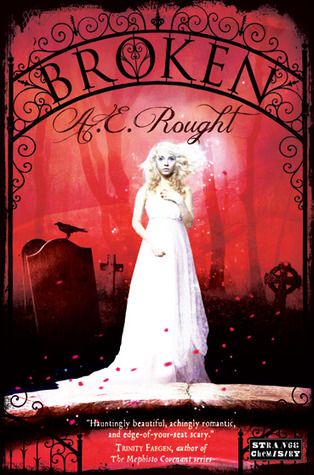
Review: Broken by A.E. Rought

Title: Broken 
Author: A.E. Rought 
Genre: Young Adult Paranormal
Release Date: January 8, 2013
Publisher: Strange Chemistry
Format: eARC
Pages: 384
Source: Publisher via NetGalley
Links: Goodreads | Amazon | Bookdepository
Read from January 6 to 14, 2013
My rating: 2 stars: Nothing special
Summary: A string of suspicious deaths near a small Michigan town ends with a fall that claims the life of Emma Gentry's boyfriend, Daniel. Emma is broken, a hollow shell mechanically moving through her days. She and Daniel had been made for each other, complete only when they were together. Now she restlessly wanders the town in the late Fall gloom, haunting the cemetery and its white-marbled tombs, feeling Daniel everywhere, his spectre in the moonlight and the fog. When she encounters newcomer Alex Franks, only son of a renowned widowed surgeon, she's intrigued despite herself. He's an enigma, melting into shadows, preferring to keep to himself. But he is as drawn to her as she is to him. He is strangely... familiar. From the way he knows how to open her locker when it sticks, to the nickname she shared only with Daniel, even his hazel eyes with brown flecks are just like Daniel's. The closer they become, though, the more something inside her screams there's something very wrong with Alex Franks. And when Emma stumbles across a grotesque and terrifying menagerie of mangled but living animals within the walls of the Franks' estate, creatures she surely knows must have died from their injuries, she knows.
Hurting is better than forgetting.

As I haven't really been a fan of paranormal books, I started Broken with little to no expectation. After the first few pages, I was hooked. The prose was very delicate and wonderful to read; it sounded poetic. I loved the way the author described things in beautiful metaphors, as it really got the message, tone, and feelings across, embedded within those words. I was deeply impressed, but it didn't take long for things to go the other way around. In this case, I think it's best to quote Markus Zusak of The Book Thief: "Like most misery, it started with apparent happiness." And I don't mean the character's, I mean mine.

Things started to get bad after Emma, forever pining after her dead boyfriend Daniel, meets the new boy Alex. Then the teen girl instinct kicks in and she gets obsessed with him, saying how he makes her feel and how she shouldn't feel that way, asking questions along the lines of why-does-he-make-me-feel-this way and what-does-he-mean-by-saying-that-or-looking-at-me-like-that, which I can't really stand. This continues for pretty much the rest of the story. What's worse, Emma is obsessed with some of the sentences Alex says, and would repeat it again and again and again. I know the function of those sentences and Emma's need to repeat it, but really, the tireless repetition is a little uncalled for. It's like the writer doesn't trust the reader to be smart enough to pick up on the foreshadows, and it's a bit trying too hard to keep the whole story unified. It's too much for me, and after a few times it really started to bother me.

The plot is predictable. So predictable that I felt like it was pointless to read this book at all. There are more parts I disliked than parts I liked. And even though I really did enjoyed it in the beginning, I lost patience with it after a while and had to force myself to finish it. I mean, of course, the romance has to be so sappy that the boy is willing to do anything to be with the girl, and say something like "[My heart] doesn't beat for me. It's for you" even if they've known each other for two weeks. And of course, the boy has to be so messed up that the girl thinks it's attractive. And of course, the boy has to remind the girl of the dead boyfriend and echo his exact words and make her heart confused. And of course, the girl has to be so confused that she keeps a distance but pines for him anyway, 'cause apparently she can't live without him. These are only some examples of the worst cliches ever. Yawn.

In some ways, Broken is so bad that it reminds me of Twilight. Although Broken has better writing (only in the beginning), they're both made of uninteresting characters I don't care about, plots I don't like, romance that makes no sense and I have to roll my eyes at; overall books I can't stand. I think they're on the same level of bad paranormal romance. So readers of Twilight might enjoy this better than I did.

------------------------
This review is also posted on Goodreads.
I received a digital copy from NetGalley and the publisher for review.

Saturday, January 5, 2013

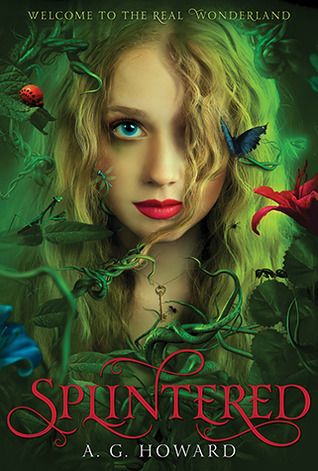
Review: Splintered by A.G. Howard

Title: Splintered
Author: A.G. Howard
Genre: Young Adult Fantasy
Release Date: January 1, 2013
Publisher: Amulet Books
Format: eARC
Pages: 384
Source: Publisher via NetGalley
Links: Goodreads | Amazon | Bookdepository
Read from December 28 to January 2, 2013
My rating: 4 stars: I really like it
Summary: This stunning debut captures the grotesque madness of a mystical under-land, as well as a girl’s pangs of first love and independence. Alyssa Gardner hears the whispers of bugs and flowers—precisely the affliction that landed her mother in a mental hospital years before. This family curse stretches back to her ancestor Alice Liddell, the real-life inspiration for Lewis Carroll’s Alice’s Adventures in Wonderland. Alyssa might be crazy, but she manages to keep it together. For now. When her mother’s mental health takes a turn for the worse, Alyssa learns that what she thought was fiction is based in terrifying reality. The real Wonderland is a place far darker and more twisted than Lewis Carroll ever let on. There, Alyssa must pass a series of tests, including draining an ocean of Alice’s tears, waking the slumbering tea party, and subduing a vicious bandersnatch, to fix Alice’s mistakes and save her family. She must also decide whom to trust: Jeb, her gorgeous best friend and secret crush, or the sexy but suspicious Morpheus, her guide through Wonderland, who may have dark motives of his own.


I'm going to London to find the rabbit hole. Even though I'm scared gutless of where it might lead, of who's waiting inside for me. Of whatever I'm supposed to do once I'm there. I have to go. 

Is there a better way to end 2012 and start 2013 than spending time immersing yourself in the enchanting Wonderland of Splintered? No, I don't think so. Even though I've never actually read the original Alice's Adventures in Wonderland by Lewis Carroll, I was still able to catch up with this retelling of the famous and beloved classic, and came away liking it a lot.

Alyssa Gardner believes she's a descendant of Alice Liddell. And she believes that the females in her family are cursed; they hear bugs and plants talk. Alyssa is afraid of becoming like her mother, who is in an asylum--"mad," dressed in a pinafore and refusing to eat anything unless it's served in a teacup--and her grandmother, who, believing she could fly, jumped out of the window to her death. Splintered's Wonderland is a few notches crazier, darker, more horrible, and more twisted, and Alyssa needs to go there to fix Alice's mistakes and put an end to the curse that haunts her family once and for all. But what she doesn't plan is for Jeb, her best friend and secret crush, to get dragged along into this. As they enter Wonderland through the rabbit hole, they take on a journey to do something they didn't intend to, and become involved in a business that is not theirs--a business that, unless carried out successfully, will keep them in Wonderland forever.

What I liked about this book is its captivating spin of the original Wonderland story. As a member of this generation, I cannot help but know about the young Alice and her Wonderland. I believe I have seen a Disney film once when I was little, but I'm not sure; and I saw Tim Burton's film starring Johnny Depp the first week it came out in cinema (I enjoyed it but I didn't think it was that good). So yeah, I do know about it even though I've never actually read the book. Splintered still maintains some things from the original: Wonderland, the Caterpillar, Queen Red, White Rabbit or Rabid White, the Mad Hatter or Herman Hattington, and of course the Alice legend. But they're not entirely similar; Splintered takes an interestingly dark turn, paints Wonderland in a light that is anything but wonderful--a place full of monsters trying to either eat/kill you or use you.

In the latter category belongs Morpheus, a netherling moth (not sure what that is) who somehow grows up with Alyssa. Now, this is an interesting character. Words used to describe him depict him as a sexy, seductive and sensual being that draws Alyssa to him and influences her, rendering her unable to think straight. I think A.G. Howard did a really great job forming this character and choosing words that reinforce his personality, because man, is he hot *fans self*. I could feel his charms permeating the air even by just reading his dialogue, seriously. This is one of the characters who isn't always likeable but always enjoyable to read about. He's, in his own words, mysterious, rebellious, and troubled--"the qualities women find irresistible."

One of those women, besides myself, is Alyssa. I enjoyed it when she doesn't know how to feel around him. But I also liked Alyssa when Morpheus isn't around. Normally she's brave, smart and a little mad. A truly likeable protagonist. Girls that kick ass. Jeb is a delightful character as well. I found the IloveyoubutI'mwithhersoIcantakemymindoffofyou thing way too cliché, but I'll take it because Jeb is just so sweet and always says the right thing and and makes me swoon and everything. But in comparison to Morpheus, he unfortunately pales as a weaker and less interesting character.

On the whole I really liked this book. The writing is fantastic, the characters pleasant, and the story very entertaining. Quite action-packed, this book is a wonderful read. If I were in any position to judge, I would say that this is one interesting interpretation of Wonderland and a very well-done retelling of the classic, not to mention very well thought-out. It's thrilling, with plot twists here and there to keep things unpredictable and exciting. If you're already a fan of Lewis Carroll's book, you won't want to miss this! Or even if you're not, you won't want to miss this either!

------------------------
This review is also posted on Goodreads.
I received a digital copy from NetGalley and the publisher for review.

Monday, December 10, 2012

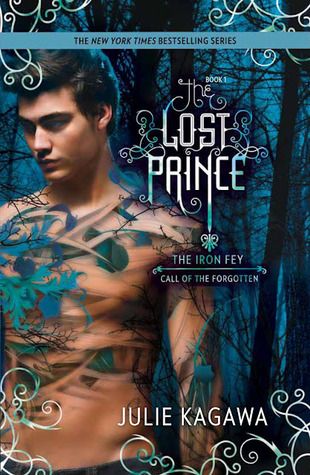
Review: The Lost Prince by Julie Kagawa

Title: The Lost Prince 
Author: Julie Kagawa
Series: The Iron Fey: Call of the Forgotten #1
Genre: Young Adult Fantasy
Release Date: October 23, 2012
Publisher: Harlequin Teen
Format: Paperback
Pages: 379
Source: Publisher via NetGalley
Links: Goodreads | Amazon | Bookdepository
Read from November 12 to 21, 2012
My rating: 3 stars: I like it
SummaryDon’t look at Them. Never let Them know you can see Them. That is Ethan Chase’s unbreakable rule. Until the fey he avoids at all costs—including his reputation—begin to disappear, and Ethan is attacked. Now he must change the rules to protect his family. To save a girl he never thought he’d dare to fall for. Ethan thought he had protected himself from his older sister’s world—the land of Faery. His previous time in the Iron Realm left him with nothing but fear and disgust for the world Meghan Chase has made her home, a land of myth and talking cats, of magic and seductive enemies. But when destiny comes for Ethan, there is no escape from a danger long, long forgotten. 


There is a whole unknown world that exists around us, side by side, and no one knows it is there. Except for a few. A very rare few, who can see what no one else can. And the spirits of this world can be helpful or harmful, friendly or wicked, but above all, those who see the invisible world are constantly trapped by it. They will always walk between two lives, and they will have to find a way to balance them both. 

When I finished this book almost three weeks ago, I decided I wasn't pumped about it enough to write a review. You see, since I had neither praises nor criticisms, there was nothing worth saying, right? But since the day I finished the book, I couldn't help but feel bad for leaving it without saying anything. I felt I owed the original Iron Fey series that much to at least say something instead of just letting it pass me by.

I had high hopes for it. I did. And I guess everyone did, too. The Iron Fey series has been unimaginably fun, and after four main books, I'd grown to adore the Nevernever and everything in it. I remember Ethan, that little boy who was so quiet, who could see fairies, who was mature even when he was 4 years old. Well, he's grown up now, and he's changed. Broody Ethan hates the fairies' guts, which isn't very surprising since he thinks they took his sister away from him and made her their Queen, making it unlikely that she would come home. Ethan lives his life in fear of Them. He keeps a low profile, making sure to never attract any unwanted attention. His plan was going quite well until Kenzie St. James wants to be this tough guy's friend, and until Ethan accidentally looks straight at a fairy, and now They know he can see Them. Ethan then gets involved, involuntarily, with a new kind of fairies—the "Forgotten." And that leads him to the Nevernever, the place he never wants to set foot in, ever. But there he is.

I liked that this book brings back the old characters; it's a delight to see them all again. Meghan, Ash, Puck, Grimalkin, Razor, and what a surprise, Keirran! And he has a love interest! Honestly, I didn't particularly love the story. I felt it was quite mediocre, like The Iron Knight, only a bit better. I din't instantly like Ethan with his brooding nature, nor Kenzie with all her contrived enthusiasm to have something to do with the fairies. I think their characters are a bit too much, too constrained. Possibly to achieve sharp and clear contrasts between them, you know, opposites attract and whatnots. I had a hard time believing anything in this book, including their relationship development. One minute Ethan doesn't one to have her around, then another he wants to kiss her. As I said, it felt unnatural.

Admittedly, I was greatly disappointed. I was expecting mind-blowing, earth-shattering, but I only got alright and mediocre. A letdown, if I may. I guess I had my hopes up too high. Still a fun book on the whole, though. Looking forward to the next book!

------------------------
This review is also posted on Goodreads.
I received a digital copy from NetGalley and the publisher for review.

Tuesday, November 13, 2012

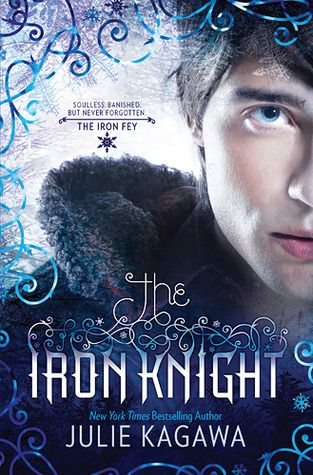
Review: The Iron Knight by Julie Kagawa

Title: The Iron Knight
Author: Julie Kagawa
Series: The Iron Fey #4
Genre: Young Adult Fantasy
Release Date: October 26, 2011
Publisher: Harlequin Teen
Format: Paperback
Pages: 394
Links: Goodreads | Amazon | Bookdepository
Read from November 5 to 11, 2012
My rating: 3 stars: I like it
Summary: Ash, former prince of the Winter Court, gave up everything. His title, his home, even his vow of loyalty. All for a girl… and all for nothing. Unless he can earn a soul.
To cold, emotionless faery prince Ash, love was a weakness for mortals and fools. His own love had died a horrible death, killing any gentler feelings the Winter prince might have had. Or so he thought. Then Meghan Chase—a half human, half fey slip of a girl— smashed through his barricades, binding him to her irrevocably with his oath to be her knight. And when all of Faery nearly fell to the Iron fey, she severed their bond to save his life. Meghan is now the Iron Queen, ruler of a realm where no Winter or Summer fey can survive. With the (unwelcome) company of his archrival, Summer Court prankster Puck, and the infuriating cait sith Grimalkin, Ash begins a journey he is bound to see through to its end— a quest to find a way to honor his solemn vow to stand by Meghan’s side. To survive in the Iron realm, Ash must have a soul and a mortal body. But the tests he must face to earn these things are impossible. At least, no one has ever passed to tell the tale. And then Ash learns something that changes everything. A truth that turns reality upside down, challenges his darkest beliefs and shows him that, sometimes, it takes more than courage to make the ultimate sacrifice.


I will be with her again, or I will die. There aren't any other options. 

I finished the previous book, The Iron Queen, with so great a satisfaction that I expected nothing less from this follow-up, but after pages and pages of adventure and mysteries and secrets, I ended up disappointed. This is not to say that The Iron Knight is a bad book, only it just didn't live up to its three predecessors, and is in my opinion the most mediocre one out of the four.

In this book, Ash sets out on a dangerous journey to the End of the World in order to earn a human soul, as it is the only way he can be with Meghan in the Iron realm without eventually dying from Iron. Ash isn't alone in this quest; there are the usuals—Puck and Grimalkin—and other two surprising characters accompanying him and seeing him through to the end. They follow a very dangerous path into the strangest and darkest parts of the Nevernever where it is said those who have gone in there have never come back.

As much as I love Ash, I didn't find the narration via his POV to be very satisfying. There were more than a dozen times when I felt like this book was written in the third person POV rather than Ash's, because if he's voicing the story, I didn't hear it. Only in some chapters did I really get into his head. Any other times it just felt like I'm reading dialogues. And I would doze off and then not pick up the book until another day came. In all honesty, I would say that I enjoyed Meghan's storytelling far more than Ash's.

When I neared the end of the book, I was praying so hard that Ash would change his mind. I was never one to compromise my identity, who I am, for someone else, so that's why I didn't completely agree with the journey he takes on. I didn't find his quest romantic, instead I found it stupid. Stupid, stupid, stupid Ash. But what can I say? Love makes you blind, right? His undying love for Meghan didn't touch me quite as deeply as the sacrifices made for him, and the friendship offered to him by other characters. When Ash lives the future in his head, I felt his sadness and I hoped he would turn his back. A Winter Prince—invincible, immortal—wants to become a weak mortal for his love? I just couldn't grasp it. Why not wish for an immunity against iron instead? That would make much more sense.

The part that I hate the most is when it's one of those weird moments again when I don't like a book as much as everybody else. Every one of my GR friends who have read this all gave it 5 stars. Let me repeat, all of them gave The Iron Knight five stars. And when I finished the book, I was sitting there and all, "Really? Is that it?" and feeling very very very underwhelmed. My feeling and enjoyment while reading this have been sadly rather static in a pretty mediocre level. It felt almost as tedious as household chores. And I hate that because I feel like I missed out on something that nobody missed that could have added two more stars to this rating, or could have made me love this book with all I had. Which obviously didn't happen. 

On the whole, I'm happy with the way things turn out. Meghan and Ash get what they deserve in the end. In the past month I've been reading the whole Iron Fey series, and it has given me so much joy. Naturally, I felt sad that I had to let these characters go. I've grown to love them a lot. And I will terribly miss them.

------------------------
This review is also posted on Goodreads.

Tuesday, November 6, 2012

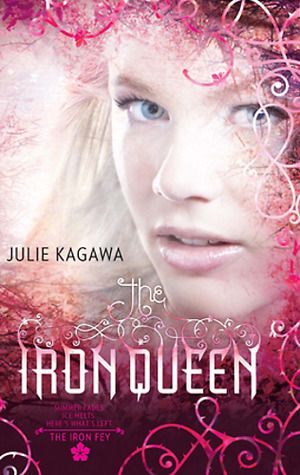
Review: The Iron Queen by Julie Kagawa

Title: The Iron Queen
Author: Julie Kagawa
Series: The Iron Fey #3
Genre: Young Adult Fantasy
Release Date: January 25, 2011
Publisher: Harlequin Teen
Format: Paperback
Pages: 358
Links: Goodreads | Amazon | Bookdepository
Read from October 30 to November 3, 2012
My rating: 5 stars: I love it! It's amazing!
Summary: My name is Meghan Chase. I thought it was over. That my time with the fey, the impossible choices I had to make, the sacrifices of those I loved, was behind me. But a storm is approaching, an army of Iron fey that will drag me back, kicking and screaming. Drag me away from the banished prince who's sworn to stand by my side. Drag me into the core of conflict so powerful, I'm not sure anyone can survive it. This time, there will be no turning back.


You've become a major player in this war. You're balanced on the edge of everything—faery and mortal, Summer and Iron, the old ways and the march of progress. Which way will you fall? Which side will you choose? 

When I read The Iron King and The Iron Daughter, I felt they had a great potential but weren't quite there yet, so they both got four stars from me. I didn't expect the third installment, The Iron Queen, to surpass the previous two, and that's why I was so blown away by how truly amazing this one is, which I didn't see coming at all. This book is much better than the first two and that made me believe that this is Julie Kagawa at her best.

The story picks up instantly where book two leaves off: Meghan and Ash's exile from the Nevernever. Meghan thinks that she won't be bothered by the fairies anymore, but she's dead wrong. Iron fairies are still roaming the mortal world looking for her, because the false king believes that by killing Meghan, he'll get King Machina's power. At the same time, the false king's army has been getting stronger and attacking Summer and Winter. And Meghan might just be Nevernever's only hope to defeat the false king and restore peace.

The first half starts off pretty slowly and maintains its pace throughout, which made me a little impatient. But when the second half starts, things pick up fast and remain fast until the end, which I loved. I read the second half all in one sitting, and I really couldn't tear my eyes away. Julie Kagawa gives me excitements after excitements after romances after heartaches after sadness after excitements. I said in my reviews of the previous two books that the fight scenes for me felt somehow lacking. However, in this book, Julie Kagawa gave me everything and then more. It was breathtakingly fun! Fun fun fun! Best fight scenes in the series are in The Iron Queen. Epic battles. I loved it. With everything thrown my way, it was indeed difficult to stop. I swallowed it whole, I took everything in all at once. It was delightful.

The characters are more developed in this book, fully formed. I liked Meghan more now, seeing her grow from a feeble helpless half-breed to a strong warrior deserving to be Queen. And although I couldn't make up my mind earlier, I'm now Team Ash. That boy does crazy things to my stomach, let me tell you. He's so cute, like, he makes me bury my head in my pillow and squee endlessly, come up for air and then bookmark those lovely scenes. And hot scenes, because, well, they're so hot. But my being on Team Ash doesn't mean that I don't like Puck now. I still do, but less than Ash. Poor Puck, getting his heart ripped out and stomped on. He'll continue to make my heart ache, I'm sure. Grimalkin still amuses me endlessly with his wits and sarcasm. Bad kitty, as Razor says. Razor is so cute.

And if anything is to be said about Julie Kagawa's writing, I'd repeat it: this is Julie Kagawa at her best. I don't know how she does it, but she pulls it off beautifully. Her words make the story flow very smoothly and reinforces the story very well, making us see things more clearly and feel things more intimately. So charming.

Apart from all the fun it gave me, this book made me shed a lot of tears (oh, Ash). And I loved every minute of the journey I traveled with Meghan. I hope it's only getting better from here, as I am now ready to take on the next books.

 ------------------------
 This review is also posted on Goodreads.

Monday, October 29, 2012

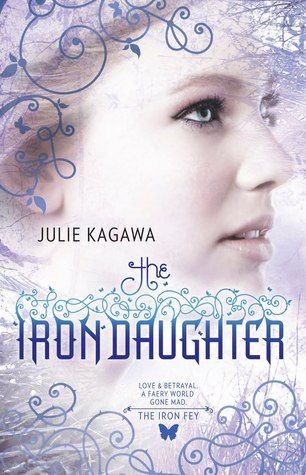
Review: The Iron Daughter by Julie Kagawa

Title: The Iron Daughter
Author: Julie Kagawa
Series: The Iron Fey #2
Genre: Young Adult Fantasy
Release Date: August 1, 2010
Publisher: HarlequinTEEN
Format: Paperback
Pages: 359
Links: Goodreads | Amazon | Bookdepository
Read from 21 to 25 October, 2012
My rating: 4 stars: I really like it
Summary: Half Summer faery princess, half human, Meghan has never fit in anywhere. Deserted by the Winter prince she thought loved her, she is prisoner to the Winter faery queen. As war looms between Summer and Winter, Meghan knows that the real danger comes from the Iron fey—ironbound faeries that only she and her absent prince have seen. But no one believes her. Worse, Meghan's own fey powers have been cut off. She's stuck in Faery with only her wits for help. Trusting anyone would be foolish. Trusting a seeming traitor could be deadly. But even as she grows a backbone of iron, Meghan can't help but hear the whispers of longing in her all-too-human heart.


Because if I was going to play in the Unseelie Court, I had to be made of ice. No, not ice. Like iron. 

In The Iron King Ash kept his word to help Meghan on her quest to the Iron realm, and now Ash expects Meghan to fulfill her end of the bargain by going back with him to the Winter Court. Meghan gladly goes with him to the place where being a Summer fey is something to get you in trouble. And on top of that, she's Oberon's half-breed. All the more troubles come her way. Ash has to act cold and distant, and it's killing Meghan to think that after all they've been through, Ash is just going to walk away, saying none of that was real, that everything was just his way of making her come here. Just when Meghan thinks that she's defeated the Iron King Machina, and that there is no more threat to the Nevernever, the Winter Court is attacked from within by the new Iron King's soldiers. Blamed for the death of the oldest Winter Prince and for stealing the Scepter of the Seasons, Meghan has to prove herself and the Summer Court innocent by getting the Scepter back before Winter starts war with Summer, which can bring the end of the Nevernever, and the start of the Iron realm's ruling power.

At first I felt a little underwhelmed by The Iron Daughter because there was so much running around but nothing accomplished. I'm not saying that it was too slow, but the story just felt all over the place with no clear direction to me. I also felt that the novel was too focused on the love triangle. It is without a question heart-rending, as I can't really pick one myself (as I said in my Iron King review, I keep changing sides) but I wanted more than that. I was prepared to give this book 3 stars when there still wasn't much going on, but when the plot came together nicely I changed my mind. When actions started it was pretty much heart-stopping, and much much better than the earlier parts. I felt terribly sad and cried at the losses that come to pass, and the choices the characters have to make. Feelings are made very clear in this book and it tears my heart open. Sacrifices always get me, and those present in this book ate at my heart.

There are lot of things I liked in this book. I liked how the clues dropped in the first book played out in this one, but not to the full extent. I feel there's still a lot coming to be revealed and unraveled, something grand waiting to jump out at us once the puzzle pieces fall together. And I can't wait for that to happen. I want it to be epic. My love for the characters grew as I got to know them better, especially Ironhorse. I've grown to love his BOOMING VOICE and his loyalty. Ash is as usual a heartthrob. And Puck is just hilarious and adorable. Grimalkin is, well, Grimalkin. But sometimes I didn't like Meghan. She only stands there and is protected and isn't really doing anything on her own. But I also understand that this character is still being built up in the progress, not yet completed. I can't wait to see her when she's her true self. I didn't like that strange things happen but no one asks questions. They just accept it, but why? I would question a lot of things, were I those blind characters. This is one of the things I felt isn't very neatly done. You don't answer questions just to show the answers in an epic way later, but it still doesn't change the fact that you refuse to acknowledge issues that need to be addressed when they come up by ignoring them altogether (and probably wishing we don't catch that). Another thing is that the book says Meghan's power got sealed, and it must take Oberon or Mab to undo it. But then near the end, Meghan uses her power openly, so here's the question: When does it become undone? I don't think it ever does. Tsk tsk.

When I finished this book, my heart was racing. What an ending! My heart ached for Puck. I could feel danger looming ahead. This was almost amazing, but it wasn't there yet, sadly. I actually liked the first book better. With all these questions hanging in the air and clues that still need to be played out, I hope the third book is better!

--------------------------------
This review is also posted on Goodreads.

Tuesday, October 23, 2012

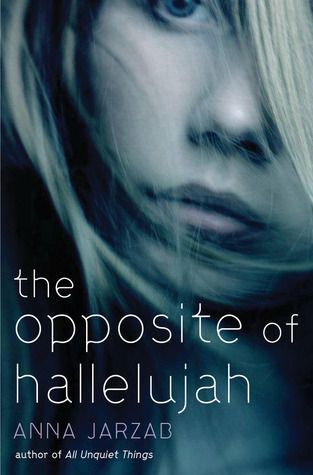
Review: The Opposite of Hallelujah by Anna Jarzab

Title: The Opposite of Hallelujah
Author: Anna Jarzab
Genre: Young Adult Contemporary
Release Date: October 9, 2012
Publisher: Delacourte
Format: eBook
Pages: 464
Source: Publisher via NetGalley
Links: Goodreads | Amazon | Bookdepository
Read from October 9 to 12, 2012
My rating: 4 stars: I really like it
Summary: Caro Mitchell considers herself an only child—and she likes it that way. After all, her much older sister, Hannah, left home eight years ago, and Caro barely remembers her. So when Caro’s parents drop the bombshell news that Hannah is returning to live with them, Caro feels as if an interloper is crashing her family. To her, Hannah’s a total stranger, someone who haunts their home with her meek and withdrawn presence, and who refuses to talk about her life and why she went away. Caro can’t understand why her parents cut her sister so much slack, and why they’re not pushing for answers. Unable to understand Hannah, Caro resorts to telling lies about her mysterious reappearance. But when those lies alienate Caro’s new boyfriend and put her on the outs with her friends and her parents, she seeks solace from an unexpected source. And when she unearths a clue about Hannah’s past—one that could save Hannah from the dark secret that possesses her—Caro begins to see her sister in a whole new light.


No, Caro, you don't understand. You don't even try to understand. You live in a world that revolves completely around you, and you never once, not even for a second, try to see what other people might be experiencing or feeling. You just never think about anyone else, and it's beneath you. 

The Opposite of Hallelujah is one of those books that take me pretty much by surprise. I'd go in expecting one thing and end up getting another. I don't usually handle long books well, but this one didn't feel long to me. I thoroughly enjoyed it and was constantly interested in the characters and the story. I found this book to be quite well written.

As I finished this book eleven days ago, I found it hard to try to recall what I wanted to say about it once I was done reading it. I don't remember much, so this review is going to be short and, hopefully, straight to the point.

This story is about a lot of things: sisterhood, friendship, family, religion, and coming to terms with the past—holding on to it and letting it go. And I enjoyed that a lot. I liked how the author put those things together and made it work. Watching Caro learn a lot of things and grow up in a lot of ways before my eyes was a good experience. I think the author did a very nice job portraying Caro as a stubborn brat who doesn't care much about anyone, and developing Caro's character gradually until she becomes an opposite of herself. I liked how she stands up for herself even when everyone else backs out of her life. She doesn't beg; she needs no one's help; and she's determined to figure things out on her own. Unraveling Hannah's past was also thrilling. Not only that, but also learning how that past affects her choices, making her become the person she is today. A lot of that has to do with her faith in Christianity. I usually don't like it when religion plays a big role in books, but this one doesn't seem preachy. It's not trying to make a point, but just giving food for thoughts, and that was good enough for me. More than the plot, I enjoyed the characters and their development throughout the story. The author's prose kept me going and captivated.

------------------------
This review is also posted on Goodreads.
I received a digital copy from NetGalley and the publisher for review.
Related Posts Plugin for WordPress, Blogger...