Showing posts with label genre: young adult contemporary. Show all posts

Saturday, July 12, 2014

Review: The Fault in Our Stars by John Green

 photo fault-in-our-stars-paperback-movie-tie-in_zps974db3f3.jpg
Title: The Fault in Our Stars
Author: John Green
Genre: Young Adult Ficton
Release Date: January 2012
Publisher: Speak
Format: Paperback
Pages: 313
Links: Goodreads | Amazon | Bookdepository
Read from June 6 to 12, 2014
My rating: 3 stars: I like it
Summary: Despite the tumor-shrinking medical miracle that has bought her a few years, Hazel has never been anything but terminal, her final chapter inscribed upon diagnosis. But when a gorgeous plot twist named Augustus Waters suddenly appears at Cancer Kid Support Group, Hazel’s story is about to be completely rewritten.


There is no shortage of fault to be found amid our stars.

The thing about this book is that I can't quite put my fingers on anything. I can't say I like it, but I don't dislike it either. I can't say it's a good book, but it's not a bad one either. I don't care much about it, but I've read it three times (trying to find something to like). I can't say John Green disappoints me, because he certainly doesn't. I just DON'T know how I feel about The Fault in Our Stars, whether the book or the movie. The story just doesn't work for me.

When I read it in March 2013, my feelings leaned toward the negative end of the spectrum. So here was the book everyone's been raving about, the book I supposed would change my life in some ways, and I expected nothing short of amazing from John Green anyway. And there I was, failing at feeling anything. Finishing the book thinking: well that's it? That in itself, not necessarily the story, was a huge, underwhelming disappointment. I felt like I'd been majorly cheated. I concluded that TFiOS is the most overrated book in the 21st century.

Though this time I had no expectations whatsoever, I still held the same conclusion. I started rereading again because I just wanted to find out exactly why it failed with me the first two times, and I still came away with no satisfactory answers. So I'll just stop trying to rack my brain and begin to tell you frankly how I feel, and maybe figure something out along the way.

First of all, I think a considerable amount of the hype surrounding TFiOS is cancer perks. I'm not saying anything bad here; I'm just pointing out that I think the book wouldn't have been so hyped about, hadn't it been for the fact that it involves cancer. And anyone arguing otherwise might be deluding themselves. I understand that cancer is an extremely relatable subject, and that naturally makes the book popular. (I like reading about subject matters that I can relate to as well, and I tend to like them, too.) What bothers me, though, is when people say this is not a book about cancer, but seriously, how can this book not be about cancer? It's all the characters ever talk about. It affects everything they do and don't do, their feelings and thoughts. Saying TFiOS is not a cancer book is like pretending you love the book for its beautiful story, not because it's about cancer. That you're not manipulated into liking it by the presence of cancer which defines the whole story as you know it. What makes a story beautiful, anyway? Doesn't cancer determine that they're not going to live long and yet they love each other that makes it a beautiful love story? I don't know how to put it nicely, but I feel like TFiOS is a pretentious book about cancer and uses the fact that it's a love story about people with cancer to manipulate readers' feelings and then bask in all the sympathy and tears it can get from them, which are people's natural reactions to cancer. I don't know what John Green's intention was, but I felt that the book tries to manipulate me the whole time. All I heard in my head was "OMG I'm gonna write a cancer book and people are gonna cry so hard and they're gonna love all the feels!!!!!!!!" That was a huge turn-off.

There were times when I liked Hazel and Augustus, but most of the times I didn't. Let's start with  Augustus--to use Isaac's words--what a self-aggrandizing bastard. So. Pretentious. Apparently, he can't say anything without making it sound like a soliloquy, like he's prepared a speech for every occasion and memorized them so that when the occasion arises, he can recite the speech flawlessly on the spot and end it with a smirk to make the girl go even crazier. What's that you say, you fear oblivion? I don't see you trying so hard for the world to remember you, sorry. And what's with all these "metaphors"? How is a cigarette a metaphor for a "killing thing"--it IS a killing thing, no metaphor involved. Dear Gus, a metaphor is when you say something is another thing, whose similarities are not easily arrived at until you really analyze and think about them. Like in Carol Ann Duffy's poem "Valentine," an onion is a metaphor for love because it makes you cry or whatever. No, that pretentious act is not metaphorical, it's symbolic. It symbolizes defiance and the need to control, I get it. It just bothers me so much. For someone who complains about people's wrong use of literality, Augustus isn't good at literary terms either.

Hazel, however, is more bearable. I liked her at times when she shows her firm stance in reality and not grand daydreams, especially when she tells Augustus off about how this is the life you get now live with it. And she annoyed me really bad with her overly girly moments. I guess that's all I have to say about Hazel. She didn't make much of an impression on me. And oh, I didn't for a minute buy that they really loved each other. I didn't. Sorry. It just felt too forced.

I understand that they're supposed to come off as smart above their years, with their philosophical pondering and existential concerns and deep understanding of life and all, but honestly, I just didn't believe it. It didn't feel like them speaking THEIR thoughts. Augustus and Hazel feel more like quote-making machines, whose inner ramblings and dramatic monologues and soliloquies are literary devices through which John Green can deliver his most contrived yet gorgeous lines aiming right for the tear ducts--with expected responses of agreement such as "OMG so true!" or something along that line or real crying, for that matter. (Though I'll admit I highlighted those quotes, too. They're beautiful as standalone quotes, not suited for dialogues of teenagers.)

And yet, I understand why they're written this way. What I appreciate about TFiOS (I'm not so hateful, people) is that it's the most literary of all John's novels. I mean, almost everything can be analyzed to imply deeper meanings. For example, Augustus wants to be remembered by the world, hence: fear of oblivion, the air of self-importance, aggrandizing bullshit--all this so he can validate his significance. Hazel's obsession with An Imperial Affliction and how it ends represents clearly her concern for her parents after she dies. Many literary references and intertextuality appear in the novel. Like T.S. Eliot's "Love Song of J Alfred Prufrock," which Hazel knows by heart and can recite from memory, can illustrate the pointlessness and mundaneness of living, or even Hazel's "disturbing the universe" by falling in love with Gus despite her not wanting to be a granade. Or Hazel's continuing William Carlos Williams' "The Red Wheelbarrow" can reflect how she wishes she could've prolonged Gus's life. The motif "star(s)" occurs throughout the novel and in its title, but I haven't really given it much thought yet.

Although my experience reading TFiOS this time didn't improve much from the previous times, I can now rest in peace knowing that the reason I didn't enjoy the book was not because I was prejudiced or I expected too much, but because it was written in ways impossible for me to enjoy. That's not to say the book is bad; it seems to have achieved its purposes with other readers alright. It is as guilty for my not liking it as my programmed to reject anything that feels artificial is. I'm not upset like I was last time. After trying 3 times, it's clear that it just doesn't work. I made peace with the fact that we're not meant to be. The fault is neither in TFiOS nor in myself that I felt underwhelmed.

 ------------------------
This review is also posted on Goodreads.

Sunday, June 22, 2014

Review: Thirteen Reasons Why by Jay Asher

 photo 2813153_zpsdccb98b9.jpg
Title: Thirteen Reasons Why
Author: Jay Asher
Genre: Young Adult Contemporary
First Release Date: October 18, 2007
Publisher: Razorbill
Format: Paperback
Pages: 288
Links: Goodreads | Amazon | Bookdepository
Read from June 15 to 16, 2014
My rating: 4 stars: I really like it
Summary: You can't stop the future. You can't rewind the past. The only way to learn the secret. . . is to press play.Clay Jensen doesn't want anything to do with the tapes Hannah Baker made. Hannah is dead. Her secrets should be buried with her.
Then Hannah's voice tells Clay that his name is on her tapes-- and that he is, in some way, responsible for her death.All through the night, Clay keeps listening. He follows Hannah's recorded words throughout his small town. . .and what he discovers changes his life forever.


“I hope you're ready, because I'm about to tell you the story of my life. More specifically, why my life ended. And if you're listening to these tapes, you're one of the reasons why.”

I read according to my mood. You can probably tell something about a person's state of mind at the moment by observing what they're currently reading. And as you can guess, I was feeling pretty damned depressed when I picked up this book. Long story short: I was (have been) feeling like I was getting nowhere with my life and I felt trapped with no way out and I'm constantly falling short of my own expectations. The idea of suicide crept into my head and I played around with it, and then came to the conclusion that I wouldn't mind it if I were to not be alive anymore the next minute. Now, don't be alarmed, I'm okay now. I wasn't even contemplating suicide; it's just that I happened to be in the right state of mind to be thinking about it (and I was only thinking).

Growing up in a Buddhist country, I was taught that suicide is an unforgivable sin. And I don’t mean to go into details about this, but I’ve had my lapses of depression and thoughts about suicide. Sometimes my brother would ask what the heck is wrong with me, and most of the time I’ll just ignore him because socialization is just too much of an effort to make when I cannot care less. Sometimes, though, I’ll tell him I don’t feel like living anymore, just so he can stop nagging me. In my family, the suggestion of suicide triggers an incredibly automatic response: the caring look is gone from my brother’s eyes and every word that he utters is tinged with accusations. Anger replaces sympathy. Mine is a society that condemns anyone who commits suicide as a cowardly, selfish, worthless person who craves attention and acts upon superficial impulses. And let’s just say that this is just one of countless other opinions that Thailand and I don’t share.

Before this review turns into a rant fest, let’s talk about Jay Asher’s Thirteen Reasons Why. It’s been sitting on my shelf for years, so when I suddenly needed it, it was already there waiting for me: the first book on the YA shelf, because I arrange my shelves alphabetically according to authors. (This is a real benefit of hoarding books– you always have the right book at hand when the mood hits.) The book is just as I expected: dark, heartbreaking and extremely suspenseful. For someone who has to get up at 7.30 to be at work at 9.30, staying up to watch a World Cup game until 1 am says a lot about dedication and loyalty. And what do you think it says about a book when that someone, instead of collapsing in bed, sacrifices some more hours to finish that book? Yup, that book must be friggin’ awesome.

And it is. Thirteen Reasons Why, while not exactly a mystery book, works the mysterious charms so well. From the first page where the main character Clay Jensen receives a shoe box full of 13 cassette tapes from a dead girl whom he’s had a crush on, we can’t help but wonder what exactly that he’s done to make him deserve such a torturous punishment. The fact that he keeps wondering the same thing and that he’s oh-so-sweet add even more to the suspense. And what are her 13 reasons? How are they so horrible as to drive a girl to kill herself? Opening this book is like opening a box of questions that can’t demand answers immediately enough, and I love that about this book.

The narration switches between Hannah Baker’s recordings and Clay. The interaction between Clay’s narrations, interspersed into Hannah’s, gives the book a sense of real-time urgency, which in my opinion is better than keeping them in big, separate chunks. Sometimes, it doesn’t work so well, as his responses tend to be too frequent, thus interrupting the flow and keeping me from fully immersing myself into her story. When that happened, I would be like: will you just calm your shit and let her finish, Clay? This would be followed by an unhealthy amount of exasperated eye-rolling. But then again, this didn’t happen often. Most of the time I would be too engrossed to notice.

Personally, I believe that feelings and pain are always real, and the magnitude of suffering may vary from person to person. Have you ever had someone tell you the pain you feel isn’t a real pain because what causes that pain doesn’t “seem” like a legit pain causer? I’ve had that shoved in my face one too many times. They would sometimes say they fail to sympathize with me because my problems are so small that it’s rather impossible to be suffering as greatly as I am; I must be overreacting and need to quit being such a drama queen already. How about people feel differently about different things? And how about some people feel more intensely than others? Sure, it might just be a spur-of-the-moment-thing, but that doesn’t make them overly dramatic and their feelings any less real. I never doubt the “realness” of the pain suffered before a person chooses to commit suicide. It’s unfair to judge unless you’re in their shoes, but the thing is you can never pretend to be in anyone’s shoes and understand them, because no two pairs of shoes have been through the exact same shit and taken the exact same roads leading up to that spot where suicide is decided. I’m in no way glorifying it; I’m just trying to point out that since we can never know to what extent a person must be suffering, it’s not our business to judge the legitimacy of their motives and call them cowardly or selfish or stupid or whatever. (Family and friends, please take notes.)

That said, I wish Hannah would’ve reached out to her parents. It’s like they’re not even a part of her life. All her decisions are made without taking her parents into consideration. Because they’re not a part of her problems, I think it’s a bit unfair for her to actually be bothered to meticulously make maps (and secretly drop the maps into lockers weeks before she kills herself—such a planner, huh?), tapes and a second set of tapes for those who make her life miserable, and leave not a single word for her clueless parents. While these people get explanations they might not even care to know about, the parents might be asking themselves “why” for the rest of their lives and getting no answer. Ouch.

For those who don’t like books that sound preachy, be warned that there are didactic messages like:
"You don’t know what goes on in anyone’s life but your own. And when you mess with one part of a person’s life, you’re not messing with just that part. Unfortunately, you can’t be that precise and selective. When you mess with one part of a person’s life, you’re messing with their entire life. Everything. . . affects everything."
And
"No one knows for certain how much impact they have on the lives of other people. Oftentimes, we have no clue. Yet we push it just the same."
I’m not recommending this book for its lessons. (I think books shouldn’t focus primarily on lessons. Yawn.) Rather, read it for the story. Explore how pretty amazingly one event leads to another to another like a “snowball effect.” This book is such a page-turner. It’s safe to say that I haven’t enjoyed a book this much in a long, long time.


 ------------------------
 This review is also posted on Goodreads.

Sunday, March 17, 2013

Review: Paper Towns by John Green

 photo 7papertowns_zps8e568af1.jpg
Title: Paper Towns
Author: John Green
Genre: Young Adult Contemporary
Release Date: October 16, 2008
Publisher: Speak
Format: Paperback
Pages: 305
Links: Goodreads | Amazon | Bookdepository
Read from March 8 to 10, 2013
My rating: 5 stars: I love it! It's amazing! + Favorite
Summary: Quentin Jacobsen has spent a lifetime loving the magnificently adventurous Margo Roth Spiegelman from afar. So when she cracks open a window and climbs back into his life—dressed like a ninja and summoning him for an ingenious campaign of revenge—he follows. After their all-nighter ends and a new day breaks, Q arrives at school to discover that Margo, always an enigma, has now become a mystery. But Q soon learns that there are clues—and they’re for him. Urged down a disconnected path, the closer he gets, the less Q sees of the girl he thought he knew.


“Here's what's not beautiful about it: from here, you can't see the rust or the cracked paint or whatever, but you can tell what the place really is. You can see how fake it all is. It's not even hard enough to be made out of plastic. It's a paper town.”

I love Paper Towns so much that I have been at a loss for words for one whole week. I thought I love Alaska, but I love this even more. This book is perfect to me.

(Right now, it's hard to form coherent responses to this book, since it's been a week and my feelings are not as intense as they were right after I finished it, so please bear with me.)

There are a lot of things I loved about this book. I loved the story, the characters, the intertextuality (Walt Whitman's "Song of Myself"), the mystery, and most of all, damn, I loved the ending. I loved it so much. I remember being hurt all over while reading this book. Like Looking for Alaska, reading it gave me some kind of warmth, soothing and intense at the same time. It was sad, but it was also more than that. I spent a few minutes trying to write down what I think this story is a mixture of, but it all came out wrong. It's one of those books you really can't summarize. The whole thing is just too sublime to be wholly reduced or contained in just a few petty sentences.

Besides the story, the characters in this book are just wonderful. I understood Q as well as I could easily place myself in Margo's shoes. The thing about loving someone from afar is that it comes with this distance, which is big and wide enough for you to imagine and fill in the blank whatever you want about them, and sometimes you can't separate reality from imagination, because, for you, they are embodied in this one figure, and you end up believing this conjured-up thing/person to be real and inseparable. It's easy to think you love someone unattainable, but the truth is it can be more about you than about them--because the thought of attaining the unattainable gives you pride or makes you feel good about yourself or whatever. Looking from a distance, you don't see the cracks or flaws; but what if you don't like what you see when you're up close? Will you feel betrayed or deceived? Will they still be what you think you want? Will Q still love the real and exposed Margo?

I could relate so much with Margo, and that made me love the book even more. This girl, who carries herself with poise on the outside and marvelously kicks ass on a daily basis, is filled to the brim with all the pent up unhappiness and dissatisfaction with life. And I just totally get it. In this manner, Margo is pretty much like Alaska in Looking for Alaska, whom I also love. To me, it's crystal clear why she needs to go away so desperately, why she just can't hold on for one more second. I respect her because she doesn't waste time talking about what she's going to do, she just goes ahead and does it. Her determination and having the courage to go through with her plans are something I look up to. What I also love about her is that despite her determination, she doesn't push it, but instead gives herself time for second thoughts, a chance to change her mind.

I think John Green played with these ideas very well in Paper Towns, with a lot of depth and sophistication. I also loved that he took the other turn for the ending, the less cliched one, which is all the more rewarding and painful for readers (or at least for me). I remember having a crying jag near the end of the book; I felt everything and it was overwhelming. It was just so beautiful, what with things so messed-up and wrong and expectations ruined—and yet, amid all that destruction, there's so much beauty in it that is so, so real and so raw. I don't know if I'm making sense, but I can tell you the ending of Paper Towns is one of the best book endings in all history of my readership. This book is very clever, too, and touching, and definitely the best thing I've read since the beginning of 2013. A five-star kind of magnificence. A new favorite I plan to reread a lot in the future.

------------------------
This review is also posted on Goodreads.

Monday, March 11, 2013

Review: Looking for Alaska by John Green

 photo 6alaska_zpsa58745dd.jpg
Title: Looking for Alaska
Author: John Green
Genre: Young Adult Contemporary
Release Date: January 1, 2005
Publisher: Speak
Format: Paperback
Pages: 231
Links: Goodreads | Amazon | Bookdepository
Read from March 5 to 6, 2013
My rating: 5 stars: I love it! It's amazing! + Favorite
Summary: Before. Miles "Pudge" Halter's whole existence has been one big nonevent, and his obsession with famous last words has only made him crave the "Great Perhaps" (François Rabelais, poet) even more. Then he heads off to the sometimes crazy, possibly unstable, and anything-but-boring world of Culver Creek Boarding School, and his life becomes the opposite of safe. Because down the hall is Alaska Young. The gorgeous, clever, funny, sexy, self-destructive, screwed-up, and utterly fascinating Alaska Young, who is an event unto herself. She pulls Pudge into her world, launches him into the Great Perhaps, and steals his heart.
After. Nothing is ever the same.

“You spend your whole life stuck in the labyrinth, thinking how you'll escape one day, and how awesome it will be, and imagining that future keeps you going, but you never do it. You just use the future to escape the present.”

Thus began my John Green book marathon (I finished this and Katherines, am reading Paper Towns next). I'd been meaning to read Looking for Alaska for so long, but 1) I couldn't really find the time to and 2) no, actually, I was afraid of ending up not liking it (kind of like the quote I put above; I kept thinking I would read it one day and it would be awesome but I never did it because I was afraid of being proven wrong—brilliant quote, by the way, John Green). Well, now that I couldn't resist it anymore and finally read it, I feel so stupid for having putting it off all this time. We're only about 2 months and 2 weeks into 2013, and this is the best read by far. Dang! I really should've read this much sooner! I hope 8 years after the publication date isn't too long. Still, better late than never, right?

It's one of those times again when a book affects me so much that I don't know how to begin talking about it properly. Here goes nothing.

Looking for Alaska is divided into "before" and "after," and by looking at it I kind of knew what was to come. This is not a subtle foreshadow, but rather blatant, and I was really happy and looking forward to the heart-wrenching parts because God knows I live for tearjerkers. In the "before" part, Miles "Pudge" Halter leaves home to attend a boarding school in order to leave behind the same old things and seek "the Great Perhaps." Not having any friends before, Miles surprisingly makes a few friends who totally kick ass: "the Colonel", Alaska, and Takumi. Miles gets pulled into their pranks and become a part of this circle of great friendship. More than anyone, Miles is drawn to Alaska—the reckless, unstable, unstoppable, impulsive, loud, fun, beautiful, rude, unhappy, bookish Alaska Young, the girl who "embodies the Great Perhaps" and changes everything in his world in the "after" part.

I enjoyed the story, the characters, the writing, everything. I loved how this is a coming-of-age story with heartfelt heartbreak and love and loss and sadness and misery and friendship and nostalgia and mistakes and regrets and longing for a better future. This book has everything that I love to read about, and it blends all these things together perfectly. About halfway through the book, I couldn't feel its amazingness yet, and I thought it was just okay. But once it goes into the second half of the book I just couldn't stop the tears from coming. I felt so much, and yet too little; I couldn't get enough of the sadness the book drowned me in. I felt alive.

Like I said in my Katherines review, John Green's characters are brilliantly crafted. I loved them. Even though I don't have much in common with Pudge, I respect him greatly. Not a lot of people realize that they've had enough and that they need to change, or have the courage to leave things behind in hope for a better unknown. I feel like a total loser in comparison to him; I always complain about how I hate it and how I'm so full of it, and I dream about leaving all of it behind but I never really do anything about it (again, like the quote above). And Alaska, she's so full of hope and misery that she reminds me of myself (this is not to say I'm as cool as her, but I think we're both similarly "deeply unhappy" with our lives). I'm known for my unpredicatable ups and downs, and with a little trigger, I can freak out for the longest time about things I have no power to change. I feel like I get her, and she gets me. The way she sees life and the world is heartbreaking. Even with all her flaws, Alaska is a perfect character the way she is, and I love her with all my "crooked heart."

I don't think any more needs to be said other than that Looking for Alaska is just what I've been looking for to get me out of my epic reading slump. In the time when hardly any books move me, Alaska managed to get a hold of my heart and wrench it, wrench it so hard it hurt all over, and made me once again susceptible to feelings besides boredom. I submerged myself in the overwhelming floods of emotions, in which there was some sort of illumination about life and suffering. John Green's writing enveloped me with warmth on top of all that. Although my first reaction when I finished the book was to give it 4.5 stars, I changed my mind as I slept on it these past two days. This book is glorious and deserving of every praise.

------------------------
This review is also posted on Goodreads.

Friday, March 8, 2013

Review: An Abundance of Katherines by John Green

 photo 5katherines_zps50758107.jpg
Title: An Abundance of Katherines
Author: John Green
Genre: Young Adult Contemporary
Release Date: September 1, 2006
Publisher: Dutton
Format: Hardcover
Pages: 229
Links: Goodreads | Amazon | Bookdepository
Read from March 6 to 8, 2013
My rating: 3 stars: I like it (3.5)
Summary: Katherine V thought boys were gross. Katherine X just wanted to be friends. Katherine XVIII dumped him in an e-mail. K-19 broke his heart. When it comes to relationships, Colin Singleton's type happens to be girls named Katherine. And when it comes to girls named Katherine, Colin is always getting dumped. Nineteen times, to be exact. On a road trip miles from home, this anagram-happy, washed-up child prodigy has ten thousand dollars in his pocket, a bloodthirsty feral hog on his trail, and an overweight, Judge Judy-loving best friend riding shotgun--but no Katherines. Colin is on a mission to prove The Theorem of Underlying Katherine Predictability, which he hopes will predict the future of any relationship, avenge Dumpees everywhere, and finally win him the girl. Love, friendship, and a dead Austro-Hungarian archduke add up to surprising and heart-changing conclusions in this ingeniously layered comic novel about reinventing oneself.

What is the point of being alive if you don't at least try to do something remarkable?

This is my second John Green book (the first is Looking for Alaska, for which I will write a review after this one), and honestly I didn't like it as much as I did Alaska. They are totally different, and I think I prefer the Alaska kind of mood to this comic one. But this is not to say that Katherines isn't a good book; it is a good book, but just not one that will compel me to gush about it forever.

In John Green's second novel, Colin Singleton, a "washed-up child prodigy," just gets his heart broken by K-19, which is the starting point of this whole novel. All his life, Colin's love interests have been all named "Katherine" (the exact spellings, no variations)—he explains this somewhere in the story that once he got together with the second Katherine, he felt like he wanted to keep the streak (forgive me if my memory is wrong; after all, "you don't remember what happened. What you remember becomes what happened," to quote John Green).  The best friend, Hassen, a "fatty" and "not a terrorist" (hahaha he always says funny things), thinks it will do him good if they go on a road trip together, because, well, road trips are awesome, right? On the way, Colin sees this poster that says Archduke Franz Ferdinand's corpse, which started WWI, is buried in Gutshot, Tennessee. And because Colin is Colin, who has interests in everything (actually, the book says he doesn't "know from boring"), they go see it. And Gutshot, Tennessee just might start a new chapter in his life, one that doesn't involve any more Katherines, but one that will see Colin comes to terms with his high expectations of himself and others.

I think John Green did a really great job in crafting compelling characters. Like in Alaska, the characters in this book feel so real, so alive, so likeable and relatable in ways big and small. Colin is a unique human being who is miserable most of the time because of the pressure he puts on himself. I understand where he's coming from; always wanting to be better than what you already are, because "good" isn't enough to be remarkable. It's scary, don't you think, to think that you've got something to offer, but that talent is "lodged" with you "useless" (to quote John Milton), because so far you haven't offered anything yet, and you don't know if you'll ever be able to do something about it. It's scary! And it eats at you, this pressure you put on yourself. To think that it is bad for me, I know that it must be worse for Colin, because at least he has a ground on which he can always assess his "matterness." A child prodigy, now teenager Colin expects himself to be even more than that, but not all child prodigies grow up to be or geniuses or necessarily remarkable. This Colin quote: "I just want to do something that matters. Or be something that matters. I just want to matter" speaks to me quite personally, and I'm sure it speaks to a lot of other people as well, as it wraps up this feeling of wanting to be more so well.

But to say that Colin is my favorite would be totally wrong, even if I do like him. Hassen, I have to admit, is the most colorful character in the book. If you know me personally, you might know that I don't cope very well with boredom. Boredom is lethal to me, it chokes and suffocates me (which is the main reasons why I abandon a lot of books), and most of the time I don't stick with books long enough to discover the not-boring parts. But Hassan, he colors everything. Any scenes with him never failed to crack me up, and I totally mean it. Books don't usually make me laugh out loud; chuckle, maybe, or snort, but not laugh out loud, and that's exactly what Hassan made me do. My mom asked me if I was alright, because I laughed long and hard and intermittently. Hassan is the best. And I would totally love to have a friend like him in real life. He just makes everything better.

I will say this again in my review for Alaska because this thought originally occurred to me while I was reading it, but I'll also say it now to make my point: John Green's writing skill is clearly excellent. So excellent that sometimes some passages would strike me, like as soon as I read them I know it's what I've been feeling but didn't know how to put into words. Still, all the time I was reading Katherines, I could feel the absence of something, only I didn't know what it was until the book ended: this book, for me, is not so much plot as characters, and I don't know if that's good or bad. I would love more plot, though, to hold it together better. And I didn't like the ending. So abrupt, and a little contrived, if I may. But overall an enjoyable read. And who'd have known that math could be associated or interwoven with something so hilarious and fun?

------------------------
This review is also posted on Goodreads.

Friday, January 18, 2013

Review: Uses for Boys by Erica Lorraine Scheidt

Title: Uses for Boys
Author: Erica Lorraine Scheidt
Genre: Young Adult Contemporary
Release Date: January 15, 2013
Publisher: St. Martin's Press
Format: eARC
Pages: 240
Source: Publisher via NetGalley
Links: Goodreads | Amazon | Bookdepository
Read from January 14 to 15, 2013
My rating: 3 stars: I like it (2.5)
Summary: Anna remembers a time before boys, when she was little and everything made sense. When she and her mom were a family, just the two of them against the world. But now her mom is gone most of the time, chasing the next marriage, bringing home the next stepfather. Anna is left on her own—until she discovers that she can make boys her family. From Desmond to Joey, Todd to Sam, Anna learns that if you give boys what they want, you can get what you need. But the price is high—the other kids make fun of her; the girls call her a slut. Anna's new friend, Toy, seems to have found a way around the loneliness, but Toy has her own secrets that even Anna can't know. Then comes Sam. When Anna actually meets a boy who is more than just useful, whose family eats dinner together, laughs, and tells stories, the truth about love becomes clear. And she finally learns how it feels to have something to lose—and something to offer. Real, shocking, uplifting, and stunningly lyrical, Uses for Boys is a story of breaking down and growing up.


I have no father. I have no mother. Then you came along and everything changed. 

Uses for Boys majorly caught me off guard. I started this book thinking it would be just another YA Contemporary about troubled teenagers. In the beginning it does feel like one; but then the story takes a totally different turn from what I expected, and led me along a road I would've never taken if it I had known any better.

Anna grows up with no father. In her early childhood, her mother would tell her again and again that Anna is all she ever wanted, and Anna loved the idea. It was bliss, until her mother starts going out all the time to chase after new husbands, one after another, and then she has no time for Anna anymore. Growing up with no father and as good as no mother, Anna turns to the people who give her attention: boys. All of a sudden boys start talking to her, saying that she's pretty, flirting with her, and Anna goes along with it, giving them all they want, one boy after another, just so she can have their company.

I have mixed feelings about this book. On one hand, it's quite entertaining. If it were dull, I would've hated it, but it wasn't, so I went through it pretty fast. It has an easy narrative style, like a person talking, rather than a well thought-out piece of writing like other novels. The story is divided into a lot of parts, and each parts come up pretty randomly, so it isn't always predictable. And that's a good things. But on the other hand, the subject matter is quite discomforting. The book talks about sex pretty bluntly, and I feel weird reading this in the words of a thirteen or fifteen year old (I don't remember which one). For a young girl her age, Anna is very experienced with boys, having slept with 4 or more (I lost count), not to mention that she got pregnant, and had an abortion. I didn't enjoy watching someone let her life slip away like that for no good reason other than to feel loved.

Her mother is partly to blame, I get that. Negligent parents do a lot of damage to their children. And we can see how Anna's mother affects her pretty clearly. She would say that she cares, but then she never shows it. What kind of mother lets her child quit school and move out at 13 to live in a boyfriend's apartment? As hard is it is to imagine, I know there are parents like this out there.

In a way, I think I understand that this book just wants to "tell it like it is" with no fancy fabrications, no glorifying, no denouncing. That would explain why the narrative is this way, and why Anna doesn't acknowledge any of her actions to be anything (not the right thing, not the wrong thing, not a mistake, not anything) other than things she feels like she has to do. Trying so hard to impress, Anna willingly falls victim to her so-called friend and boyfriends, and this is very common among teenagers. Like Anna, they're not always likeable, and don't always know right from wrong. We can judge all we want, but it's also important to understand them, why they are the way they are and why they do the things they do. To me, Uses for Boys is a story that speaks of real teenagers with problems. Even though the book falls short of plot and denouement, it's quite an easy and enjoyable read, unless you're put off by dark, discomforting stories with (too) many sex scenes.

------------------------
This review is also posted on Goodreads.
I received a digital copy from NetGalley and the publisher for review.

Wednesday, January 16, 2013

Review: The Tragedy Paper by Elizabeth LaBan

Title: The Tragedy Paper 
Author: Elizabeth LaBan 
Genre: Young Adult Contemporary
Release Date: January 8, 2013
Publisher: Knopf Books for Young Readers
Format: eARC
Pages: 320
Source: Publisher via NetGalley
Links: Goodreads | Amazon | Bookdepository
Read from January 4 to 6, 2013
My rating: 3 stars: I like it (2.5)
Summary: Tim Macbeth is a 17-year-old albino and a recent transfer to the prestigious Irving School, where the motto is, “Enter here to be and find a friend.” Tim does not expect to find a friend; all he really wants to do is escape his senior year unnoticed. Despite his efforts to blend into the background, he finds himself falling for the quintessential “it” girl, Vanessa Sheller, girlfriend of Irving’s most popular boy. To Tim’s surprise, Vanessa is into him, too, and she can kiss her social status goodbye if anyone finds out. Tim and Vanessa enter into a clandestine relationship, but looming over them is the Tragedy Paper, Irving’s version of a senior year thesis, assigned by the school’s least forgiving teacher. The story unfolds from two alternating viewpoints: Tim, the tragic, love-struck figure, and Duncan, a current senior, who uncovers the truth behind Tim and Vanessa’s story and will consequently produce the greatest Tragedy Paper in Irving’s history. 


Sometimes it's hard, impossible even, to know how much magnitude a choice holds until it is all over. 

Duncan Meade enters the Irving School a senior this year. As a school tradition, each senior gets their own dorm room without having to share it with anyone. On the first day of school, each senior will go to the senior hall and find their room; and in the room, there will be "treasures" left behind for them from the previous senior who lived there. Duncan has one fear: he is afraid to find out if the smallest room in the hall belongs to him. And of course, it does. The treasures the previous owner, Tim Macbeth, leaves behind for Duncan is a note and a stack of CDs. Those CDs play the recordings of Tim's story for Duncan as the "meat of your Tragedy Paper," which is the Irving School's senior English paper to be handed in at the end of the school year.

The Tragedy Paper started out, for me, as intriguing; I was curious to see how the connection between Tim Macbeth and Duncan Meade would play out. Would it be, you know, like Shakespeare's Macbeth, in which Macbeth kills Duncan? Or would Tim Macbeth share the same tragic flaw with Macbeth, and Duncan the receiving end of that flaw like King Duncan? Or what? Of course, I was expecting the use of these two names to have some significance. I have been taught in Literature class that a text alludes to something like this, it is saying something implicitly, and you should find what it infers. But it looks like this book falls flat in that department, because as far as I know, the only function of this allusion is only to tell the reader: Hey! This book is a tragedy because its two main characters are named after the two in Shakespeare's tragedy Macbeth! Hmm. Right now, in my head, I can even see my beloved Lit teacher hold up her index finger in a warning manner, and hear her say her favorite disapproval: "Nonono."

Again, I don't seem to share everyone (who's read it)'s enthusiasm about this book. Some say that it's "deep" and "profound," but I honestly don't see how that can be. It's not like I suck that much at reading between the lines and critical thinking; how about it's just meh? 90% of the book is about Tim told, narrated by Tim's recordings which Duncan listens to; while Duncan's part takes up only about 10%. And this makes me wonder why it has to be written this way. Not only does it bother me that the book doesn't just simply tell Tim's story--which already is the focus, if not the entire meat, of this story--it has to have Duncan as a medium (why bother?), but it also irritates me that, knowing very well Duncan's function is only to hang around and play the CDs so we can listen to them as well, the book tries so hard to have Tim affect his romantic life--in a way trying to make a connection between them when it's strained and uncalled for. If there'd been some believable and close connection between them for the recordings to have their natural effects, I would've believed it and appreciated it more.

In the end, I'll say that The Tragedy Paper is not a bad book, but there are a lot of things that I personally didn't like. The ending, for instance, felt too contrived in the way that it is steered into a tragedy pattern, which I understand since I get it, the point is that this book is a tragedy; but I still didn't like it that much. And the effects Tim's story has on Duncan are to me a little too unbelievable. I'd love for it to have more substance, and if the switching between two points of view is going to be this unbalanced and the connection this strained, how about no switching at all? I'd be happy to read Tim's story alone as the whole book without Duncan having a voice in part. That's just me. For the most part, I enjoyed Tim's story and wanted to see how it was tragic and how it would end, but once I did, I felt greatly underwhelmed. Still, as I said, it's not a bad book. It has good potentials but it's just not my cup of tea. 2.5 stars.

 ------------------------
This review is also posted on Goodreads.
I received a digital copy from NetGalley and the publisher for review.

Tuesday, October 23, 2012

Review: The Opposite of Hallelujah by Anna Jarzab

Title: The Opposite of Hallelujah
Author: Anna Jarzab
Genre: Young Adult Contemporary
Release Date: October 9, 2012
Publisher: Delacourte
Format: eBook
Pages: 464
Source: Publisher via NetGalley
Links: Goodreads | Amazon | Bookdepository
Read from October 9 to 12, 2012
My rating: 4 stars: I really like it
Summary: Caro Mitchell considers herself an only child—and she likes it that way. After all, her much older sister, Hannah, left home eight years ago, and Caro barely remembers her. So when Caro’s parents drop the bombshell news that Hannah is returning to live with them, Caro feels as if an interloper is crashing her family. To her, Hannah’s a total stranger, someone who haunts their home with her meek and withdrawn presence, and who refuses to talk about her life and why she went away. Caro can’t understand why her parents cut her sister so much slack, and why they’re not pushing for answers. Unable to understand Hannah, Caro resorts to telling lies about her mysterious reappearance. But when those lies alienate Caro’s new boyfriend and put her on the outs with her friends and her parents, she seeks solace from an unexpected source. And when she unearths a clue about Hannah’s past—one that could save Hannah from the dark secret that possesses her—Caro begins to see her sister in a whole new light.


No, Caro, you don't understand. You don't even try to understand. You live in a world that revolves completely around you, and you never once, not even for a second, try to see what other people might be experiencing or feeling. You just never think about anyone else, and it's beneath you. 

The Opposite of Hallelujah is one of those books that take me pretty much by surprise. I'd go in expecting one thing and end up getting another. I don't usually handle long books well, but this one didn't feel long to me. I thoroughly enjoyed it and was constantly interested in the characters and the story. I found this book to be quite well written.

As I finished this book eleven days ago, I found it hard to try to recall what I wanted to say about it once I was done reading it. I don't remember much, so this review is going to be short and, hopefully, straight to the point.

This story is about a lot of things: sisterhood, friendship, family, religion, and coming to terms with the past—holding on to it and letting it go. And I enjoyed that a lot. I liked how the author put those things together and made it work. Watching Caro learn a lot of things and grow up in a lot of ways before my eyes was a good experience. I think the author did a very nice job portraying Caro as a stubborn brat who doesn't care much about anyone, and developing Caro's character gradually until she becomes an opposite of herself. I liked how she stands up for herself even when everyone else backs out of her life. She doesn't beg; she needs no one's help; and she's determined to figure things out on her own. Unraveling Hannah's past was also thrilling. Not only that, but also learning how that past affects her choices, making her become the person she is today. A lot of that has to do with her faith in Christianity. I usually don't like it when religion plays a big role in books, but this one doesn't seem preachy. It's not trying to make a point, but just giving food for thoughts, and that was good enough for me. More than the plot, I enjoyed the characters and their development throughout the story. The author's prose kept me going and captivated.

------------------------
This review is also posted on Goodreads.
I received a digital copy from NetGalley and the publisher for review.

Wednesday, October 10, 2012

Review: Dash & Lily's Book of Dares by Rachel Cohn and David Levithan

Title: Dash & Lily's Book of Dares
Author: Rachel Cohn and David Levithan
Genre: Young Adult Contemporary
Release Date: October 11, 2011
Publisher: Ember
Format: Paperback
Pages: 260
Links: Goodreads | Amazon | Bookdepository
Read from October 6 to 7, 2012
My rating: 4 stars: I really like it
Summary: “I’ve left some clues for you.If you want them, turn the page. If you don’t, put the book back on the shelf, please.” So begins the latest whirlwind romance from the New York Times bestselling authors of Nick & Norah’s Infinite Playlist. Lily has left a red notebook full of challenges on a favorite bookstore shelf, waiting for just the right guy to come along and accept its dares. But is Dash that right guy? Or are Dash and Lily only destined to trade dares, dreams, and desires in the notebook they pass back and forth at locations across New York? Could their in-person selves possibly connect as well as their notebook versions? Or will they be a comic mismatch of disastrous proportions? Rachel Cohn and David Levithan have written a love story that will have readers perusing bookstore shelves, looking and longing for a love (and a red notebook) of their own.


I was perusing a particular favorite when I saw a peek of red. It was a red Moleskine...

And so begins something beautiful between Dash and Lily. I seriously can't get over how good this book is.  I didn't realize that this is a Christmas read, so yesterday when I felt like reading it, I just did. We don't celebrate Christmas here anyway, so it would be a little silly to wait two months to read this. I'm totally glad I picked it up because I didn't like the last five books I've read that much and I started feeling tired of reading after all those dull books. To put it another way, Dash & Lily's Book of Dares helped me take my mind of things and start afresh, with humor and cuteness and fun. I finished this book more than satisfied.

As I'd read one David Levithan book before, I'd expected nothing short of magnificent writing in this, and he did not let me down at all. Man, can he write! But since I'd never experienced Rachel Cohn's books before, I wasn't sure if I would like it. I wasn't sure what this would be about and what to expect from it. The blurb sounds simple enough: boy meets girl. There didn't seem to be much sophistication or complexity, so I thought this might be just another time-killer that wouldn't be worth thinking about afterwards. But I was wrong. Its simply story of ten days in New York was more fun than all my last five books combined together.

The story begins on December 21, just a few days before Christmas. Dash visits the Strand, known for its 18 miles of books, to look for J.D. Salinger's old editions. And then he sees a red Moleskine sitting on the shelf. Inside there are instructions that will set him running around in the bookstore looking for clues. The red notebook belongs to Lily, but really it's her brother's idea to get her to meet someone. And little do they both know that it will lead them to do crazy stuff like sit on Santa's lap or watch Gramma Got Run Over by a Reindeer, meet interesting people like wax celebrities, and go hunt for clues in the most unlikely places like behind mama's behinds and the wall of a restroom stall. It's an adventure that opens up doors for possibilities, and I'm not just talking about landing in jail or getting locked up in a bookstore's basement here. Oops.

Both Dash and Lily are very likeable characters. I love that Dash's chapters are written only by David Levithan, and Lily's by Rachel Cohn. The result is that they have clear voices of their own that are consistent throughout the story. I especially adore Dash; I love him instantly. Dash–a connector of words. Haha. He sounds just like the author who wrote him, and I already liked him a lot to begin with. Dash's sarcasm and humor and his vocabulary kept me entertained, and I found myself laughing out loud with more frequency than I have laughed to any particular book before. I don't know if he's genuinely funny to everyone or just me. His fondness of bookstores and Oxford English Dictionaries (20 volumes!) made me sure we could be great friends. Lily is just as adorable and funny (but in a different way). I love that Lily is very close to her extended family relatives. Like really, really close. Close enough to involve all of them in this journey of the red notebook. It's very heartwarming to read about. Lily's innocence and her alter ego known as Shrilly, as well as her emotional attachment to her dead pet gerbil (and the grudge she holds against the murderer even if they've all grown up) make her endearing to me. I wish Lily exists in real life so I can watch goalie Lily save babies like she saves goals. It will be hilarious.

I haven't felt this good in a while, and I thank Dash & Lily's Book of Dares for being more than I'd expected, and for making me laugh and smile when I really needed it. The characters are well-crafted. I love all of Dash's friends and Lily's relatives. The beautiful writing is refreshing, and the simple plot is brilliant. A super wonderful read!

------------------------

This review is also posted on Goodreads.

Monday, October 8, 2012

Review: The Perks of Being A Wallflower by Stephen Chbosky

Title: The Perks of Being A Wallflower
Author: Stephen Chbosky
Genre: Young Adult Contemporary
First publication: February 1, 1999
Release Date: February 2, 2009
Publisher: Pocket Books
Pages: 231
Format: Paperback
Links: Goodreads | Amazon | Bookdepository
Read from September 26 to 27, 2012
My rating: 4 stars: I really like it + Favorite
Summary: This is the story of what it's like to grow up in high school. More intimate than a diary, Charlie's letters are singular and unique, hilarious and devastating. We may not know where he lives. We may not know to whom he is writing. All we know is the world he shares. Caught between trying to live his life and trying to run from it puts him on a strange course through uncharted territory. The world of first dates and mixed tapes, family dramas and new friends. The world of sex, drugs, and The Rocky Horror Picture Show, when all one requires is that perfect song on that perfect drive to feel infinite.

So, I guess we are who we are for a lot of reasons. And maybe we'll never know most of them. But even if we don't have the power to choose where we come from, we can still choose where we go from there. We can still do things. And we can try to feel okay about them. 

Honestly, I don't know how to begin to write this review, so I'm starting it with this lame sentence just so I can finally start it after thinking about it for over a week. Normally when I leave a book unreviewed this long after finishing, I won't bother anymore, because I'll have forgotten what I want to say anyway. But not this book. I guess I have a lot of things to say about The Perks of Being A Wallflower but no ways to say them. None that I find good enough anyway.

Through a series of letters addressed to an unknown recipient, 15-year-old Charlie tells his story. It involves a lot of problems, I think all of the problems, that teenagers go through. It's interesting how this book was first published in 1999, and now thirteen years later these problems are still relevant in today's society. What he goes through isn't much different from what teenagers these days encounter. Fitting in, drugs, sex, homosexuality, psychological issues, suicide, you name it. A lot of readers seem to think that the author crammed too many issues together to fit into one little book, but it didn't feel that way to me. And it's true that the problems aren't given much depth, but it didn't bother me either. It didn't feel forced or too much; it felt just right and natural to me. This may be because I felt connected to Charlie as if it was me Charlie's talking to, as if I was that recipient of those honest heart-felt letters. There's something in his voice that grabbed my full attention; a voice tinged with such sadness that it broke my heart over and over.

I found Charlie to be a great character. I knew from the beginning that he's autistic, and that only added to how much I liked him and made him awesome by default to me. (I should mention that I have a strange liking for books told by an autistic character and I don't know why exactly that is.) The honesty in his letters allowed me to be close and connected to him and let me feel what he feels. Charlie's sensitive, he sees, he listens, he understands, he pays attention to things around him and sometimes gives those things too much thoughts that he ends up hurting himself. He suffers from the past that's haunting him, partly making him the way he is. But I found beauty in his being this way. A lot of times I just wish I could tell him that it's alright and give him the tightest hugs possible just so I could absorb some of his sadness and alleviate his pain.

The secret of Charlie's past, when it emerged, came as a huge blow to me. I didn't see it coming. I even missed it the first time; it only hit me when I re-read the last few pages. It rendered me completely speechless and I could only sit there and think about it and let the pieces fall together. The clues were all there, I just didn't look deep enough to think they would mean something. I asked my friends who have read this and 80% of them missed it and were shocked to learn the truth, so I guess this is just very subtly included in the story. Miss one negligible sentence and you can miss the whole thing. I'm not going to spell it out for you  and ruin the shock. I just want to say that after I learned about this, it made everything much clearer about Charlie. I truly felt sorry for him; he's in no way deserving of what's been done to him, and the person it made him become.

Besides Charlie, I really liked almost all the other characters too. Especially Patrick, Sam, and the English teacher Bill. Patrick and Sam really shine in all their crazy moments. And I love Bill for his attentiveness. They reach out to Charlie and let him in, and be his friends. I don't think Charlie can ask for friends better than them. They're lively characters with their own voices and I love all of them.

This book made me sad. In a good way. The good kind of sadness that makes me think about things. The kind that gives me teary eyes and a ghost of a smile that would tremble as the tears roll down. It didn't make me cry all the time, but it did when I read really good parts. This is what I love about this book. If I were to describe it in one word, "poignant" would be it. That, and also "beautiful."

------------------------

This review is also posted on Goodreads.

Saturday, September 8, 2012

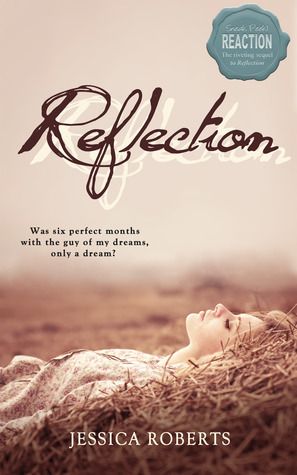
Review: Reflection by Jessica Roberts

Photobucket

Hi guys! Today B's Book Blog is honored to host a tour stop for the Reflection book tour! In this post you'll find my review, the author's bio and also a giveaway! Enjoy! :)

Title: Reflection
Author: Jessica Roberts
Genre: New Adult, Young Adult Contemporary
Release Date: February 17, 2012
Format: eBook
Pages: 289
Source: YA Bound
Links: Goodreads | Amazon | Barnes and Noble
Read from August 30 to September 2, 2012
My rating: 4 stars: I really like it
Summary: Bright, spunky Heather Robbins has escaped her small hometown and is anxiously beginning her freshman year of college. Rising above her rocky childhood, she’s found a place where good things are finally starting to happen: her own private apartment, refreshing college classes, and an intense attachment to a mysterious and rugged classmate, Nick Richards. But when her dreamy college life turns out to be nothing more than a wonderful dream while resting in a coma, questions threaten. Now, Heather must press forward to unlock the real past, and find the answers buried deep in her mind. What she unlocks instead is a roller coaster ride through flashbacks, embellished memories, and a whirlwind romance. And when it’s all over and she comes face to face with the truth, will she lose everything she’s fallen in love with?


"On occasion patients have dreams while in their coma. And you seem to be one of those special situations. These dreams can mix fantasy with reality, and memories of people and places sometimes jumble within these dreams."

In my opinon, Reflection is, in one word, different. It was a totally different reading experience for me. A good different too, I might add. I haven't had that many chances to read books involving coma--in fact I remember having read only one, If I Stay. So reading Reflection was kind of like trying something new. 

I was unsure about it at first. I'm not a fan of confusing shifting perspectives, and this book has a lot of those. Most of the time I didn't know if I was reading it as it happens the first time, or reading it as Heather recounts her memories to the doctor. I didn't know this until like past halfway through the book, when I decided that it must still be the recounting. But confusing as it was for me, I coudn't stop. 

It didn't take me long to finish this book, mostly because it was so addictive. I wanted to know more, needed to find out what's happened before and what will happen after. It was all very interesting and exciting to hear Heather talk about what she remembers about her first 6 months at college. Shitty friends, good friends, her crush, etc. There were some elements that seemed supernatural, but they turn out to be her coma messing with her memories. 
In a PRS [Persistent Reflective State] coma the brain responds very differently than when it's in a typical coma. The first distinction has to do with memory.Unlike a common coma where the brain is stagnant, in PRS the brain works overtime, distinguished by overzealous brain activity [...] As it does so and the memories are called back to the surface, the mind begins to then live out those experiences, as if for the first time. To the mind, these prolonged dreams, 'reflections' as we call them, are current and real, as if living a life through the mind, but with experiences that have already occured in a person's life. As the mind sorts through memories and lives them out, sometimes it mixes people, places, and even adds imaginative experiences as it would in a typical dream, filling in parts that it cannot remember.
Not knowing what is real and what isn't kills Heather, and it killed me too. I was eager to see Heather out of the hospital and find out whether the romance with Nick was real. But there are shocks along the way. For Heather, the memories of those 6 months seem like just yesterday; but for everyone else, it has been 2 years and 7 months. Everyone has moved on without her. Everything has changed. 

Reflection leaves me wanting more. Its ending is a good one, preparing us for the next book. I can't wait to read Reaction and see Heather fight to win back what she has lost. This is a very good read! 

------------------------


About the Author
JESSICA ROBERTS grew up in the San Francisco, California Bay Area where she spent most of her time playing sports alongside her six siblings. She was crowned Miss Teen California her senior year of high school, and went on to Brigham Young University where she graduated in Human Development. Her love of family, church, writing, athletics, and singing and dancing keeps her life busy and fulfilled. She currently resides in Utah with her husband and three children.

Blog | Twitter | Facebook


The giveaway is for (1) $25 Amazon gift card plus an e-copy of Reflections plus (9) additional Reflection e-books.  Open Internationally.

a Rafflecopter giveaway


------------------------

This review is also posted on Goodreads.
I received a digital copy from NetGalley and the publisher for review.

Sunday, August 26, 2012

Review: The Stone Girl by Alyssa B. Scheinmel

Title: The Stone Girl
Author: Alyssa B. Scheinmel
Genre: Young Adult Contemporary
Release Date: August 28, 2012
Publisher: Knopf Books for Young Readers
Format: eBook
Pages: 224
Source: Publisher via NetGalley
Links: Goodreads | Amazon | Bookdepository
Read from August 18 to 21, 2012
My rating: 1 star: I don't like it
Summary: Sethie Weiss is hungry, a mean, angry kind of hunger that feels like a piece of glass in her belly. She’s managed to get down to 111 pounds and knows that with a little more hard work—a few more meals skipped, a few more snacks vomited away—she can force the number on the scale even lower. She will work on her body the same way she worked to get her perfect grades, to finish her college applications early, to get her first kiss from Shaw, the boy she loves, the boy who isn’t quite her boyfriend. Sethie will not allow herself one slip, not one bad day, not one break in concentration. Her body is there for her to work on when everything and everyone else—her best friend, her schoolwork, and Shaw—are gone.


She feels like a creature out of a fairy tale: a girl who discovers that her bones are really made out of stone, that her skin is really as thin as glass, that her hair is brittle as straw, that her tears have dried up so that she cries only salt. Maybe that's why it doesn't hurt when she presses hard enough to begin bleeding: it doesn't hurt, because she's not real anymore.

This is one of those novels I think I might like but end up not liking. I've never read any books that involve eating disorders of any kind before, so I thought this could be a new experience. But it is an understatement to say that I am disappointed.

I didn't like this book. Because of the 3rd person point of view, I couldn't get into the story to begin with.  I found it hard to read and it didn't help that it really kind of bored me. But there are other things that endlessly disturb me, like the narrator's thoughts.

The narrator, Sethie Weiss, starts out an anorexic and then becomes a bulimic as the story goes on. Being extremely thin is her idea of beautiful. What really makes me uncomfortable is the fact that she glorifies her eating disorder like she really believes it. Realistic? I don't know. But definitely uncomfortable. She says she loves lying down on the floor and feeling her hipbones pressed against the hard floor, because it's telling her that there's no fat there. This girl is seriously obsessed. There are a lot of scenes where I had to turn my eyes away and scrunch up my face because I was really terrified. Especially the scene where she wants to "cut the fat right out" and "scrape out the fat" with her nails.  So what does she do? She scratches her right knee, the place where she makes her scab flick off, and then she leans closer and sucks. Yes, DIY liposuction! Only she doesn't suck out the fat. What comes out is blood, which according to her, is "disappointing." If you want to her if she swallows the blood, no, she doesn't, because "for all she knows, blood might have calories."

This book makes me want to cry big time.

It might be because I couldn't relate to the main character, not having had an eating disorder and all. However I, like most girls, have felt ugly because of my fat. Sure, I used to hate myself and be depressed because of it, but I got over it. The thing is, I don't ever remember having ideas as ridiculous as Sethie's. I don't sleep with a knife under my pillow or mattress. And I sure don't play with it, let alone using it to trace my skin and thinking about cutting it to let out the fat. Which is precisely what Sethie does, among other things like throwing up and starving herself. Like I said, it disturbs me a lot.

Except for disgust, I hardly felt anything reading this book. I didn't find Sethie sympathetic, and I definitely didn't like her. There's no character development whatsoever. It's kind of ironic that, being a realistic young adult novel, there are a few unrealistic aspects. Sethie is supposedly very smart, but she also uses drugs, and lets herself be used for sex. And in the end, she miraculously wakes up. No, it doesn't work for me. If someone has been so stubborn about her behaviors, she doesn't just get up and change herself like that.

After everything I've said, as you might have guessed, I have to give it just one star. The subject matters may sound interesting, but trust me, that's really all there is to it. Unless you want to spend your time reading the wrong book and experience disturbing issues, there are other books for you. I'm definitely not going to recommend this book for anyone.


------------------------

This review is also posted on Goodreads.
I received a digital copy from NetGalley and the publisher for review.

Wednesday, August 22, 2012

Review: Confessions of an Angry Girl by Louise Rozett

Title: Confessions of an Angry Girl
Author: Louise Rozett
Series: Confessions #1
Genre: Teen, Young Adult Contemporary
Release Date: August 28, 2012
Publisher: HarlequinTeen
Pages: 272
Source: Publisher via NetGalley
Links: Goodreads | Amazon | Bookdepository
Read from August 14 to 17, 2012
My Rating: 2 stars: Nothing special
Summary: Freshman Rose Zarelli has rage issues. First of all, her father lost his job, took work as a contractor in Iraq...and never came home. Second, she likes the wrong guy and his super-intense, scary cheerleader girlfriend is now her nemesis. Third, her fashionista best friend, Tracy, is suddenly infinitely cooler than she is—and talking about losing her virginity. (What?!) Rose is ahead when it comes to studying for the PSAT, but she’s so far behind socially that she might as well be moving backward. She needs Tracy’s help choosing the right clothes, she likes all the wrong extracurricular activities, and she can’t even make a decision about which photo of her father to put on the memorial website she’s making (and hiding from her adolescent-shrink mother). With her brother away at college and her mother always locked in her office with her messed-up teen patients, Rose struggles to get through each day without inflicting bodily harm on anyone.


This is a story about a girl with a stellar vocabulary who is four years away from college and a year and a half away from a driver's license. About a girl trapped in a hostile universe where the virginity clock is ticking down--relentlessly--with zero consideration for her extenuating traumatic, lifealtering circumstances.


Let me start off by saying that this book is not for me. From the start, I knew that I wasn't going to like it much. Throughout the book, the story failed again and again to interest me. It's just incredibly boring This is one of those books that I won't want to pick up again once I lay it down. 

Which is, to be honest, quite unexpected. I know Rose has lost her father in the war in Iraq. And I tend to love books whose main character's father is dead, which I can totally relate to. But most of the time I was annoyed by Rose. Her character isn't all that believable to me. She is supposed to be angry as described in the blurb. But no, she feels pretty normal to me. Just any other normal teenager who's pessimistic and sarcastic and annoying. Rage issues? Please, what an overstatement. It's just a way to make Rose sound more interesting, I guess, but it's so deceiving. She does have angry outbursts but only no more than 3 times, and they are nowhere near rage issues. She claims to be very smart, but I really couldn't see how. 

The other characters in the book are also just as, if not more, annoying. There are your typical mean girl  named Regina (but is nowhere near epic as Mean Girls' Regina George), the best friend who can only talk about "doing it" without protection with her boyfriend, and the crush--oh, the unattainable crush who's with someone else but plays with Rose's heart anyway and then quits by saying he's not for her. Hmm. I'm not sure which one of them I want to punch first. 

Frankly, I feel like this book is maybe for the teen age group. It really didn't do it for me. There are a lot of things that I really don't like in the book that feel immature and childish. Girl drama, crush drama, best friend drama. None of that really interests me. And in the end, I could say that the plot really goes nowhere. No character development, that's for sure. I couldn't feel the climax, if there is one. The story just goes on and on, and then abruptly stops. Seriously. I emphasize, abruptly. And then? Oh, there'll be book two! Haha, well, too bad I'm not impressed enough to want to stick around when it comes out. This is a very forgettable read for me. 


------------------------

This review is also posted on Goodreads.
I received a digital copy from NetGalley and the publisher for review.

Saturday, August 18, 2012

Review: Over You by Emma McLaughlin and Nicola Kraus

Title: Over You 
Author: Emma McLaughlin and Nicola Kraus
Genre: Young Adult, Chick Lit
Release Date: August 21, 2012
Publisher: Harper Teen
Pages: 304
Format: eBook 
Source: Publisher via Edelweiss
Links: Goodreads | Amazon | Bookdepository
Read from August 13 - 25, 2012 
My Rating: 3 stars: I like it
Summary: After the grand explosion of her relationship, seventeen-year-old Max Scott developed what every girl in the history of the world has been waiting for: a way to get over being dumped. Now Max is the go-to guru for heartbroken high-school girls all over NYC. But when her ex unexpectedly shows up in her neighborhood, Max’s carefully controlled world starts to unravel. With her clients’ hearts hanging in the balance, Max will have to do the seemingly impossible: get over him once and for all. 

How is it that civilization evolved the ability to shuttle someone to the moon, but other than capturing its excruciating details in every medium, it hadn't come up with anything to guide women through heartbreak? 

This is a story about a 17-year-old girl, Max Scott, who runs a company of her own called Ex, Inc. With the help of Max's two friends, the company helps girls all over New York get over their exes. So far Max is the guru of heartbreak, until she sees Hugo Tillman, the guy who dumped her years ago, in the neighborhood. And then this proves to her that she isn't really as over him as she thinks she is.

I liked the idea of this book. I thought it was very promising and that it would be a fun read. And in a way, it is. I expected it to be a YA novel, but it turns out to be chick lit with YA characters. Now, my experience with chick lit novels in the past has told me that I don't tend to like them that much --there are only a few chick lit books that I have given the maximum of 4 stars to. And while I liked Over You enough, there are some things in the book that kept me from fully enjoying it.

In the very beginning, I had a problem getting into it. To begin with, I'm not really a big fan of third-person omniscient narration in chick lit, and this is exactly how the book is narrated. What's more, the run-on sentences (some are 7 lines long!) with lots of punctuation marks make me constantly lose track of what's being said. This wasn't fun. The progress was slow and I was annoyed more than anything. But after a quarter of the book, it became less difficult for me. I'm not sure if this was because I'd already got used to it or the writing really was better. Still, I wasn't impressed with the writing, to say the least.

There are many ways the book could have been better. Especially in the character department. While they're fun to read about, they don't have much depth. I didn't feel connected to any of the characters. Max is a good character, but I'm not sure if I liked her. She's portrayed as strong, confident, and someone who knows exactly what she's doing and doesn't let anyone mess with her. But years ago, she's been broken too. Max's breakup with Hugo, as revealed later in the book, is very miserable and involves goose shit. I liked how she thinks she's fine until Hugo comes back into her life again and she loses her cool. That's as realistic as  a relationship can get. But I don't like the way the book makes Hugo a jerk. I mean, Max is seriously not over him and she loves him so much still, and when they have another shot, the writers decide to make him the biggest asshole ever so that she realizes he's not for her and so she can easily make a decision to go back to her present love interest and easily get over Hugo. What I'm trying to say is, after all the crying and pining, if he's really that much of a jerk, how come she doesn't realize it until now? But that's not the point. The point is that I find it a very bad plot device -- one that weakens the conflict in the story and makes everything too easy. Hugo is an important character because he makes all that Max think she is come crashing down. Hugo could've had much more depth to his character and be used to make Max doubt herself even more before she finally gets over him, which would make the story much more powerful.

Bottom line: Over You has a very promising idea and is a light and fun read, but it could have been much better.


------------------------

This review is also posted on Goodreads.
I received a digital copy from Edelweiss and the publisher for review.
Related Posts Plugin for WordPress, Blogger...